
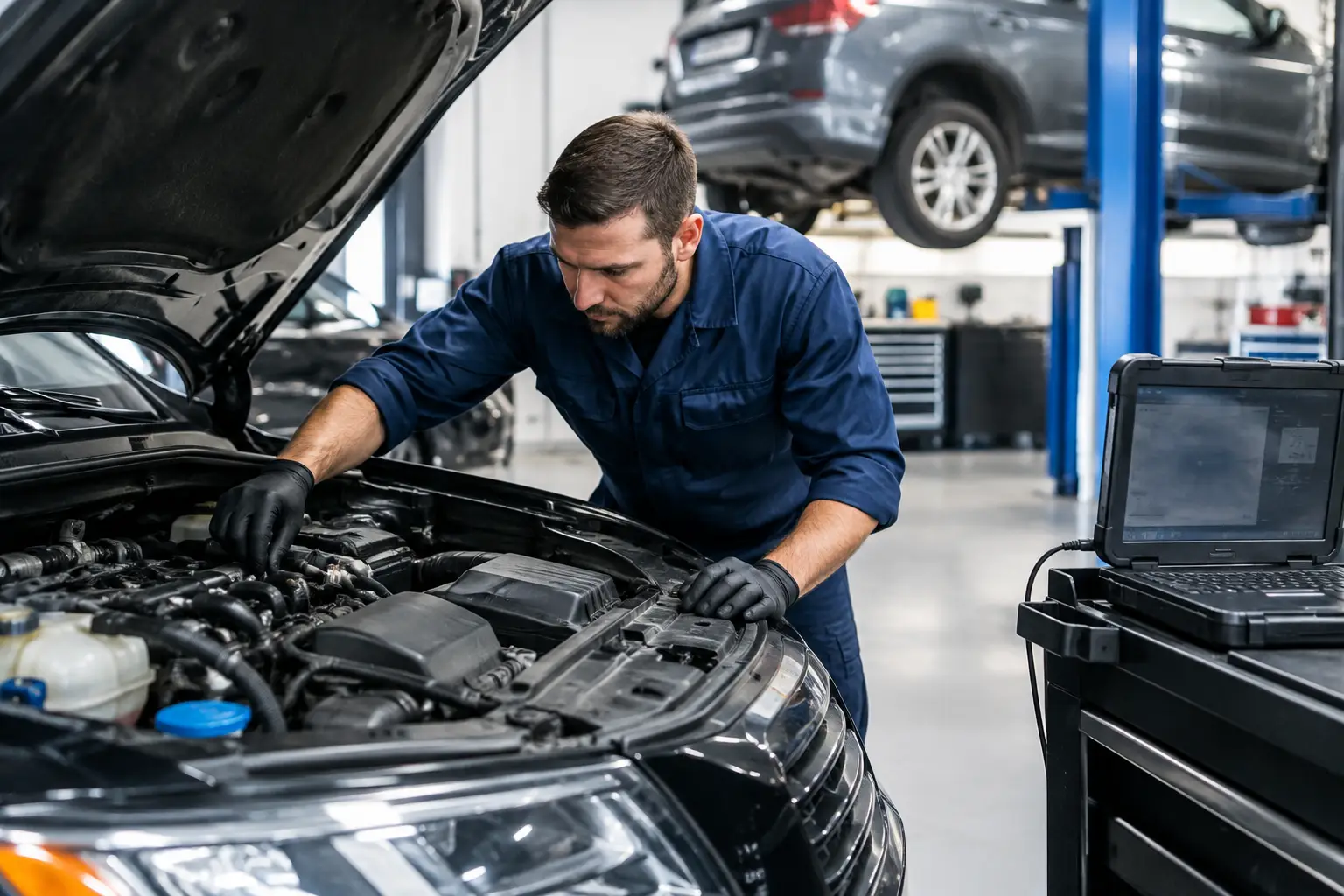
Choosing a Reliable Garage Without Guesswork
A warning light comes on during the school run. Your car loses power on the way to work. Or the MOT tester hands you a failure sheet that does not mean much until somebody explains it. Choosing a reliable garage at that point should not feel like another problem to solve.
Most drivers do not need a mechanic every week. They need one who answers clearly when something goes wrong, checks the actual fault, and gives them a sensible plan to get back on the road. A good local garage will not make promises before looking at the vehicle, but it should make the next step straightforward.
Choosing a reliable garage starts with how they diagnose faults
The biggest difference between a dependable garage and a poor one is often what happens before the spanners come out. If an engine warning light is on, the car is in limp mode, or it keeps cutting out, there can be several possible causes. Replacing the first part that looks likely may get lucky. It can also leave you paying for a repair that does not cure the problem.
In most cases, a proper diagnostic process starts with your symptoms. When did the warning light appear? Does the problem happen when the engine is cold, under acceleration, or only on short journeys? Has the car recently had work done? These details help narrow down the fault before testing begins.
A diagnostic scan is useful, but fault codes are not a repair instruction. A code may point to a sensor, for example, while the real cause is damaged wiring, an air leak, or another issue affecting that sensor. A reliable mechanic uses the code as a starting point, carries out the relevant checks, and explains what has been found in plain English.
This matters with common problems such as DPF warnings, loss of power, electrical faults and poor engine performance. A DPF issue may be caused by repeated short trips, but it can also be a sign of another engine fault preventing normal regeneration. Clearing the light without dealing with the cause usually means it will return.
Ask for a clear repair plan, not a vague promise
Once the fault has been identified, you should know what work is recommended and why. That does not mean you need a technical lesson. It means the garage should be able to tell you what is wrong, what could happen if it is left, what needs doing now, and whether any further work can wait.
For example, worn brake pads may need replacing soon, while a minor advisory item can be monitored. A slipping clutch needs a different conversation from a clutch pedal that feels stiff because of a hydraulic issue. Both can affect driving, but the repair route and urgency are not necessarily the same.
Be cautious if you are given a large list of work with no explanation of priorities. Cars do wear out, and an MOT failure can uncover more than one issue, particularly on an older vehicle. But a trustworthy garage will separate safety-critical repairs from maintenance that can be planned for later.
Clear pricing is part of this. You should receive an estimate before major work goes ahead, along with an explanation if further inspection is needed before a firm figure can be given. Some jobs reveal additional problems only after parts are removed. That can happen with seized bolts, damaged components or hidden corrosion. The key point is that the garage contacts you before adding unexpected work, rather than presenting a surprise bill at collection.
Look for communication that makes sense
A car in the workshop is inconvenient, especially when it is the one vehicle your household relies on. You need realistic updates, not vague assurances that it will be ready soon.
A reliable garage will tell you whether the vehicle needs diagnosis first, whether parts have to be ordered, and what the likely timescale is. Same-day repairs are often possible for straightforward faults or parts that are readily available. They are not always realistic for complex electrical problems, gearbox repairs or work requiring specialist parts. Honest timing is far more useful than a rushed promise that cannot be kept.
Pay attention to how a garage handles your first enquiry. Do they ask sensible questions about the fault? Do they explain whether the car is safe to drive? Can they tell you what information to bring, such as the MOT failure sheet or details of recent repairs? These are good signs that they are trying to solve the right problem.
If your car has poor brakes, a serious knocking noise, overheating, a flashing engine warning light or a sudden loss of control, do not keep driving it just to reach a preferred appointment. Ask for advice and arrange recovery or transport support where needed. The right garage will put safety first.
Signs a local garage is worth using
You do not need to be a car expert to judge whether a workshop is likely to look after you properly. It comes down to consistency, accountability and whether the advice matches what you can see and feel from the car.
Look for these practical signs:
- They ask about the symptoms before suggesting parts or repairs.
- They give a clear estimate and seek approval before carrying out extra work.
- They explain the fault in everyday language, without talking down to you.
- They use quality parts suited to your vehicle and stand behind their workmanship.
- They can show or explain worn or failed components when it is useful to do so.
- They give sensible advice on what needs attention now and what can wait.
Local knowledge also helps. A family-run garage serving Lowestoft and nearby areas depends on people returning when they need servicing, repairs or help with the next warning light. That gives the business a reason to be direct about what your vehicle needs, rather than treating every visit as a one-off sale.
Do not choose on price alone
Everyone wants a fair repair bill. But the lowest quote is not always the lowest cost once repeat visits, incorrect parts or unfinished faults are taken into account.
A very low price may leave out diagnostic time, use poor-quality parts, or cover only the most obvious symptom. This is particularly relevant with engine management faults and DPF problems. If the cause is not addressed, the warning light can return quickly and you may be back where you started.
That does not mean the most expensive option is automatically better either. Ask what the quote includes. Is diagnosis included? Are parts and labour covered? Does the price allow for a quality replacement part? Will the garage check that the original fault has been fixed before handing the car back?
For routine servicing, check that the service matches your vehicle’s needs and mileage. An interim service may be suitable between annual visits for a high-mileage driver. A major service is more thorough and may include items due at longer intervals. A reliable garage will recommend the appropriate service rather than selling the biggest package by default.
Check whether the garage deals with your type of problem
Not every workshop handles every fault in the same way. If your car will not start, you need someone who can test the battery, charging system, starter circuit and other likely causes rather than simply fitting a new battery. If the air conditioning is blowing warm, the system may need a regas, but it should also be checked for leaks or component faults where appropriate.
The same applies to MOT repairs. A garage that explains why a tyre has uneven wear, why a suspension component has failed, or why brake performance is below standard gives you a better chance of preventing the same problem from happening again.
At AutoFix4u, the focus is diagnostic-first: identify the fault properly, explain the repair plan, then carry out the work using suitable quality parts. That approach is designed for drivers who need a dependable answer, not a quick guess.
Make the booking easier for everyone
When you call or request a quote, give the registration, make and model, a short description of the symptoms, and when they occur. Mention any dashboard lights, unusual sounds, smells or recent work. If the car has failed its MOT, have the failure sheet ready.
This information will not replace an inspection, but it helps the garage prepare and advise whether the vehicle should be driven in. It can also make it easier to arrange a diagnostic slot quickly when the fault is urgent.
A good garage should leave you feeling clearer after the first conversation, not more confused. If your vehicle is showing a warning light, struggling to start, losing power or due MOT repairs, contact a local workshop, ask for diagnostics or a clear quote, and get the fault checked before a smaller issue becomes a breakdown.