A Flat Battery Recovery Example Explained
Your car worked perfectly yesterday. This morning, the dashboard lights look dim, and the engine will not start. You turn the key and hear a clicking noise.
This flat battery recovery example explains how to handle the situation safely. It also shows why a jump-start may only solve the immediate problem.
At AutoFix4u Garage Lowestoft, we help drivers with battery problems, starting faults and vehicle recovery. Our approach focuses on identifying the cause before recommending repairs.
A flat battery does not always mean you need a replacement. Sometimes a simple recharge solves the problem. However, an alternator fault or electrical drain may require further investigation.
Flat battery recovery example: what happens first?
Imagine a car parked outside a house overnight.
The owner returns in the morning and discovers that the vehicle will not start.
The central locking responds slowly. The interior lights appear dim, and the engine makes a rapid clicking noise.
These symptoms often suggest a weak or discharged battery.
However, other electrical faults can cause similar problems.
Step 1: Check the vehicle safely
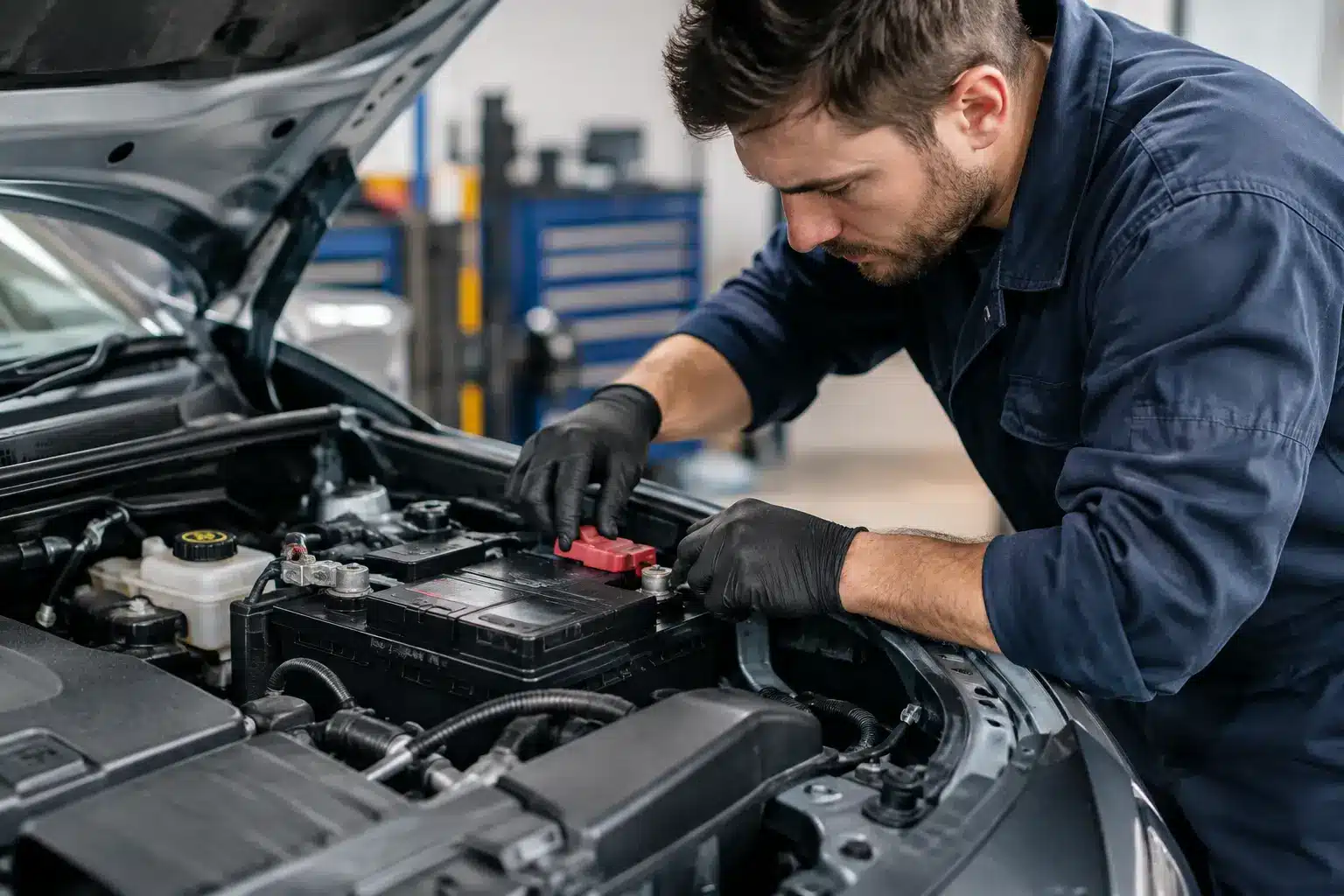
Before attempting a jump-start, inspect the battery area.
Look for obvious problems such as:
- Loose battery terminals.
- Damaged electrical cables.
- Corrosion around the connections.
- Cracks in the battery case.
- Signs of battery leakage.
- Unusual smells around the battery.
Do not attempt a jump-start if the battery looks damaged, swollen or leaking.
Keep flames and sparks away from the battery.
If you are unsure about its condition, contact a professional.
Step 2: Test the battery
A technician can check battery voltage and condition.
Voltage provides useful information, but it does not tell the whole story.
A battery may power the dashboard while lacking enough strength to start the engine.
A proper battery test helps identify this problem.
Cold weather can make a weak battery struggle even more.
Short journeys and long periods without driving can also reduce its charge.
Step 3: Attempt a safe jump-start
If the battery is suitable for jump-starting, a technician may use a booster pack.
The procedure must follow the vehicle manufacturer’s instructions.
Some vehicles have dedicated jump-start points under the bonnet.
Once the engine starts, the technician can continue checking the electrical system.
Starting the engine does not prove that the battery or charging system is healthy.
A jump-start only provides enough power to start the vehicle.
It does not identify why the battery lost its charge.
What happens after a successful jump-start?
After the engine starts, the next step is to check the charging system.
The alternator normally supplies electrical power while the engine runs. It also helps recharge the battery.
A faulty alternator can leave the battery without enough charge.
As a result, the car may start after a boost but stop again later.
Check the alternator
A technician can measure charging voltage and inspect the relevant connections.
Possible signs of an alternator problem include:
- Battery warning light on the dashboard.
- Headlights becoming unusually dim.
- Electrical equipment behaving unexpectedly.
- Repeated starting problems.
- The battery losing charge during use.
The problem may involve the alternator, wiring, drive belt or another charging-system component.
Our alternator fault symptoms guide explains these warning signs in more detail.
Check the battery condition
An older battery may no longer hold enough charge.
This can happen even if the alternator works correctly.
Repeated discharge can also reduce battery performance.
A battery test helps determine whether charging is worthwhile or replacement makes more sense.
However, installing a new battery without checking the charging system may not solve the original problem.
That is why proper testing matters.
Common causes of a flat car battery
Several problems can leave a car unable to start.
Understanding the cause helps prevent another breakdown.
1. An old or weak battery
Car batteries gradually lose capacity as they age.
Eventually, they may struggle to provide enough power for starting.
Cold mornings often reveal the problem.
You may notice slower cranking before the battery fails completely.
A professional battery test can help confirm its condition.
2. Frequent short journeys
Starting an engine requires considerable electrical power.
The alternator then needs time to replenish the battery.
Drivers who make frequent short journeys may not give the system enough opportunity to recharge.
Lights, heated windows and other electrical equipment also increase demand.
If you mostly drive around Lowestoft on short trips, regular battery checks may help prevent unexpected starting problems.
3. An alternator problem
A faulty alternator may fail to recharge the battery correctly.
The vehicle might start after a jump-start but develop problems during the journey.
In more serious cases, electrical power may drop until the engine stops.
A charging-system inspection can identify the cause.
4. An electrical drain
Some electrical components continue using a small amount of power while the car is parked.
This is normal.
However, a faulty component may draw too much power.
Possible causes include interior lights, aftermarket equipment, damaged wiring or control modules that fail to enter sleep mode.
A technician can test for an excessive electrical drain.
Our guide to battery problems overnight explains this issue further.
5. Poor battery connections
Loose or corroded battery terminals can prevent electrical current from flowing correctly.
This may cause intermittent starting problems.
Damaged earth cables can create similar symptoms.
A technician should inspect the connections before recommending expensive parts.
Flat battery recovery example: when is recovery necessary?
A jump-start is not suitable for every situation.
Sometimes recovery provides the safest option.
For example, arrange assistance when:
- The vehicle stops while driving.
- The battery warning light stays on.
- The battery has visible damage.
- The engine will not start after a suitable boost.
- Several electrical systems stop working.
- The vehicle is parked in an unsafe location.
- You suspect an alternator or serious electrical fault.
Do not keep attempting to start a vehicle with an unknown electrical problem.
Repeated attempts can drain the remaining battery power.
For an unsafe or non-running vehicle, professional recovery may be the better option.
Read our recovery versus roadside repair guide to understand the difference.
What should you do while waiting for battery assistance?
First, make sure you and your passengers are safe.
If the vehicle is parked safely, switch off unnecessary electrical equipment.
Avoid repeated starting attempts.
Do not disconnect battery cables while the engine runs. This can damage vehicle electronics.
Also, avoid touching damaged battery components.
If you have breakdown cover, check whether your policy includes battery assistance or recovery.
When contacting a garage, explain the symptoms clearly.
Useful information includes:
- Whether the engine cranks or only clicks.
- Whether the dashboard lights work.
- Any battery warning lights.
- How long the car has been parked.
- Whether it recently needed a jump-start.
- Any recent electrical repairs.
These details can help a technician plan the appropriate checks.
Can you drive after a flat battery?
That depends on why the battery lost its charge.
If someone left an interior light on, the battery may simply need charging and testing.
However, a car with a charging fault could stop again.
A successful jump-start does not guarantee a safe journey.
If the battery warning light remains on, avoid driving and arrange professional advice.
A proper battery and alternator test can help determine the next step.
How AutoFix4u checks battery and starting faults
At AutoFix4u Garage Lowestoft, we aim to find the actual cause of a starting problem.
We begin by discussing the symptoms.
Next, we inspect the relevant electrical components and carry out appropriate tests.
Depending on the results, we may check:
- Battery voltage and condition.
- Alternator charging performance.
- Battery terminals and earth connections.
- Starter motor operation.
- Electrical fault codes.
- Possible excessive battery drain.
Not every vehicle needs every test.
The symptoms help us decide where to begin.
After the inspection, we explain what we find and discuss the repair options.
Our goal is to avoid unnecessary replacements and provide clear pricing before work starts.
Flat battery recovery in Lowestoft and nearby areas
A flat battery can disrupt your entire day.
It may happen outside your home, at work or before an important appointment.
Drivers around Lowestoft, Oulton Broad, Carlton Colville, Kessingland and Beccles can contact AutoFix4u Garage Lowestoft for battery advice, starting-system diagnostics and recovery enquiries.
We can discuss whether your vehicle needs a jump-start, further testing or transport to the workshop.
Availability depends on your location, the fault and our workshop schedule.
Book a battery or charging-system check
If your car repeatedly needs a jump-start, do not ignore the warning signs.
The battery may be weak, but an electrical drain or charging fault could be responsible.
A proper inspection can help identify the cause before another breakdown.
Contact AutoFix4u Garage Lowestoft for clear advice and a suitable repair plan.
Call: 07778 979802
Contact our garage or send us a WhatsApp message.
Find the cause of the flat battery and reduce the risk of another unexpected no-start.