
Air Con Regas Guide for Cars Losing Cold Air
When the car is blowing warm air on the school run, commute or drive to the coast, an air con regas guide can help you work out the next step. In most cases, weak air conditioning means the system is low on refrigerant. But a regas is not always the full fix. If refrigerant has escaped because of a leak or an electrical fault is stopping the system from working, simply refilling it may only give short-term cold air.
At AutoFix4u, we start by looking at the reason your air conditioning has stopped performing properly. That means clear advice, proper checks and no surprise extras.
What is an air con regas?
Your car’s air conditioning system uses refrigerant gas and oil to move heat out of the cabin. The refrigerant circulates through sealed pipes, a compressor, condenser and evaporator. It absorbs heat from inside the car and releases it outside, which is why the vents should blow cold when the system is working as it should.
An air con regas removes the remaining refrigerant, checks the system and refills it with the correct type and quantity specified for your vehicle. Modern cars commonly use either R134a or R1234yf refrigerant. They are not interchangeable, so the correct gas matters.
Refrigerant is not a fuel that the car simply uses up. A small reduction over time can happen through normal permeation in hoses and seals, particularly on an older vehicle. However, if the air con has gone from cold to warm quickly, we often see a leak, damaged component or system fault behind it.
Signs your car may need an air con regas
The obvious sign is air that is no longer properly cold, even with the temperature set to minimum and the fan turned up. You may notice it takes much longer to cool the cabin, or that it only feels slightly cool while driving.
Other common signs include a musty smell when the system is switched on, windows that take too long to clear in wet weather, or the air con working one day and not the next. Air conditioning also helps remove moisture from the air inside the car, so it is useful all year round, not just during a heatwave.
A clicking sound when you press the air con button can also point to a problem. Sometimes the compressor clutch is trying to engage but cannot because system pressure is too low. On newer cars, there may be no obvious click, so testing is the sensible route.
Warm air does not automatically mean the gas is low. A blocked cabin filter can reduce airflow, while a failed cooling fan, pressure sensor, compressor or electrical connection can stop the system cooling. This is why guessing can cost more in the long run.
When a regas is the right solution – and when it is not
If your air conditioning has gradually become less effective over a couple of years and there are no signs of damage or major pressure loss, a regas may be all it needs. Once the correct amount of refrigerant is back in the system, cooling performance should return.
If the system is empty, very low, or loses its cold air again shortly after being refilled, there is likely a leak to find. Common leak points include corroded condensers at the front of the car, pipe joints, seals and damaged hoses. The condenser sits behind the front grille, where it can be hit by road debris and exposed to water and salt.
In these cases, paying for repeat regases is false economy. The sensible repair is to identify the leak, explain what has failed and repair it before refilling the system. That is the difference between treating the symptom and sorting the cause.
What happens during an air con regas service?
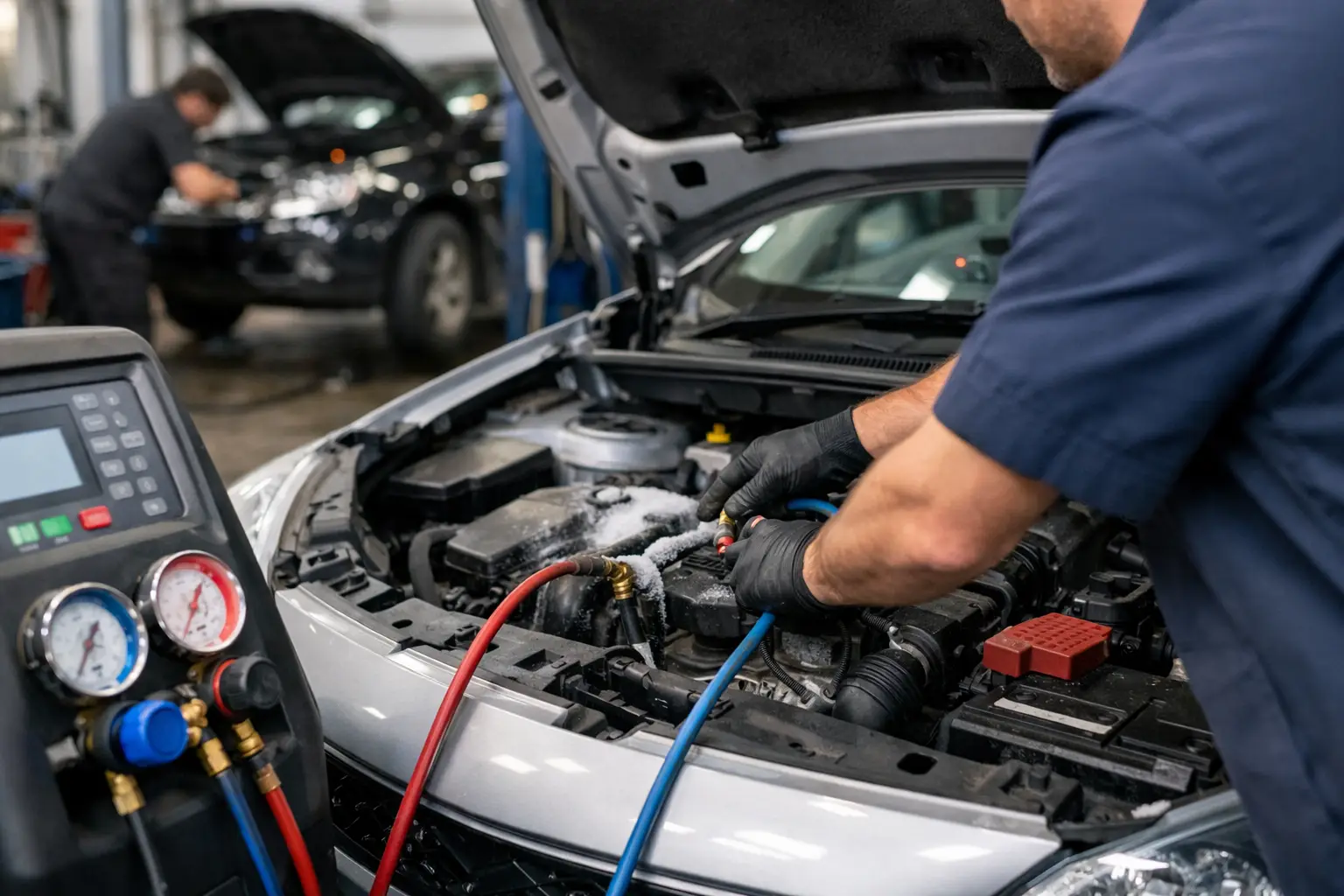
A proper air con service is more than attaching a bottle of gas. First, the equipment recovers and measures what refrigerant remains in the system. This helps show whether it is low and prevents refrigerant being released into the atmosphere.
The system is then evacuated to remove air and moisture. Moisture can cause poor performance and internal corrosion, so this part matters. A vacuum hold test can identify some leaks, although it cannot guarantee that every small leak will show up under vacuum. If the readings suggest a problem, further diagnosis may be needed before a refill.
Once the system passes the necessary checks, it is refilled with the manufacturer-specified refrigerant and oil amount. We then test vent temperature and system operation to make sure it is cooling correctly. If a fault becomes clear during testing, you should be told what it is, what needs doing and what the next step will be before any extra work is carried out.
Why air con can stop working after winter
Many drivers only notice an air conditioning issue when the first warm weather arrives. The system may not have been used much over winter, even though it still has a job to do when demisting the windscreen.
Regular use helps circulate the oil that lubricates seals and compressor components. Leaving it switched off for months can allow small issues to go unnoticed until you need cold air. Running the air con for around 10 minutes every week, including in winter, is a good habit if your vehicle allows it.
Winter road conditions can cause problems too. Salt and spray around the front of the car can accelerate corrosion on the condenser. If your car has recently had front-end damage, even a minor knock, it is worth mentioning this when booking in.
Can you regas car air conditioning yourself?
DIY refill kits can look like an easy answer, but they are rarely the best option. They do not properly recover the old refrigerant, measure the exact amount required or diagnose why the system became low. Overfilling or using the wrong gas can damage components and lead to a more expensive repair.
Air conditioning refrigerants must also be handled correctly. Garage equipment allows the system to be recovered, tested and refilled safely. For a car you depend on every day, a proper check is usually better value than taking a chance on a temporary fix.
How often should car air conditioning be regassed?
There is no single timetable that suits every vehicle. Some cars may need attention after two or three years, while another may keep cooling well for much longer. The best guide is performance and the vehicle manufacturer’s service information, rather than automatically booking a regas every year.
If the system is still cold, clears the windscreen efficiently and shows no fault signs, it may not need refrigerant added. If performance has dropped, book a check before the hot weather makes daily driving uncomfortable.
Get the right answer before spending money
If your car is blowing warm air, smells damp or struggles to clear the windscreen, do not assume it only needs gas. A quick inspection can tell the difference between a straightforward air con regas and a fault that needs repairing first.
For drivers in Lowestoft and nearby areas, AutoFix4u can assess the system, explain the findings in plain English and give you a clear repair plan. Call now or get a quote for air conditioning checks and regas work. Getting it looked at early can mean a cooler cabin, clearer windows and less chance of a small leak turning into a larger repair.



One thought on “Air Con Regas Guide for Cars Losing Cold Air”