Why Are My Brakes Grinding? Causes and Fixes
A grinding noise when you press the brake pedal is not one to ignore, especially if you rely on your car for work, school runs or getting around Lowestoft. If you are asking, “why are my brakes grinding?”, the answer is usually wear in the braking system, but the exact cause needs checking before it turns into a bigger repair.
In most cases, a light squeak can wait for a booked inspection. A harsh metal-on-metal grinding noise, a change in braking performance, pulling to one side or a warning light means stop using the vehicle if it is safe to do so. Brakes are a safety system. Getting the fault diagnosed early is normally quicker and more straightforward than waiting for damage to spread.
Why are my brakes grinding when I slow down?
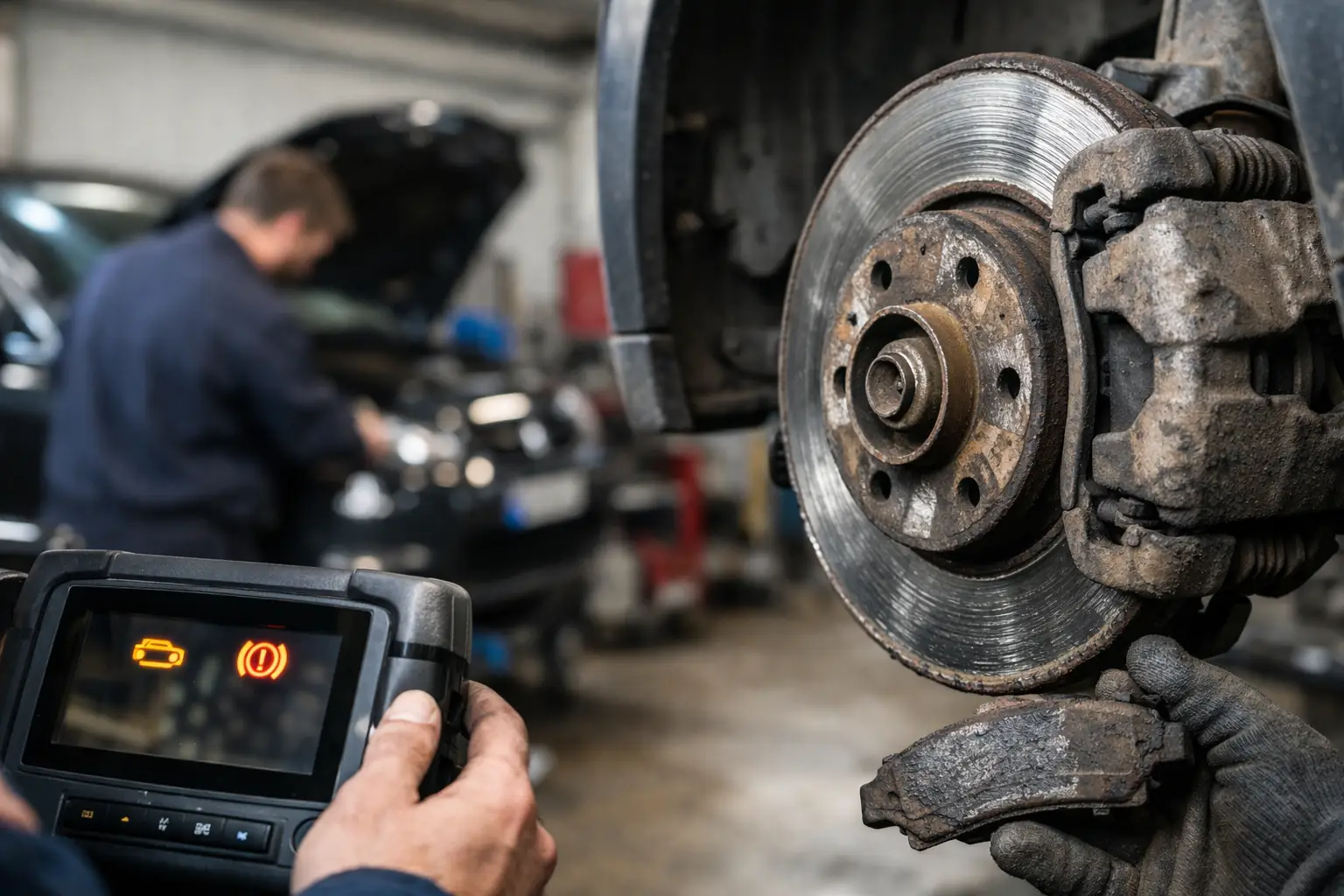
The most common cause is worn brake pads. Brake pads have friction material on the outside, which presses against the brake disc to slow the wheel. Once that material has worn down, the metal backing plate can rub directly on the disc. That is the grinding sound many drivers notice.
This usually happens gradually. You may first hear a squeal at low speed, then a rougher noise when braking. Some pads have a small wear indicator designed to make a noise before the pad reaches the metal. Not every vehicle gives that warning, though, so a quiet brake pedal does not always mean the pads are in good condition.
If the pads have reached metal, both the pads and brake discs will often need replacing. Fitting pads alone onto a deeply scored or damaged disc is false economy. The new pads will not bed in properly, braking may feel poor, and the noise can return.
Worn or damaged brake discs
Brake discs are the metal discs behind the wheels. They wear over time along with the pads. A disc can become thin, heavily lipped around its edge, corroded, scored or cracked. Any of these problems can cause noise, vibration through the brake pedal or steering wheel, and inconsistent braking.
Surface rust after rain, a cold spell or a car sitting unused can also make a scraping sound for the first few brake applications. This often clears after a short drive as the pads clean the disc surface. If it carries on, becomes louder, or the car has been parked for weeks, it needs inspecting. Heavy corrosion can leave the disc surface uneven or cause a brake to bind.
A seized brake caliper or sticking slider
A caliper holds the brake pads in position and applies pressure when you brake. It needs to move freely. If a caliper piston sticks, or the slider pins seize, one pad may stay in contact with the disc after you release the pedal.
We often see this issue when a car has had little use, particularly through wet and salty winter conditions. One wheel can become much hotter than the others, the car may pull left or right under braking, and you may smell hot brakes after a short journey. The affected pad can wear down far faster than the pad on the other side.
This is not simply a pad replacement job. The caliper and its moving parts need checking properly. Depending on what has failed, the solution may involve freeing and servicing the components or replacing the caliper. The root cause matters, otherwise the same wheel can wear out another new set of pads.
Dirt, stones or a bent backing plate
Behind many brake discs is a thin metal shield, often called a backing plate. It helps keep dirt and water away from the brakes. A small stone can become trapped between the shield and disc, or the shield can get bent after clipping a kerb or driving through rough debris.
The result is often a constant scraping or grinding noise that changes with wheel speed, even when you are not touching the brake pedal. It can sound alarming but may be a relatively simple fix once the wheel is removed and inspected. Do not assume it is harmless, though. A proper check confirms whether it is debris or a more serious brake fault.
Rear brakes can grind too
Front brakes do most of the work, so front pads commonly wear first. But rear brakes can grind for the same reasons: worn pads, corroded discs and sticking calipers. Some cars use drum brakes at the rear instead. Inside the drum are brake shoes rather than pads, and worn or damaged shoes can make grinding noises too.
Electronic parking brakes and conventional handbrakes can add another cause. If the parking brake mechanism sticks or does not release fully, it can leave the rear brakes dragging. You may notice reduced fuel economy, a hot wheel, a burning smell or a car that does not roll freely.
Grinding only happens in certain situations
The timing of the noise gives useful clues, but it does not replace an inspection. Grinding only when braking points more strongly towards pads, discs or caliper movement. A noise that happens constantly while driving could be a stone, backing plate, wheel bearing or another rotating component.
Grinding when turning can sometimes be caused by a worn wheel bearing or a tyre rubbing after suspension damage. If the steering feels loose, the car wanders, or you hear a droning noise that gets louder with speed, arrange a check as soon as possible. Brake noise can be misleading from inside the cabin, which is why we inspect the whole area rather than guess from the sound alone.
A brief noise after the car has stood overnight is different from grinding every time you stop. A little surface rust may clear in a few brake applications. A persistent harsh noise will not fix itself. Continuing to drive can turn a routine brake job into discs, pads, calipers and possibly further damage.
Can I drive with grinding brakes?
If the noise is clearly metal-on-metal, the brake pedal feels different, the vehicle pulls, or a brake warning light is on, do not continue driving unless you have no safe alternative to getting out of immediate danger. Arrange recovery or speak to a local garage first.
Even if the vehicle still stops, stopping distances may be affected and the condition can deteriorate quickly. Metal grinding against a disc removes material every time the brakes are used. That creates heat and can damage parts that may otherwise have been saved.
Never try to mask the sound with lubricant or spray around the brakes. Brake surfaces must stay clean and dry. Products applied in the wrong place can reduce braking performance. Likewise, do not rely on pumping the pedal, driving more gently or avoiding hard braking as a solution. These may change the symptom, not repair the fault.
What a proper brake inspection should include
A useful brake check is more than a quick look through the wheel spokes. The wheels need removing so the pads, discs, calipers, sliders, brake hoses and surrounding components can be assessed properly.
At AutoFix4u, the first step is identifying what has actually worn or seized. We check pad thickness and wear pattern, disc condition and measurement, caliper operation, brake fluid leaks and whether both sides of an axle are working evenly. If a fault has caused uneven wear, we explain it in plain English before recommending the repair.
Brake parts are normally replaced in pairs across the same axle. For example, if one front pad is worn out, both front pads are replaced, and discs are replaced as a pair where needed. This keeps braking balanced from left to right. You should receive a clear repair plan, quality parts and no surprise extras added after the work has started.
The best next step
Grinding brakes are usually a warning that something needs attention now, not at the next service or MOT. A prompt inspection can protect your braking performance and may prevent extra damage to discs and calipers. If you are in Lowestoft, Oulton Broad, Carlton Colville or nearby, contact AutoFix4u for a brake check, clear pricing and honest recommendations. Same-day slots may be available, and you will know what needs doing before any repair goes ahead.