Brake Pads Replacement: Signs You Shouldn’t Ignore
You usually notice worn brakes at the worst time – in traffic, at a roundabout, or when you need to stop quickly and the car just does not feel right. Brake pads replacement is one of those jobs drivers often put off for a few more days, but that can quickly turn a simple repair into a bigger and more expensive problem.
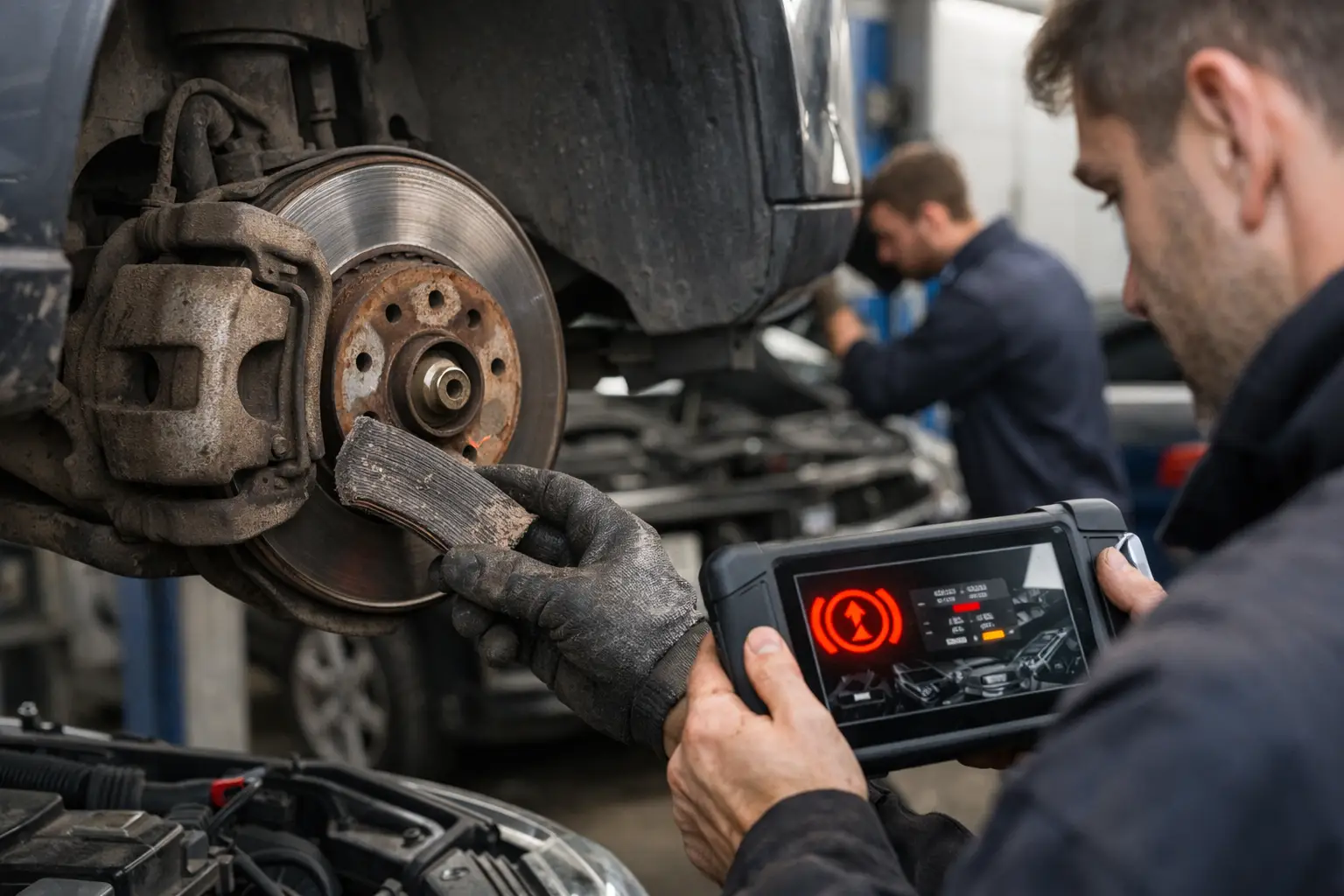
In most cases, the early signs are there. A squealing noise, grinding when braking, a warning light on the dashboard, or a brake pedal that feels less responsive than normal. We often see drivers come in after an MOT advisory or when the noise has become impossible to ignore. The good news is that if you catch it early, replacing brake pads is usually straightforward.
When brake pads replacement is needed
Brake pads wear down every time you use the brakes. That is normal. They are designed to take the friction so other parts in the braking system do not. The problem starts when the friction material gets too thin.
This usually happens because of mileage, driving style, and the type of journeys you do. Stop-start town driving will wear pads faster than steady motorway use. If you regularly carry passengers, drive hilly roads, or spend a lot of time braking in traffic, the pads can wear quicker than expected.
The most common sign is a high-pitched squeal. Some pads are designed to make this noise when they are getting low. It is a warning, not something to hope will go away on its own. If the sound turns into a grinding noise, the pads may already be worn right down. At that point, metal can start contacting the brake disc, and that is when the repair bill can climb.
Common symptoms drivers notice first
Most people do not check their brake pads visually. They notice how the car feels instead. If the car takes longer to stop, pulls slightly under braking, or the pedal feels different, it is worth getting it looked at.
A brake warning light can also point to wear, although warning lights are not always caused by the pads alone. Low brake fluid, sensor faults, or other braking issues can give similar symptoms. That is why a proper inspection matters. Guessing often leads to replacing the wrong part or missing the real fault.
We also see cars come in with one wheel making more noise than the others, or with uneven braking. In some cases, that is just worn pads. In others, there may be a sticking caliper, a worn disc, or a problem with the slider pins. This is why brake pads replacement should never be treated as fitting new pads and hoping for the best.
Squealing, grinding and poor braking
Squealing usually means the pads are low or glazed. Grinding usually means they are beyond the safe limit. Poor braking can mean the pads are contaminated, badly worn, or the discs are no longer in good condition.
It depends on how long the issue has been left. If caught early, you may only need pads. If left too long, the discs may also need replacing because the new pads will not bed in properly on a damaged surface.
Brake vibration or pulling to one side
If the steering wheel shakes or the brake pedal pulses when you slow down, the discs may be worn or uneven. If the car pulls to one side, there could be uneven pad wear or a seized component in the braking system.
That is not something to ignore. Even if the car still stops, it may not stop safely in an emergency.
What causes brake pads to wear out faster?
Some cars simply go through pads quicker than others, but driving conditions make a big difference. Short journeys are a common cause because the brakes are used more frequently and do not always get up to a stable operating temperature.
We often see faster wear when the car is used mainly for school runs, town driving, delivery work, or short commutes around Lowestoft and nearby areas. Another common issue is poor-quality parts fitted previously. Low-grade pads can wear unevenly, create more dust, and make more noise.
There is also the question of discs. New pads fitted to badly worn discs will not last as well as they should. The surfaces need to work together. If one part is already tired, the other part will suffer.
Brake pads replacement or full brake repair?
This is where clear advice matters. Not every car with worn pads needs a full brake overhaul. Equally, not every noisy brake can be fixed by changing pads alone.
A proper inspection should check pad thickness, disc condition, calliper movement, brake fluid level, and signs of uneven wear. If the discs are within safe limits and in decent condition, pads alone may be enough. If the discs are heavily lipped, scored, cracked, or under the minimum thickness, replacing both is usually the right call.
This is also why very low quotes can be misleading. Some garages price for pads only, then add extras once the wheels are off. A better approach is to inspect first, explain the condition in plain English, and tell you exactly what is needed and what can wait.
How long does brake pads replacement take?
In many cases, brake pads replacement can be done the same day, depending on parts availability and whether anything else is found during inspection. If the discs are damaged, a caliper is sticking, or a warning light points to a wider fault, it can take longer.
That does not mean the job is complicated every time. It just means brakes are safety-critical, so they need checking properly. Rushing the diagnosis is how problems get missed.
If you rely on one car for work, family trips, or the school run, downtime matters. A local garage that can inspect the brakes quickly and give a clear answer helps you make a decision without wasting half the week.
Can you keep driving with worn brake pads?
Technically, some drivers do for a while. Realistically, it is not worth the risk. Worn pads reduce braking performance, can damage the discs, and may lead to longer stopping distances. That risk gets worse in wet weather, heavy traffic, or emergency stops.
There is also the MOT side of it. If the pads are too worn, or braking performance is affected, the car may fail. We often see this when a driver has had an advisory on brakes and hoped it would last until the next service.
If the brakes are grinding, if there is a warning light, or if the car does not feel right under braking, book it in. Do not wait for the noise to get louder.
What to expect from a proper brake check
A good brake inspection should be simple and honest. The garage should look at the actual cause of the problem, not just the symptom. If there is noise, they should explain why. If the pads are worn unevenly, they should check what caused that wear. If the discs need replacing too, they should show you the reason.
That matters because brakes are not an area for guesswork. Fitting pads to a car with a sticking caliper may quieten it down for a short time, but the problem will come back. The right repair is the one that fixes the cause and gives you confidence the car is safe.
At AutoFix4u, that is how we approach it. Inspect first, explain clearly, and carry out the repair using quality parts with no surprise extras added later.
Brake pads replacement before it turns into a bigger job
Most brake problems start small. A faint squeal, a slight vibration, an MOT advisory that seems easy to ignore. Left alone, those same issues can turn into damaged discs, unsafe braking, and a car you do not want to drive.
If you have noticed noise, reduced braking performance, or a warning light, get it checked before it gets worse. Same-day slots may be available depending on the fault, and a quick inspection can often tell you whether you need simple brake pads replacement or a more complete repair.
If your car is due an MOT, making a noise when braking, or just does not feel as safe as it should, call now or get a quote. A clear answer early on is usually the cheapest and safest way forward.


2 thoughts on “Brake Pads Replacement: Signs You Shouldn’t Ignore”