
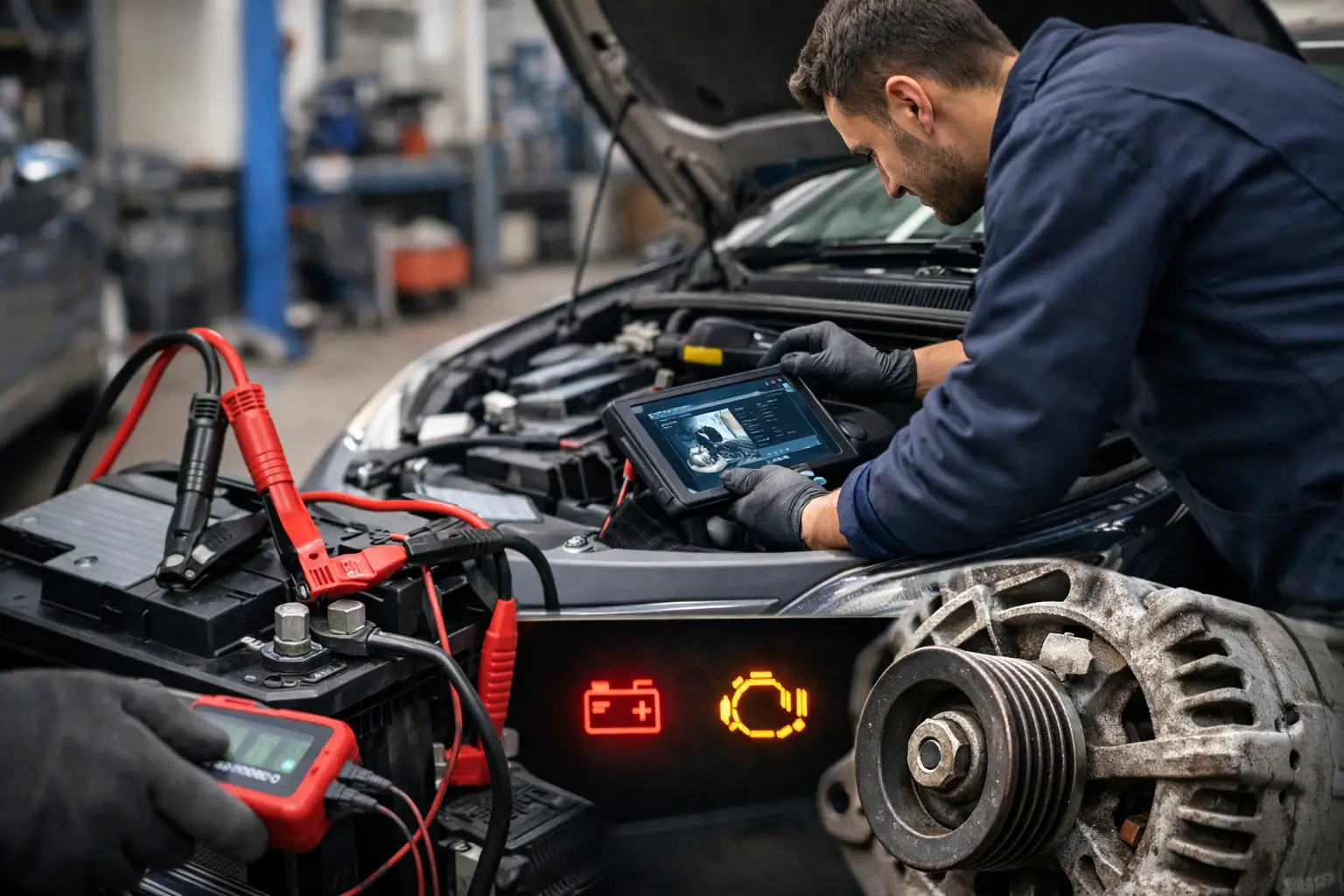
Car Not Starting Battery or Alternator UK
You turn the key or press the start button, and nothing happens – or the engine turns over slowly and then gives up. If you are searching for car not starting battery or alternator UK, the main thing you need is a clear answer fast. In most cases, it comes down to a flat battery, a charging fault, poor electrical connections, or a starter issue. The problem is that the symptoms can overlap.
We often see this when a driver has already had one jump start, the car worked for a bit, and then failed again the next day. That usually points to a deeper issue than just the battery going flat once. The right approach is simple – look at the symptoms, test the system properly, and fix the actual cause.
Car not starting battery or alternator UK – what is more likely?
If the car was fine yesterday and now will not start, the battery is usually the first suspect. Batteries wear out over time, especially in colder weather, after lots of short trips, or if the car has been standing. A weak battery may still power the dash lights but not have enough strength to crank the engine properly.
The alternator is different. Its job is to charge the battery while the engine is running and power the car’s electrical system. If the alternator is failing, the battery may go flat even if the battery itself is still serviceable. In that case, replacing the battery alone will not solve it for long.
So which is more likely? In most cases, a battery fault is more common. But if the battery has gone flat more than once, or you have warning lights and electrical problems while driving, the alternator becomes much more likely.
Signs it is the battery
A battery problem usually gives a few familiar warnings. The engine may crank slowly, as if it is struggling. You might hear a rapid clicking noise when you try to start. The dashboard may light up, but the starter does not have enough power to turn the engine properly.
Sometimes the central locking becomes weak, the lights look dim, or the car needs a jump start after being left overnight. We often see this issue when the battery is older and the weather turns cold. Batteries can seem fine one week and fail the next.
A flat battery can also be caused by something draining it. An interior light left on, a faulty module staying awake, or repeated short journeys can all leave the battery undercharged. That is why testing matters. You need to know whether the battery is worn out or whether something else caused it to go flat.
Signs it is the alternator
An alternator fault often shows up before the car stops starting altogether. The battery warning light may appear on the dashboard while driving. Headlights may flicker or look dull. The blower motor may slow down, electric windows may struggle, or warning lights may appear for no obvious reason.
Then the battery loses charge because it is no longer being properly topped up by the alternator. Eventually, the car may cut out or fail to restart after you switch it off. That is why alternator faults can catch people out. The car starts and drives for a while, so it seems fine, but the battery is being drained the whole time.
If the car starts with a jump but then goes flat again soon after, the charging system needs checking. The alternator itself may be faulty, but so might the belt, wiring, fuse, or battery connections.
Battery or alternator – the symptoms can overlap
This is where drivers get stuck. A bad battery can make the car behave as though the alternator has failed. A bad alternator can flatten a healthy battery and make it look like the battery is the problem. Poor earth connections can do much the same.
That is why guessing can become expensive. Fit a new battery when the alternator is not charging properly, and the new battery ends up flat as well. Replace the alternator without checking the battery condition, and the car may still struggle to start.
The sensible route is a proper diagnostic check. Voltage tests, battery health checks and charging tests tell you what is happening instead of leaving it to trial and error.
What you can check before calling a garage
There are a few simple checks that can help. First, look at the battery terminals. If they are loose or heavily corroded, the car may not get a proper connection. White or green build-up around the terminals is a common sign.
Next, pay attention to what happens when you try to start the car. If there is a single click, repeated clicking, slow cranking, or no crank at all, that gives useful clues. Also think about what happened before the problem started. Did the battery warning light come on while driving? Has the car been doing lots of short runs? Has it needed a jump start recently?
If you have access to jump leads and the car starts with a jump, that still does not confirm the battery is the only fault. It simply tells you the car was short of power at that moment. If it goes flat again, the cause still needs finding.
Avoid repeated jump starts without diagnosis. It might get you moving once, but it can also leave you stranded again at the worst time.
When the problem is not the battery or alternator
Not every non-start is a battery or alternator issue. We also see starter motor faults, failed ignition switches, blown fuses, damaged wiring and immobiliser problems. On some vehicles, the engine cranks normally but will not fire because of a fuel or sensor issue.
That is why the exact symptom matters. If the engine does not turn at all, the fault is often in the battery, wiring, starter or related electrical system. If the engine turns over strongly but does not start, the fault may be elsewhere.
This matters because the wrong assumption wastes time. If you rely on one car for work, school runs or caring responsibilities, you need the real cause identified quickly.
How a garage diagnoses it properly
At a working garage, this is not a guesswork job. The first step is checking battery voltage and condition. A battery can show some voltage and still be too weak under load, so it needs testing properly. After that, the charging system is checked to see whether the alternator is producing the correct output.
The cables and earths should also be inspected. A poor connection can create starting and charging faults that look like failed parts. If those basics check out, attention turns to the starter motor, fuses, relays and any stored fault codes.
This is the difference between replacing parts and solving the problem. A good diagnosis should tell you what has failed, why it happened, and what needs doing next.
Car not starting battery or alternator UK – when to book diagnostics
If the car has needed more than one jump start, book diagnostics. If the battery warning light has been on, book diagnostics. If you have fitted a battery recently and the same problem is back, definitely book diagnostics.
The same applies if the car starts sometimes and not others. Intermittent faults are common with batteries, alternators, wiring and starters. They rarely fix themselves, and they usually fail fully when you are in a rush.
For drivers around Lowestoft and nearby areas, this is the sort of fault worth dealing with quickly. Left too long, a weak charging system can damage a battery, and repeated breakdowns become more likely.
What the fix usually involves
If the battery is the cause, replacement is often straightforward. The key is fitting the correct battery for the vehicle and checking that the charging system is healthy afterwards. There is no point fitting a new battery into a car that is not charging it.
If the alternator is at fault, the repair may involve replacing the unit, checking the drive belt, and making sure wiring and connections are sound. In some cases, the issue is smaller, such as a loose terminal or poor earth strap.
That is why it depends on the test results. The aim should always be the same – stop the non-start problem from coming back, not just get the engine going once.
If your car is not starting and you are not sure whether it is the battery or alternator, get it checked properly rather than guessing. A clear diagnosis, honest advice and the right repair first time will save time, money and another morning stuck on the drive.


