
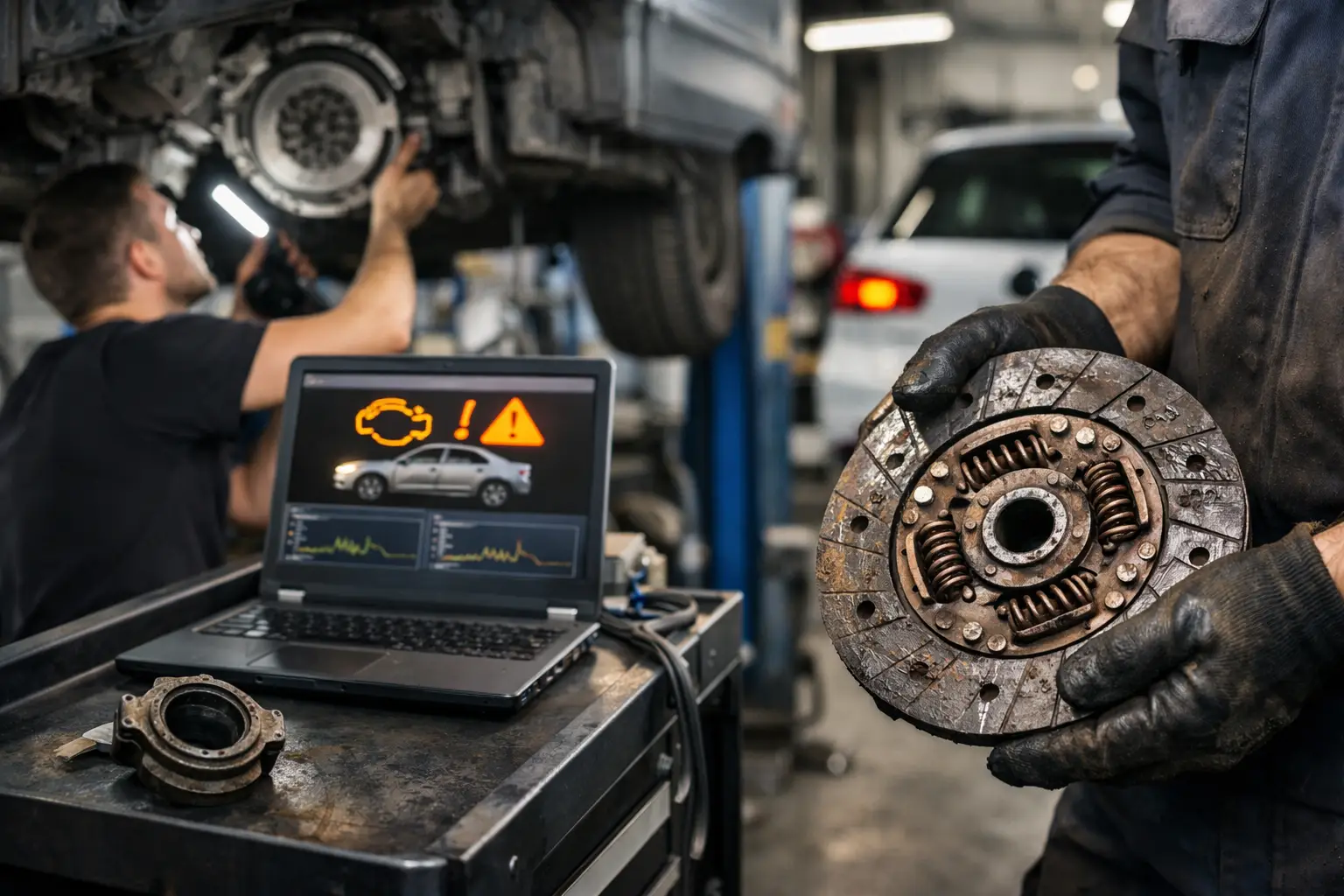
Signs Your Clutch Is Failing UK Drivers Notice
If your car suddenly feels harder to drive in traffic, pulls poorly when you accelerate, or struggles to go into gear, these are common signs your clutch is failing UK drivers often notice before a breakdown. The trouble is, clutch wear usually starts gradually. Many people get used to it until the problem gets worse, then one morning the car will not move properly at all.
We often see this issue when a driver has been putting up with small warning signs for weeks. The clutch may still work some of the time, but it is no longer doing its job properly. If you rely on one car for work, school runs or daily travel, leaving it too long can turn a manageable repair into a recovery job.
Common signs your clutch is failing in the UK
A failing clutch does not always mean the pedal drops to the floor or the car stops dead straight away. In most cases, the symptoms start with changes in how the car feels.
One of the most common signs is slipping. You press the accelerator, the engine revs rise, but the car does not pick up speed as it should. This usually happens most in higher gears or when going uphill. Drivers often describe it as the car sounding busy but not actually moving with any strength.
Another clear sign is difficulty selecting gears. If first gear or reverse has started feeling stiff, notchy or reluctant, the clutch may not be disengaging fully. Sometimes customers assume it is a gearbox fault, but often the clutch is the root cause. That is why proper diagnosis matters before any repair is recommended.
You may also notice the biting point has changed. If the clutch now bites very high up, that can point to wear in the clutch plate. If it bites unusually low or feels inconsistent, there may be a hydraulic issue affecting the clutch operation.
A heavy clutch pedal is another warning sign. If the pedal feels much harder than normal, there could be wear in the pressure plate, cable issues on older vehicles, or trouble with the release mechanism. On the other hand, if the pedal suddenly feels too soft or spongy, that can suggest a hydraulic fault such as a leaking master or slave cylinder.
Noise matters too. If you hear a squeal, rumble or grinding sound when pressing or releasing the clutch pedal, that often points to wear in the release bearing or related parts. It does not always mean total clutch failure is immediate, but it should not be ignored.
What usually causes clutch problems
The clutch sits between the engine and gearbox. Its job is to transfer power smoothly so you can pull away, change gear and stop without stalling. Over time, the friction material wears down, just like brake pads do.
In most cases, clutch wear comes down to mileage and driving style. Stop-start traffic, frequent hill starts, towing, and holding the car on the clutch all shorten its life. That is not a criticism – it is simply how many local cars are used. If you spend a lot of time in town traffic or on short daily runs, the clutch works hard.
Sometimes the fault is not just the clutch plate itself. The pressure plate, release bearing, flywheel or hydraulic system can all cause similar symptoms. This is why replacing parts based on guesswork can become expensive. We often see cars where the symptom sounded like a worn clutch, but testing showed the real issue was with the hydraulics or gearbox linkage.
Signs your clutch is failing UK motorists often miss
Some signs are easy to dismiss because the car still drives. A burning smell after manoeuvring or reversing uphill is one example. If the smell keeps returning, the clutch may be overheating and slipping.
Judder when pulling away is another one. The car may shake or vibrate as you lift the clutch pedal. This can happen because of clutch wear, contamination, hot spots on the flywheel, or engine mounting issues. It depends on the vehicle, which is why a quick look is better than guessing.
Poor fuel economy can also creep in. If the clutch is slipping, the engine can work harder without transferring power efficiently to the wheels. Most drivers do not link that with the clutch straight away.
Then there is the simple feeling that something is off. The pedal travel changes. The gear changes feel less clean. Pulling away is less smooth than it used to be. Those small changes are often the first stage of a bigger problem.
Can you keep driving with a failing clutch?
Sometimes, yes – for a short time. But it depends on the symptom and how quickly it is getting worse.
If the clutch is only just starting to slip or the gears are occasionally difficult to engage, the car may still be driveable. The risk is that clutch problems rarely fix themselves. Wear usually gets worse, and it can deteriorate quickly once slipping starts. A car that manages local trips today may struggle badly next week.
If the car will not go into gear properly, moves reluctantly, or smells strongly of burning, it is best not to keep using it unless absolutely necessary. You could end up stranded or cause further damage to related components.
For people around Lowestoft and nearby areas, this is often where fast diagnostics make the difference. It is better to get the fault checked while the car still moves than wait until recovery is needed.
What a garage should check first
A proper clutch diagnosis should start with the symptoms you have noticed, then a road test if safe, followed by checks on pedal feel, gear engagement and the hydraulic system.
From there, the garage can work out whether the fault is likely to be clutch wear, a release bearing issue, a master or slave cylinder fault, gearbox linkage trouble, or a flywheel problem. These faults can overlap, which is why clear diagnosis matters.
This is also where honest advice counts. Not every difficult gear change means a full clutch replacement. Equally, not every temporary improvement means the issue has gone away. A good local garage will explain what has failed, what needs doing now, and whether any related parts should be replaced at the same time for long-term reliability.
When clutch replacement is the right fix
If the friction plate is worn or the clutch is slipping under load, replacement is usually the only proper fix. In most cases, the clutch kit includes the clutch plate, pressure plate and release bearing. Depending on the vehicle, the flywheel may also need inspection or replacement if it is damaged or excessively worn.
This can feel like a big repair, but delaying it often creates more inconvenience than the repair itself. The real issue for most drivers is not the part – it is losing use of the car unexpectedly.
If your vehicle is used daily for commuting, family travel or work, it is worth acting when the warning signs start. Same-day slots may be available depending on the fault and parts needed, but the earlier it is checked, the more options you usually have.
What to do next if your clutch feels wrong
If your car is revving without pulling properly, struggling to go into gear, making noise from the clutch area, or developing a high biting point, get it looked at before it leaves you stuck. Even if it turns out not to be the clutch itself, those symptoms point to a fault that needs attention.
At AutoFix4u, we take a diagnostic-first approach. That means checking the actual cause, explaining it in plain English, and giving you a clear repair plan with no surprise extras. If you are in Lowestoft or nearby and your clutch does not feel right, call now or get a quote. The sooner it is checked, the easier it usually is to deal with.
Most clutch problems give you some warning. The key is not to ignore it and hope for the best.


