
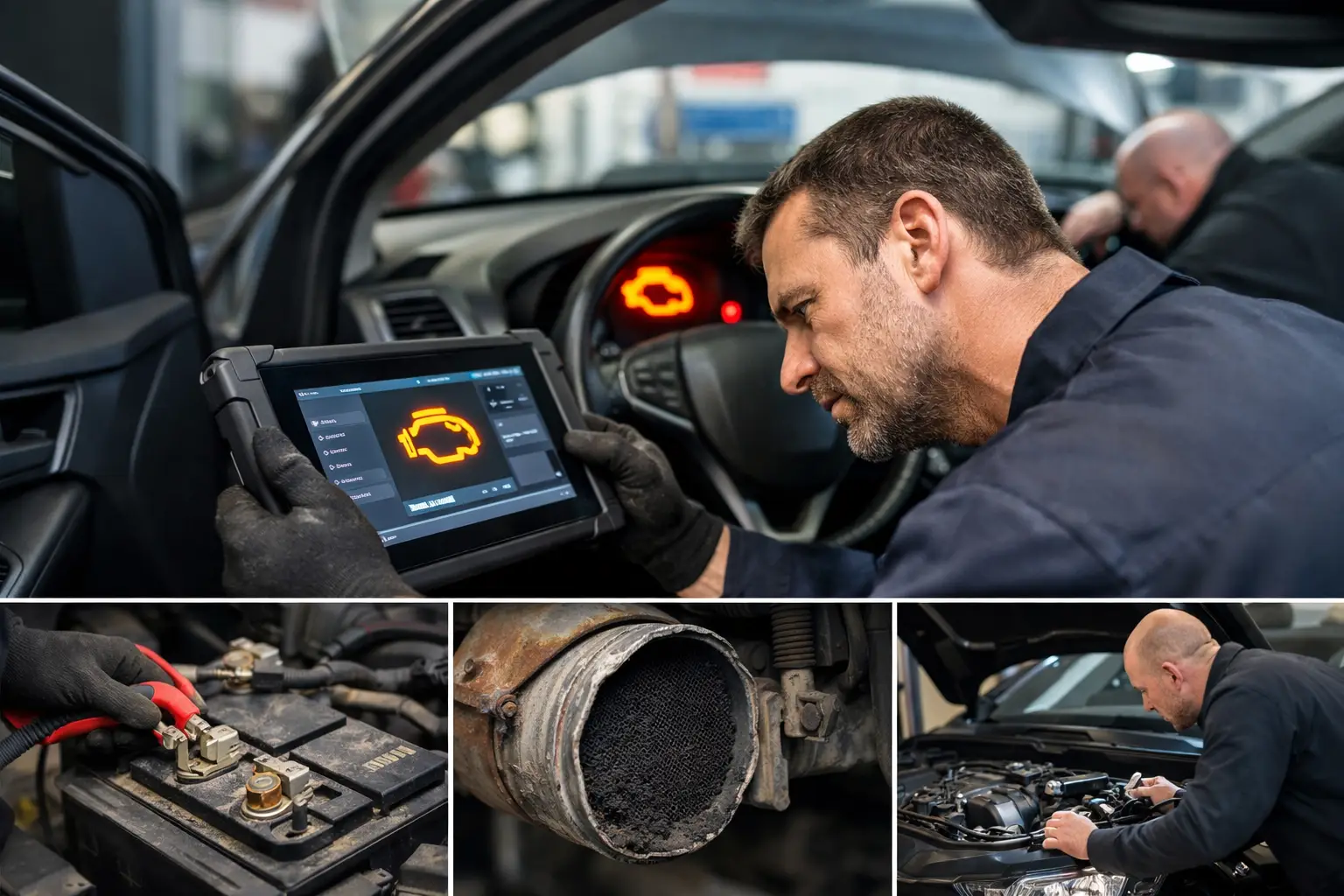
Vehicle Health Check Lowestoft for Safer Driving
A dashboard light that comes and goes, brakes that feel slightly different, or a noise on the school run can be easy to put off. But those small changes are often the first sign of a fault developing. A vehicle health check Lowestoft drivers can book locally gives you a clear picture of your car before a minor issue turns into a breakdown, an MOT failure or an expensive repair.
For most people, the car is not a spare. It gets you to work, takes the children where they need to go and covers everyday journeys around Lowestoft, Oulton Broad, Beccles and the surrounding area. When something does not feel right, you need straight answers and a practical repair plan, not guesswork.
What a vehicle health check actually looks at
A vehicle health check is a condition check of the key parts that affect safety, reliability and day-to-day driving. It is not the same as an MOT, although it can highlight issues likely to cause an MOT failure. It is also not always a replacement for a full service, which follows the maintenance schedule for your particular vehicle.
At a working garage, the check starts with the problem you have noticed. If the engine warning light is on, the car pulls to one side, it is losing power or there is a knocking sound, that information matters. We then inspect the relevant areas properly rather than treating every check as a tick-box exercise.
In most cases, this includes checking tyres for condition, tread and uneven wear; brakes for wear and signs of binding; fluid levels and visible leaks; lights and wipers; battery condition; steering and suspension components; exhaust condition; and obvious concerns around belts, hoses and under-bonnet components. Where a warning light or running problem is involved, diagnostic equipment may be needed to read fault codes and live vehicle data.
A fault code is a clue, not an automatic diagnosis. For example, a code relating to a sensor does not always mean that sensor has failed. The cause could be damaged wiring, a blocked component, an air leak or another issue affecting the reading. This is why a diagnostic-first approach saves time and helps avoid replacing good parts.
When should you book a vehicle health check in Lowestoft?
You do not need to wait for a breakdown. A check is sensible before a long journey, after a warning light appears, when buying a used car, or if your MOT is approaching and you want to deal with likely problems in advance.
We often see vehicles after the driver has noticed a small change for weeks or months. A slight squeal when braking may be worn brake pads. A vibration through the steering wheel could be tyre wear, wheel balance, a suspension issue or a brake problem. A slow start may simply be a weakening battery, but it could also point to charging or electrical faults. The earlier the cause is identified, the more options there usually are.
Book in promptly if you notice any of the following:
- An engine warning light, DPF light, battery light or other dashboard warning
- Loss of power, poor acceleration or the vehicle going into limp mode
- Grinding, squealing, knocking or clunking noises
- Brakes that feel soft, pull the car to one side or require more pedal pressure
- Difficulty starting, repeated flat batteries or dimming lights
- A burning smell, fuel smell, visible leak or smoke from the exhaust
Some faults are more urgent than others. A red warning light, brake problem, overheating engine or strong fuel smell should not be ignored. If you are unsure whether it is safe to drive, stop somewhere safe and contact a local garage for advice. Continuing to drive can turn a manageable repair into a much larger one.
The common problems we find before they get worse
Brakes and tyres
Brakes and tyres are among the most common areas where a health check picks up issues early. Pads wear gradually, so drivers often adapt without realising their stopping distance has changed. Discs can corrode or wear unevenly, particularly where a car does short journeys or sits unused for periods.
Tyres can look acceptable at a quick glance but still show cracking, low pressure, a damaged sidewall or uneven wear. Uneven wear is worth investigating because it may point to incorrect wheel alignment, worn suspension parts or a tyre that has been run underinflated. Replacing a tyre without checking the reason for the wear can mean the same problem returns.
Warning lights and engine performance
A warning light does not tell you exactly what has failed. It tells you the vehicle has detected something outside its expected operating range. This could be a simple issue, but it needs checking before it affects performance, fuel economy or emissions.
DPF faults are a common example. The diesel particulate filter collects soot from the exhaust. It normally clears that soot during a regeneration cycle, often when the car has a suitable run at steady speed. Short, low-speed journeys can interrupt that process. However, a blocked DPF can also be the result of another fault, such as a failed sensor, an EGR issue or an engine problem creating too much soot. Cleaning or regenerating the filter without finding the root cause may only provide a short-term result.
Battery, charging and electrical faults
Modern vehicles rely heavily on electrical systems. A battery can test weak even if the car still starts, especially as colder weather arrives. Corroded terminals, a failing alternator or a drain on the electrical system can all leave you with a car that will not start when you need it most.
A proper check helps separate a worn battery from a charging fault. That matters because fitting a new battery will not solve the issue if the alternator is not charging it correctly.
Suspension, steering and exhaust problems
A knock over bumps, vague steering or a vehicle that feels unsettled on the road can be caused by worn suspension or steering components. These parts do not always fail suddenly, but continued wear can affect tyre life, handling and MOT results.
Exhaust faults are also easy to miss until the car becomes noisy or the engine warning light appears. A leak, damaged mounting or emissions-related fault may affect how the vehicle drives as well as whether it passes its MOT.
Health check, service or diagnostics: which one do you need?
It depends on the problem. If your car is driving normally and you want reassurance before a trip or MOT, a vehicle health check may be the right starting point. If it is due routine maintenance based on mileage or time, a service is more suitable. A service covers scheduled items such as engine oil and filters, depending on the level of service and manufacturer requirements.
If a warning light is on, the vehicle is in limp mode, it will not start or it has a clear running fault, book diagnostics. A visual inspection alone cannot properly identify many modern engine and electrical problems. Diagnostics allow the garage to test the system, interpret the data and confirm what repair is actually needed.
There can be overlap. A health check might identify an issue that needs diagnostics, or a service may reveal worn brakes or tyres. The key is being told what has been found, why it matters, and what should be done now versus what can be monitored.
What to expect from a local garage
You should not be left wondering what has been checked or pressured into work you do not understand. At AutoFix4u, the aim is to identify the cause, explain it in plain English and give you a clear repair plan. If a repair is needed, you should know what part of the vehicle is affected, what the sensible options are and what work is being recommended before it goes ahead.
There are trade-offs in some repairs. A tyre may be legal but nearing the point where replacement is sensible before winter. Brake pads may have useful life left, while discs may be worn enough to plan both together. A battery may pass a basic test but show signs of weakening. Honest advice means explaining the condition, the likely risk and the timing, rather than presenting every finding as an emergency.
Same-day help may be possible for straightforward faults and urgent checks, but it depends on the diagnosis, parts availability and how much repair work is required. Complex faults should be diagnosed properly rather than rushed.
Do not wait for the car to make the decision for you
If your vehicle has started behaving differently, arrange a check while it is still getting you from A to B. A quick inspection can catch worn brakes, weak batteries, tyre problems and developing faults before they leave you stranded or facing an avoidable MOT failure.
Contact AutoFix4u to book a vehicle health check or diagnostics appointment in Lowestoft. You will get clear advice, transparent pricing and a practical next step based on what your car actually needs.