Jump Start Versus Battery Replacement Explained
Your car refuses to start before work. You turn the key or press the start button, but the engine barely turns over. Perhaps you hear rapid clicking instead. A jump start might help, but will it solve the problem?
Understanding jump start versus battery replacement helps you avoid unnecessary repairs. A flat battery does not always mean you need a new one. Sometimes another electrical fault causes the problem.
At AutoFix4u Garage Lowestoft, we recommend checking the battery and charging system before replacing parts. After all, the right diagnosis can prevent another breakdown.
Jump start versus battery replacement: what is the difference?
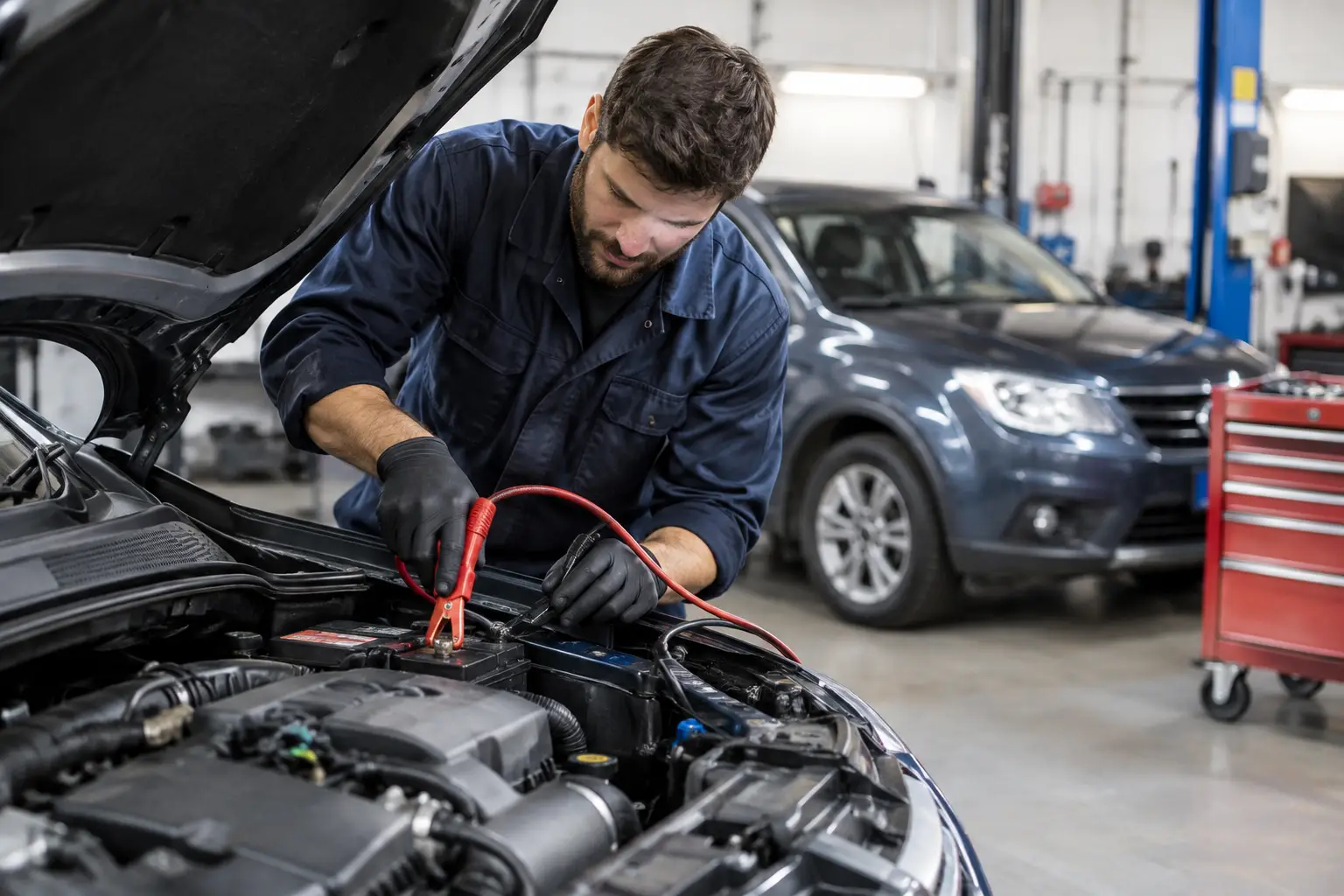
A jump start supplies extra electrical power to help your engine start. You can use a suitable jump pack or another vehicle, following the manufacturer’s instructions.
However, a jump start does not repair a weak battery. It simply provides temporary starting assistance.
Battery replacement solves a different problem. When the old battery can no longer store enough energy, fitting the correct new unit restores reliable starting.
Even so, a new battery will not repair a faulty alternator or an electrical drain.
Therefore, you need to identify why the battery went flat.
When a jump start may be enough
Sometimes a healthy battery loses charge for a simple reason.
For example, you might leave an interior light on overnight. Alternatively, the vehicle may remain unused for several weeks.
Cold weather can also expose a weak or partly discharged battery.
In these situations, a jump start may help you get moving again.
However, starting the engine does not fully recharge the battery. A deeply discharged battery may need a suitable external charger.
A battery drained by an interior light
Imagine leaving the interior light on overnight.
The following morning, your engine struggles to start. Yet the battery worked normally the previous day.
A jump start may restore starting power temporarily.
Next, a proper recharge and battery test can confirm its condition.
If the battery passes testing, replacement may not be necessary.
A car that has been parked for weeks
Vehicles still use small amounts of electricity while parked.
Alarm systems, control modules and other electronics may continue drawing power.
Consequently, the battery can gradually lose charge.
A jump start might get the engine running. Nevertheless, you should check whether the battery still holds sufficient power.
Short journeys and battery problems
Starting a car requires considerable electrical energy.
The alternator normally helps restore that energy while the engine runs.
However, repeated short journeys may not provide enough charging time.
This problem often becomes more noticeable during winter.
A battery test can reveal whether the battery needs charging or replacing.
Signs your car battery needs replacement
Not every flat battery needs replacement. However, several warning signs suggest the battery is deteriorating.
Slow engine cranking
A healthy battery should provide enough power for normal engine starting.
When the engine turns over slowly, the battery may lack sufficient capacity.
You might notice the problem more often on cold mornings.
Nevertheless, poor connections or starter motor faults can produce similar symptoms.
Therefore, testing remains important.
Repeated jump starts
One jump start after an accidental discharge is understandable.
However, needing assistance every few days suggests an underlying problem.
The battery may no longer hold charge. Alternatively, something could be draining electricity while the vehicle sits parked.
Repeated jump starts do not identify the cause.
Instead, arrange a battery and charging system inspection.
An ageing battery
Many car batteries last approximately three to five years. However, some last longer, while others fail sooner.
Battery life depends on usage, temperature, charging conditions and maintenance.
If an older battery struggles to start the car, testing can help determine whether replacement makes sense.
Visible battery damage
A swollen battery case, leaking fluid or significant damage requires professional attention.
Do not attempt a jump start if the battery appears unsafe.
Instead, arrange assistance and allow a technician to inspect it.
A damaged battery can present serious safety risks.
The alternator could be the real problem
Your alternator generates electricity while the engine runs.
It supplies vehicle electrical systems and helps recharge the battery.
However, a failing alternator may leave the battery without sufficient charging power.
As a result, your car might start after a jump but stop running later.
Other warning signs include dim headlights, electrical problems and a dashboard charging warning.
The red battery symbol often indicates a charging system fault rather than a failed battery.
Therefore, replacing the battery immediately could waste money.
Our alternator fault guide explains common charging problems.
If the charging warning appears while driving, arrange assistance promptly. The vehicle may stop once the battery loses its remaining charge.
What if your battery keeps going flat overnight?
An electrical drain can discharge a healthy battery while the engine remains off.
Technicians call this a parasitic battery drain.
For example, a faulty control module might continue using power after you lock the car.
Likewise, damaged wiring or an aftermarket accessory could create unwanted electrical consumption.
The battery may recharge successfully. However, the same problem returns after another night.
In this situation, a new battery will not necessarily solve the fault.
How a garage checks an electrical drain
First, the technician checks the battery condition.
Next, they inspect the charging system and relevant electrical connections.
If necessary, they measure the current the vehicle uses while parked.
These tests help locate unusual electrical consumption.
Once the technician identifies the cause, they can recommend the appropriate repair.
Jump start versus battery replacement on modern cars
Modern vehicles often use advanced battery management systems.
Some also feature stop-start technology.
Consequently, the correct replacement battery specification matters.
AGM and EFB batteries
Many stop-start vehicles use AGM or EFB batteries.
These batteries support the electrical demands of modern charging systems.
However, they are not automatically interchangeable.
The manufacturer specifies the appropriate battery type and capacity.
Using an unsuitable battery may lead to charging problems or reduced service life.
Battery registration and coding
Some vehicles require battery registration after replacement.
This process informs the vehicle’s electronic system about the new battery.
Other vehicles may need additional coding or system adjustments.
Not every model requires these procedures.
However, technicians should check the manufacturer’s requirements before fitting a replacement.
Our Battery Replacement Lowestoft service page explains how we can help.
How AutoFix4u diagnoses battery and starting faults
Accurate testing helps separate battery problems from other starting faults.
At AutoFix4u Garage Lowestoft, we focus on the symptoms and relevant system checks.
Step 1: Check the starting symptoms
First, we discuss what happens when you try to start the engine.
Does it crank slowly? Do you hear clicking? Perhaps the dashboard lights work, but the engine does not turn.
These details help identify which components need attention.
Step 2: Test the battery
Next, we check the battery’s condition and available starting performance.
A voltage reading alone cannot always confirm battery health.
Therefore, additional testing may help determine whether the battery can supply sufficient power.
Step 3: Inspect the charging system
We check whether the alternator provides suitable charging output.
Additionally, we inspect relevant connections and electrical components.
This helps identify problems that could discharge a new battery.
Step 4: Investigate other faults
Sometimes the battery passes every test.
In that case, the starting problem may involve the starter motor, wiring or another electrical component.
Further investigation can identify the actual cause.
Step 5: Recommend the correct repair
Once we understand the fault, we explain the findings.
You can then decide whether to recharge the battery, replace it or repair another component.
Our aim is to recommend the work your vehicle actually needs.
Is it safe to drive after a jump start?
Sometimes you can drive to a suitable repair location after a successful jump start.
However, this depends on the reason the battery went flat.
If the vehicle runs normally and shows no warning lights, a cautious journey may be reasonable.
Nevertheless, arrange battery and charging system testing.
Do not assume the alternator can fully recharge a deeply discharged battery during a short drive.
When you should stop driving
Stop safely and seek assistance if the red charging warning appears.
The same applies if electrical systems begin failing or the engine runs poorly.
A burning smell, visible battery damage or unusual smoke also requires immediate attention.
Continuing your journey could create additional problems.
Why battery testing can save money
Replacing a battery without checking the cause may seem convenient.
However, it can become expensive when the same problem returns.
For example, a faulty alternator may discharge your replacement battery.
Likewise, an electrical drain can leave a brand-new battery flat overnight.
Proper testing helps avoid these situations.
Furthermore, it provides a clearer explanation of the required repair.
Sometimes the battery only needs charging. In other cases, replacement offers the most reliable solution.
The correct answer depends on the test results.
Battery problems and regular servicing
Routine servicing helps identify developing vehicle problems.
However, a standard service does not always include detailed electrical fault diagnosis.
If your car struggles to start, mention the symptoms when booking.
A technician can then recommend suitable battery and charging checks.
Regular maintenance also helps keep electrical connections and related components in good condition.
Nevertheless, even well-maintained vehicles can develop unexpected battery faults.
Jump start versus battery replacement: which should you choose?
A jump start may be suitable when a healthy battery loses charge accidentally.
However, replacement becomes more likely when testing confirms battery deterioration or internal failure.
If the battery repeatedly loses charge, investigate the charging system and electrical consumption first.
For modern vehicles, always choose the correct battery specification.
Above all, avoid replacing parts based on guesswork.
An accurate diagnosis gives you a clearer repair plan.
Book Battery Diagnostics in Lowestoft
Does your car struggle to start in the morning?
Perhaps you need repeated jump starts, or the battery warning light keeps appearing.
AutoFix4u Garage Lowestoft can inspect battery and charging problems and explain the next steps.
We help drivers in Lowestoft, Oulton Broad, Carlton Colville, Kessingland and surrounding areas.
Same-day appointments may be available depending on workshop capacity.
Call AutoFix4u Garage Lowestoft: 07778 979802
WhatsApp: Message AutoFix4u Garage
Request an estimate: Contact AutoFix4u Garage Lowestoft
When comparing jump start versus battery replacement, remember that starting the engine is only part of the solution. Finding the cause helps prevent the same problem from leaving you stranded again.