Gearbox Repair Symptoms and Diagnosis
When a gearbox starts to go wrong, most drivers notice it in the way the car feels before they see any warning light. A gear change that used to be smooth becomes clunky. The engine revs but the car does not pick up speed properly. You may hear whining, grinding or knocking that was not there before. That is where gearbox repair symptoms and diagnosis matter. Catching the signs early often means a smaller repair, less downtime, and less chance of being left stuck at the side of the road.
At a working garage, we see this problem in all sorts of ways. Some cars come in because reverse is hard to engage. Others arrive after the driver has ignored a small judder for weeks and now the vehicle will barely move. In most cases, the gearbox itself is not the first thing to guess at. The proper job is to identify the fault properly, confirm the cause, and then decide whether it needs adjustment, parts replacement, fluid work or a full repair.
Common gearbox repair symptoms and diagnosis checks
The most obvious symptom is difficulty changing gear. In a manual car, that might mean first or reverse feels stiff, the gear lever resists movement, or the car crunches when selecting a gear. In an automatic, it may hesitate, thump into gear, slip between gears, or stay in one gear longer than it should.
This usually happens because something in the system is worn, out of adjustment or not operating at full pressure. On a manual, the issue may be the clutch not disengaging properly, worn linkage parts, internal gearbox wear or low gearbox oil. On an automatic, it could be fluid condition, a solenoid fault, internal wear, or an electrical problem affecting shift control.
Another common sign is noise. A whining sound that rises with speed can point to worn bearings. Grinding during gear changes may suggest synchroniser wear in a manual gearbox. A knock or clunk when drive takes up can sometimes be gearbox related, but it can also come from driveshafts, engine mounts or suspension components. That is why guessing is expensive. Proper diagnosis saves time and avoids changing parts that are not the cause.
Fluid leaks are another warning sign people often put off. If you see oil under the car and the gearbox starts behaving differently, the two may well be linked. Low fluid can quickly turn a minor issue into a major repair. Not every leak is from the gearbox itself, though. Engine oil, power steering fluid and coolant can all drip in nearby areas, so it needs checking rather than assuming.
What causes gearbox faults?
Wear and age are the simple answers, but there is usually more to it. A gearbox works under constant load. Every start, stop, hill start and gear change puts stress through bearings, gears, synchros, seals and linkages. Over time, parts wear down. If the oil is old, low or contaminated, that wear speeds up.
We often see gearbox issues when another fault has been left too long. A worn clutch can cause difficult shifting and damage related parts. A faulty engine mount can make the whole drivetrain move more than it should, leading the driver to think the gearbox is failing. On automatic vehicles, electrical faults can also play a part. If the control system is not receiving the right information, shift quality can suffer even if the internal gearbox is still in decent condition.
Driving style matters too, but it is not always about abuse. Regular towing, heavy stop-start traffic and lots of short journeys all add strain. That does not mean the driver has done anything wrong. It just means some vehicles need attention earlier than others.
How gearbox diagnosis should be done
Good diagnosis starts with the symptom, not the assumption. If a customer says the car is hard to get into second gear when cold, that tells us more than simply saying the gearbox is broken. We want to know when it happens, whether it changes when the engine warms up, whether there are noises, warning lights or fluid leaks, and whether the problem is constant or occasional.
From there, the checks are practical. A road test often tells you a lot. Does it crunch on downshifts? Does it jump out of gear? Does the automatic box flare the revs before changing? Does the issue happen under load, at low speed or only from cold? These details narrow things down quickly.
Manual gearbox diagnosis
On a manual vehicle, the gearbox is only one part of the picture. The clutch operation must be checked first. If the clutch is dragging, the gearbox may be blamed unfairly. We also inspect the gear linkage, gearbox oil level and condition, mounts, and listen for bearing noise. If the problem points inside the gearbox, then the likely causes are worn synchronisers, bearings or damaged gears.
A stiff gear lever does not always mean the gearbox needs rebuilding. Sometimes the fault is in the linkage or cable. Sometimes poor clutch release is the real cause. This is why a proper inspection matters before any repair plan is given.
Automatic gearbox diagnosis
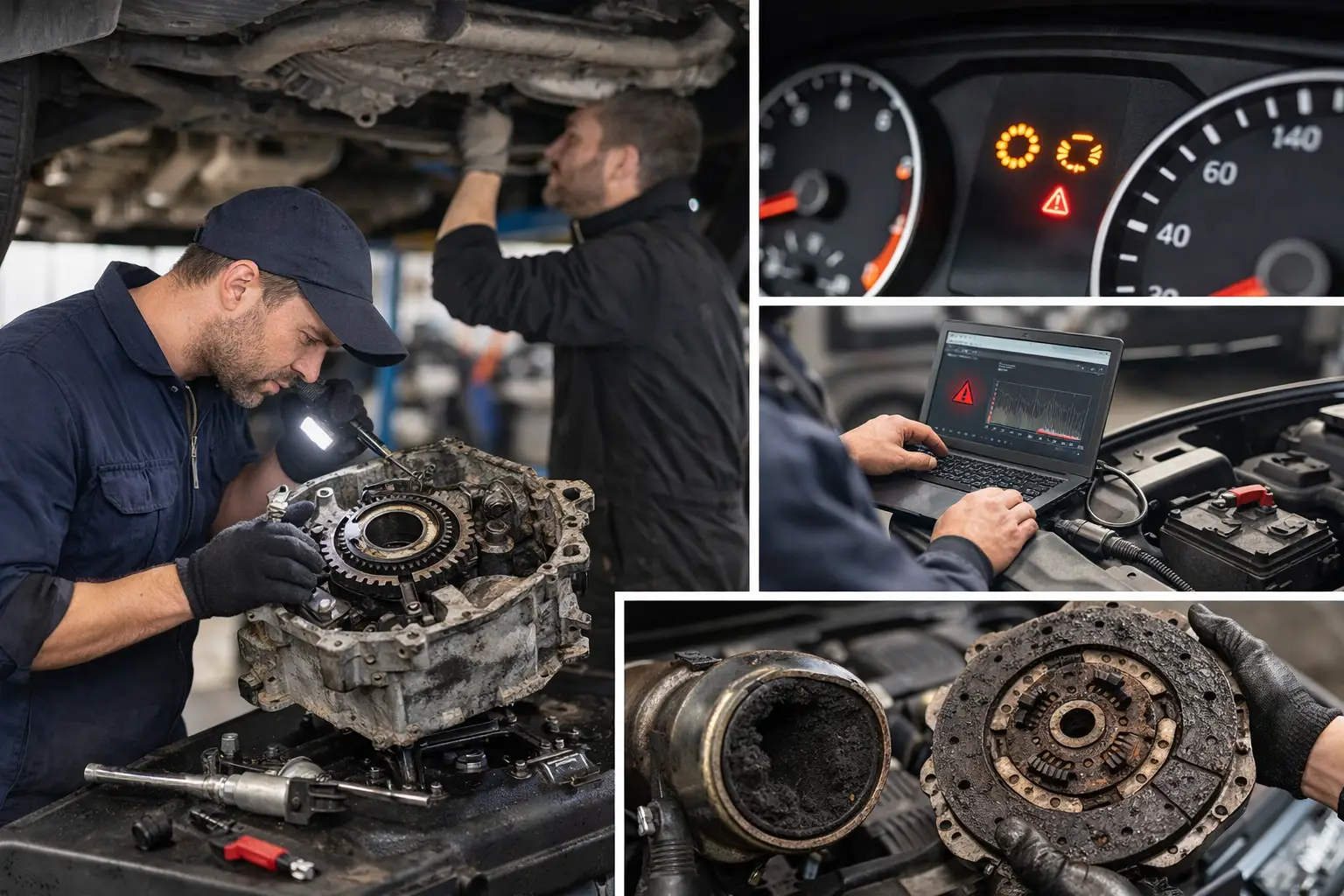
Automatic gearboxes need a slightly different approach. Fluid level and condition matter a lot, but so do electronic controls. Diagnostic equipment can help identify stored fault codes, sensor problems and shift control issues. That said, fault codes are only one part of the job. They point you in a direction. They do not replace proper testing.
If an automatic gearbox is slipping, jerking or going into limp mode, the cause could be hydraulic, electrical or mechanical. It depends on the symptoms. Burnt-smelling fluid is a bad sign. Delayed engagement when selecting drive or reverse is another. In some cases, a service issue is part of the problem. In others, wear inside the gearbox is already advanced.
When to stop driving and get it checked
If the car still moves, many people keep using it and hope for the best. Sometimes you can get away with that for a short time. Often, you just make the final bill worse.
You should get the vehicle checked as soon as possible if it is slipping out of gear, struggling to select gears, making loud grinding or whining noises, leaking fluid, or showing a gearbox-related warning light. If the car loses drive completely, do not keep forcing it. That can turn a repairable fault into a much bigger job.
The same applies if the problem comes and goes. Intermittent gearbox faults are common, especially with electrical issues on automatic models. Just because it behaves normally one day does not mean the fault has gone away.
Repair or replacement – what is the right answer?
This depends on the fault, the condition of the vehicle, and how early the issue is caught. Not every gearbox problem means a full replacement. A leak, worn linkage part, clutch-related problem or fluid issue can sometimes be dealt with without major internal work.
If the gearbox has internal damage, the choice is usually between repair, rebuild or replacement. The right route depends on parts availability, labour involved, and whether the rest of the unit is in good enough condition to justify repair. A proper diagnosis comes first. There is no honest way to recommend the best option without knowing what has actually failed.
For most drivers, the priority is simple. They want the fault explained clearly, a realistic repair plan, and no surprise extras. That is exactly how it should be handled.
Gearbox repair symptoms and diagnosis in real-world terms
Most customers do not come in saying their synchroniser rings are worn or a shift solenoid has failed. They say the car feels wrong. It crunches going into third. It hesitates pulling away from roundabouts. It thumps into drive when parking. That is the real starting point.
The job of a garage is to translate those symptoms into a clear cause and a sensible fix. Sometimes the answer is straightforward. Sometimes it takes road testing, inspection and diagnostic checks to separate a gearbox fault from a clutch, mount or electrical issue. Either way, the goal is the same – fix the cause, not just the symptom.
If your car is showing any of these signs and you are in Lowestoft or nearby, get it looked at before it gets worse. At AutoFix4u, we check the fault properly, explain it in plain English, and give you a clear next step with transparent pricing and no pressure. Same-day diagnostic slots may be available – call now or visit https://autofix4u.co.uk/ to book.
A gearbox rarely fails without warning. The trick is knowing which warning signs matter and acting while the repair is still manageable.