
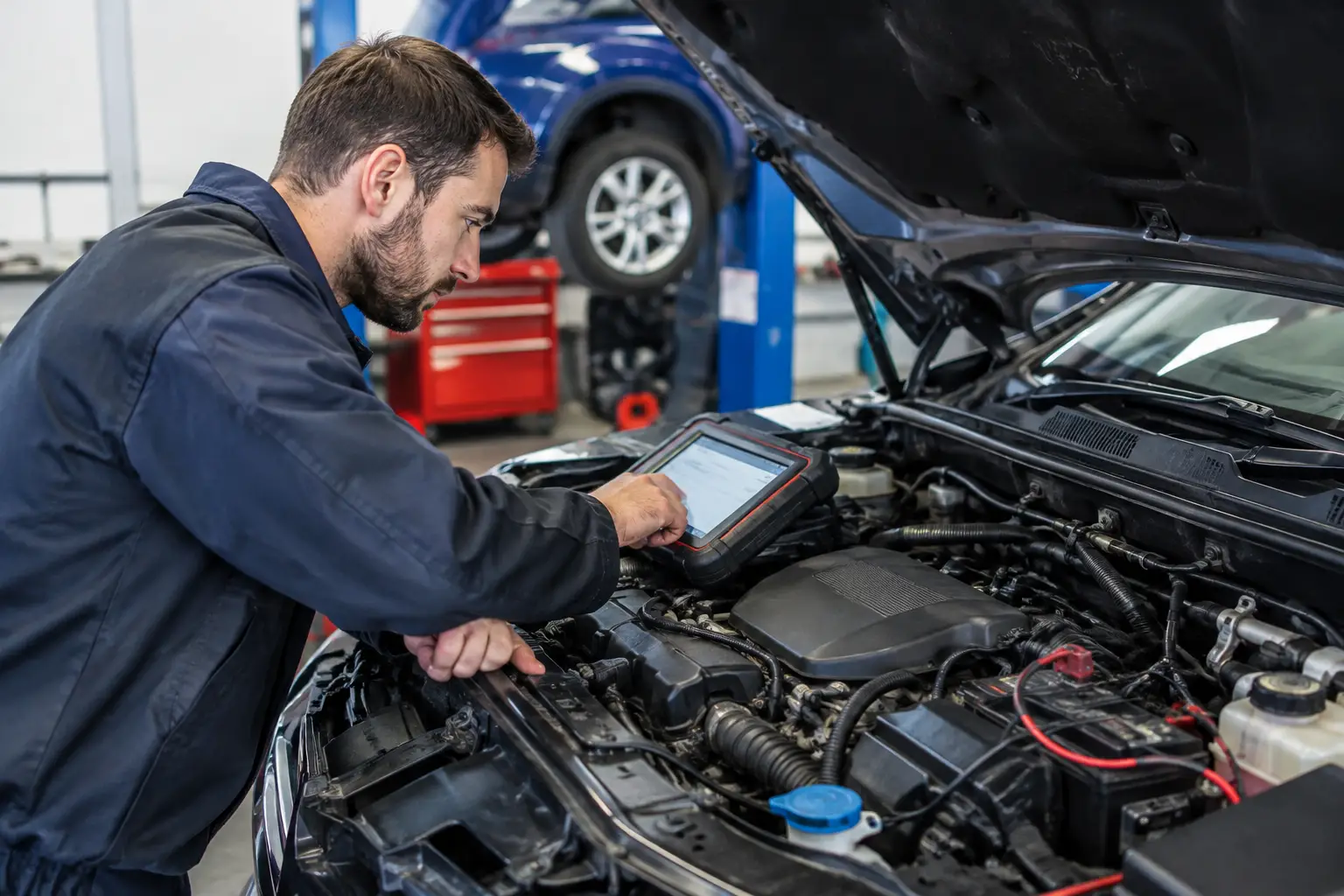
Car Electrics Need Proper Fault Finding First
You turn the key before work, but the engine refuses to start. Perhaps you hear a click, notice dim dashboard lights or get no response at all.
Sometimes, the battery keeps going flat. Other times, warning lights appear or electric windows stop working.
Car electrics can cause many different problems. However, the obvious symptom does not always reveal the real fault.
At AutoFix4u Garage Lowestoft, we investigate electrical problems before recommending replacement parts. Our goal is to find the cause, explain the repair and help prevent repeat breakdowns.
Common signs of car electrical faults
Modern vehicles rely on electrical systems for almost everything.
The battery starts the process, while the alternator supplies power during normal driving. Sensors and control units also manage engine performance, lighting, safety features and other functions.
When a fault develops, you may notice several warning signs.
Common symptoms include:
- Slow engine cranking during cold starts
- Repeated flat batteries
- Headlights that flicker or become dim
- A battery warning light on the dashboard
- Electric windows that stop working
- Problems with central locking
- Repeated blown fuses
- Radio or dashboard systems that reset
- Intermittent starting problems
- Engine warning lights or reduced performance
Some faults happen every day. Others appear only after rain or during cold weather.
For example, moisture can affect damaged electrical connections. A loose earth cable may also cause intermittent problems.
These clues help a technician identify where to begin testing.
Why car electrics need proper fault finding
A dashboard warning light tells you that a system has detected a problem.
However, it does not always identify the component responsible.
For example, a battery warning light may indicate a charging problem. The battery itself could still be healthy.
Similarly, an engine fault code may mention a sensor. Damaged wiring or low voltage could cause the same reading.
Replacing the sensor without further checks may waste money.
A proper investigation identifies the fault before anyone recommends a repair.
This approach helps avoid unnecessary parts and repeat visits.
The most common car electrical problems
Weak or failing car batteries
A weak battery often causes slow starting or clicking noises.
Cold weather can make these symptoms worse. The battery must deliver considerable power when the engine starts.
Over time, batteries lose their ability to store and deliver energy.
However, a flat battery does not always need replacing.
Short journeys may prevent the battery from recovering its charge. An electrical component might also continue drawing power after you park.
Therefore, a technician should test the battery before recommending a replacement.
Alternator and charging faults
The alternator supplies electrical power while the engine runs. It also helps recharge the battery.
If the alternator fails, the vehicle may rely on stored battery power.
You might notice dim headlights, dashboard warnings or electrical systems shutting down.
Eventually, the engine may stop and refuse to restart.
However, the alternator itself may not be responsible.
A damaged drive belt, loose connection or wiring problem can produce similar symptoms.
Our article about alternator fault symptoms and testing explains the warning signs in more detail.
Starter motor problems
The starter motor turns the engine when you start the vehicle.
A faulty starter may produce a click without cranking the engine.
Sometimes, it works intermittently.
However, weak batteries and poor cable connections can cause similar symptoms.
A technician can check the electrical supply and starter operation.
These tests help confirm whether the starter motor needs attention.
Corroded battery terminals and earth connections
Electrical current needs secure connections.
Over time, moisture and corrosion can affect battery terminals, earth cables and connectors.
A poor connection creates resistance and restricts electrical flow.
This may cause slow starting, dim lights or intermittent faults.
In some cases, cleaning and securing a connection solves the problem.
However, badly damaged cables may need replacement.
The correct repair depends on the condition of the affected components.
Blown fuses and faulty relays
Fuses protect electrical circuits against excessive current.
A fuse may blow because of a short circuit or another electrical problem.
Replacing it once may restore a function.
However, repeated fuse failures suggest an underlying fault.
Never fit a fuse with a higher rating than the manufacturer specifies.
This can damage wiring and increase fire risk.
Relays can also fail and interrupt power to electrical components.
A technician can test the relevant circuit and identify the cause.
Damaged wiring and water ingress
Electrical wiring runs throughout modern vehicles.
Heat, vibration, moisture and age can damage it.
Rodents may also chew through cables.
A damaged wire can interrupt power or cause an intermittent connection.
Water ingress creates another problem.
For example, moisture may reach a fuse box or electrical connector.
If a fault appears after heavy rain, tell the garage.
That information can help narrow the investigation.
Sensors and electronic control units
Modern vehicles use sensors to monitor engine operation and safety systems.
Electronic control units process the information and respond to changing conditions.
When readings fall outside the expected range, the vehicle may display a warning.
However, a sensor-related fault code does not always mean the sensor has failed.
The real problem could involve damaged wiring, poor voltage or another component.
A proper engine diagnostic check helps identify the source.
How a garage diagnoses electrical faults
A reliable diagnosis starts with understanding the symptoms.
We ask when the problem appeared and whether it happens regularly.
For example, does the engine struggle only on cold mornings? Do electrical problems appear after rain?
Next, we inspect the relevant components.
Step 1: Battery condition and connections
The technician checks the battery terminals, cables and visible connections.
A battery test can show whether the battery can deliver sufficient starting power.
This helps distinguish a weak battery from another electrical problem.
Step 2: Charging system testing
Next, we check the vehicle’s charging system.
The technician measures the voltage and assesses charging performance.
Modern charging systems can vary their output, so results need careful interpretation.
We also inspect the related cables and components.
These checks help identify charging faults without unnecessary replacement work.
Step 3: Diagnostic fault-code checks
Diagnostic equipment can read information from the vehicle’s electronic systems.
Stored codes provide useful clues.
However, a code alone rarely confirms the complete cause.
The technician compares the information with the actual symptoms.
Step 4: Wiring and electrical circuit testing
Some problems require more detailed electrical tests.
For example, a technician may check power supplies, earth connections and voltage drops.
These tests help locate damaged wiring and poor connections.
Where necessary, we also inspect connectors for corrosion or moisture.
Step 5: Confirm the repair
Once testing identifies the fault, we explain the recommended repair.
After completing the work, we check the affected system again.
The aim is to confirm that the repair addresses the original problem.
Why replacing parts without testing can cost more
Electrical faults can produce confusing symptoms.
A driver may replace the battery because the car will not start.
However, a faulty alternator could drain the new battery.
Likewise, replacing a sensor may not solve a wiring problem.
This creates unnecessary costs and delays.
Proper fault finding helps prevent these mistakes.
It also gives you a clearer understanding of the vehicle’s condition.
Can a weak battery cause several warning lights?
Yes. Low system voltage can affect multiple electronic systems.
For example, the dashboard may display several warnings during a difficult start.
Some control units may also record communication faults.
However, several warning lights do not always mean the battery is responsible.
Other faults can cause similar symptoms.
A technician should inspect the vehicle and test the electrical system.
This helps identify whether the warnings share one cause.
Does a new battery need programming?
Some modern vehicles use battery management systems.
These systems monitor battery condition and charging requirements.
Certain vehicles require battery registration or coding after replacement.
The correct procedure depends on the manufacturer and model.
Cars with stop-start systems may also require specific battery technology.
For example, the manufacturer may specify an AGM or EFB battery.
Installing the wrong battery can affect reliability and service life.
Therefore, always check the vehicle’s requirements before fitting a replacement.
When is an electrical fault unsafe?
Some electrical problems need urgent attention.
Stop somewhere safe and seek assistance if you notice:
- Smoke from the engine bay
- A strong burning smell
- Melting insulation or damaged cables
- Battery swelling or leakage
- Electrical sparks
- Repeated major electrical failures
- Warning lights combined with engine stalling
A red battery warning light while driving also needs prompt attention.
The vehicle may lose power once the battery becomes depleted.
If the car stops or feels unsafe, arrange recovery rather than continuing.
Do not touch damaged wiring or battery components that appear hot.
Why repeated jump-starting is not a solution
A jump-start may help when the battery has lost charge.
However, it does not identify why the battery went flat.
If your car needs regular jump-starts, the electrical system needs checking.
Possible causes include battery deterioration, poor charging and unwanted electrical drain.
Repeatedly boosting the battery may hide the underlying problem.
Instead, arrange a battery and charging system inspection.
This gives you a better chance of avoiding another breakdown.
Book car electrical diagnostics in Lowestoft
If your vehicle has starting problems, warning lights or repeated battery failures, proper testing is the sensible next step.
At AutoFix4u Garage Lowestoft, we investigate car electrical faults before recommending repairs.
Our approach focuses on identifying the cause and explaining the available options.
We help drivers in Lowestoft, Oulton Broad, Carlton Colville, Kessingland, Beccles and nearby areas.
You can explore our auto electrical repairs service for more information.
Call 07778 979802 to discuss your vehicle’s symptoms.
Alternatively, contact our garage or send us a WhatsApp message.
Electrical faults do not always need expensive repairs. The important step is finding the real problem before replacing parts.


