
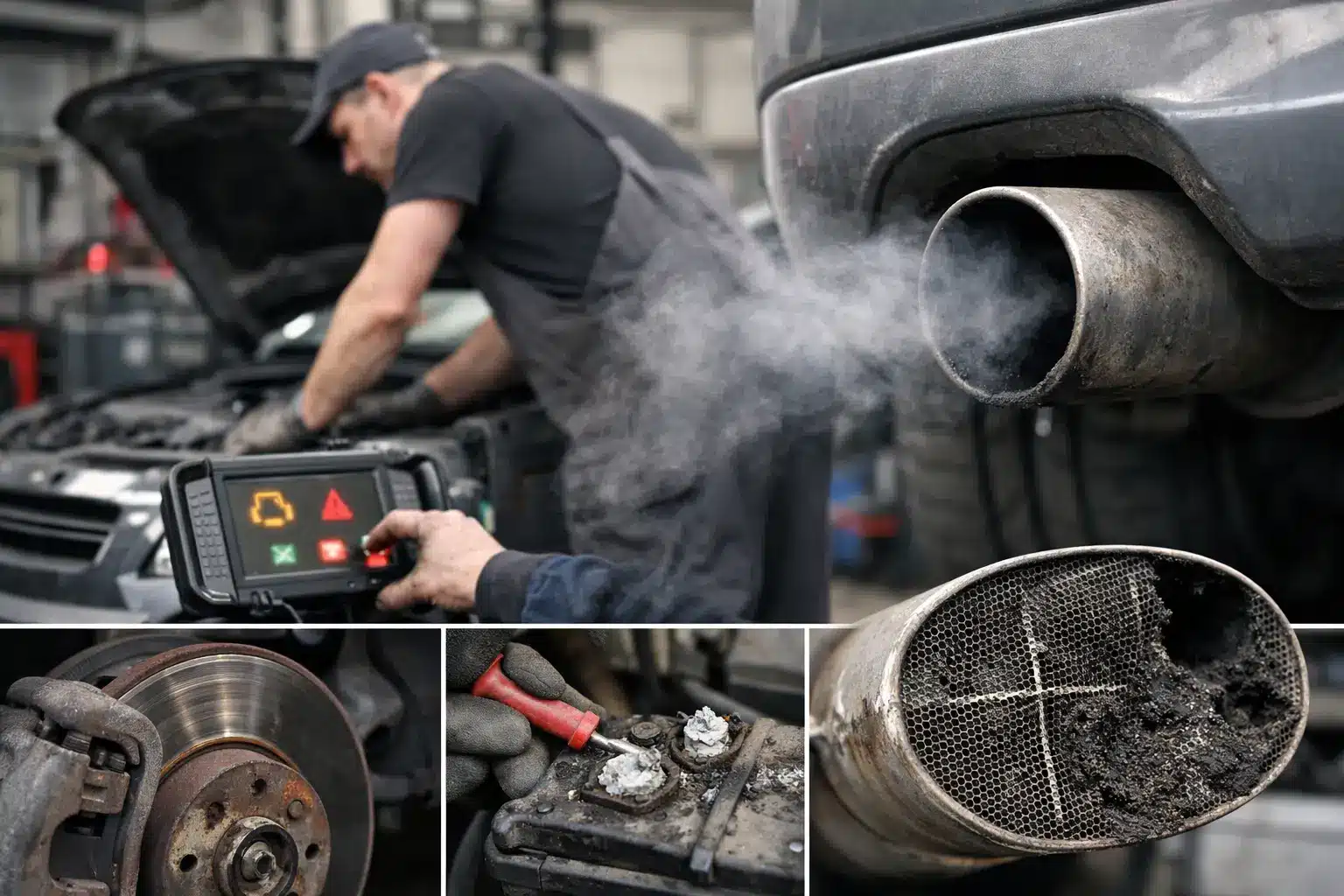
Why Does Exhaust Smell? Causes You Shouldn’t Ignore
A brief smell from the exhaust on a cold morning is one thing. Exhaust fumes getting into the cabin, a sudden strong smell at traffic lights, or fumes that make you feel unwell are another. If you are asking, “why does exhaust smell?”, the answer depends on what it smells like, where you notice it and whether your car has any other symptoms.
In most cases, a new or strong exhaust smell means something needs checking. It could be a small leak, a fuelling fault, an oil leak reaching hot exhaust parts, or a problem with the catalytic converter or DPF. The right fix starts with finding the source properly rather than replacing parts based on guesswork.
When an exhaust smell is urgent
If exhaust fumes are entering the car, do not ignore it. Exhaust gases can contain carbon monoxide, which has no smell but can make you feel dizzy, sick, tired or give you a headache. The smell you notice may come from other gases in the exhaust, but it can still be a warning that fumes are reaching the cabin.
Open the windows, switch off the heater or air conditioning if it is drawing in outside air, and stop somewhere safe as soon as you can. Avoid continuing a long journey with the windows shut. If the fumes are strong, arrange recovery or get the car checked before using it again.
We often see this issue when there is an exhaust leak underneath the car, around the engine bay, or near the front of the exhaust system. A leak can be small but still become very noticeable when the car is stationary, travelling slowly, or running with the heater on.
Why does exhaust smell inside the car?
A smell inside the car is usually more concerning than a smell noticed only at the tailpipe. The exhaust system is designed to carry gases safely away from the engine and out behind the vehicle. If fumes are finding their way into the cabin, there may be a leak or a route allowing outside air to enter.
A cracked pipe, failed joint or damaged flexi section
Exhaust pipes corrode over time, especially around joints, clamps and the flexible section of pipe near the engine. Road salt, standing water and short journeys all take their toll. A crack or hole lets gases escape before they reach the back of the vehicle.
You may also hear a blowing, chuffing or rasping noise when accelerating. Sometimes the noise is subtle at first, while the smell is obvious. A visual inspection on a ramp can often identify the fault, although leaks around the manifold or higher up in the engine bay may need closer diagnosis.
A leaking exhaust manifold or gasket
The exhaust manifold collects gases from the engine cylinders. If the manifold cracks or its gasket fails, fumes can escape near the front of the engine. Because this area is close to the cabin air intake, the smell can be drawn through the vents.
This can sound like a ticking noise when the engine is cold, which sometimes fades as metal parts warm up and expand. It is not always a simple repair, but catching it early can prevent more damage to surrounding parts.
Leaks around the boot or bodywork
Not every cabin smell comes from a fault at the front. On hatchbacks and estates, damaged boot seals, missing floor bungs or poor sealing around the rear lights can allow exhaust gases to be pulled into the vehicle while driving.
This is more likely if the smell is worse with the windows closed or when travelling at speed. The exhaust itself still needs checking first, but a proper inspection should also look at how fumes may be entering the car.
What different exhaust smells can mean
The smell gives useful clues, but it does not provide a final diagnosis on its own. Modern cars have several systems that affect emissions, fuel use and engine performance. A garage should combine the smell with fault codes, warning lights and a physical inspection.
Rotten egg or sulphur smell
A rotten egg smell can point to a catalytic converter issue or an engine that is running too rich. Running rich means the engine is receiving too much fuel for the amount of air entering it. Unburnt fuel reaches the exhaust system and can overwork the catalytic converter.
You may notice poor fuel economy, hesitation, a misfire or an engine warning light. The cause may be a faulty sensor, ignition fault, injector issue or another engine management problem. Replacing the catalytic converter without fixing the cause can lead to the same failure again.
Strong petrol smell
A petrol smell needs prompt attention. It may come from a fuel leak in the engine bay, a damaged fuel line, a leaking injector or a fault in the fuel vapour system. Sometimes a rich-running engine will also make the exhaust smell strongly of petrol.
If you can smell raw petrol, especially around the car after parking, do not keep driving and hope it clears. Petrol is a fire risk. Get the vehicle inspected before it becomes a more serious breakdown.
Sweet smell from the exhaust
A sweet smell can mean coolant is being burned in the engine. This may happen if coolant is entering the combustion chamber through a failed head gasket, a cracked component or another internal engine fault.
Look for a dropping coolant level, white smoke that continues after the engine is warm, overheating, or creamy residue under the oil filler cap. None of these signs proves the diagnosis alone, but together they need checking quickly. Continuing to drive an overheating car can turn a repairable problem into major engine damage.
Burning oil, rubber or plastic smell
Oil leaking onto a hot exhaust can produce a sharp burning smell and sometimes smoke from under the bonnet. Common sources include a rocker cover gasket, turbo oil pipe or oil spill after topping up. Rubber or plastic smells may be caused by something trapped against the exhaust, a heat shield issue or a component touching a hot pipe.
It is worth checking for visible smoke once the engine is safely stopped. Do not put your hands near hot exhaust parts. A quick inspection can establish whether it is a minor external leak or something that needs repair straight away.
Diesel smell and DPF-related problems
Diesel exhaust has its own distinct smell, particularly during a DPF regeneration. During regeneration, the car raises exhaust temperatures to burn soot from the diesel particulate filter. You may notice a hot smell, the cooling fan running after the engine is switched off, or slightly higher fuel use.
A regeneration can be normal, especially after repeated short journeys. However, a strong diesel smell, frequent regenerations, loss of power, a DPF warning light or an engine warning light suggests the system may not be completing the process properly. The underlying cause could be a blocked DPF, sensor fault, boost issue or engine problem creating excess soot.
A smell outside the car is not always harmless
You should expect some exhaust smell at the tailpipe, particularly just after starting on a cold day. Cold engines run differently until they warm up, and visible water vapour is normal in many cases. A mild smell outdoors that disappears as the engine warms up is usually less concerning than fumes in the cabin.
The situation changes if the smell becomes much stronger than normal, changes suddenly, is accompanied by smoke, or comes with a warning light or loss of power. Those details help narrow down the fault and avoid unnecessary repairs.
What not to do when your exhaust smells
Do not try to seal an exhaust leak with tape, filler or a temporary patch and treat it as a long-term fix. Exhaust parts get extremely hot, move with the engine and are exposed to water and road dirt. A temporary repair can fail quickly and may hide a worsening problem.
It is also best not to clear an engine warning light and carry on. If the light relates to a misfire or fuelling issue, unburnt fuel can damage the catalytic converter. If it relates to DPF performance, delaying diagnosis can leave the car in limp mode or unable to complete regeneration.
How a garage finds the real cause
At AutoFix4u, the first step is to establish whether the smell is coming from the exhaust itself, fuel, oil or coolant. We check for obvious leaks and damaged exhaust sections, then assess warning lights and diagnostic fault codes where needed.
A proper diagnosis may include checking live sensor readings, looking for fuel or oil leaks, inspecting the DPF system and assessing engine running. This matters because an exhaust smell is often a symptom, not the part that has failed. For example, a damaged catalytic converter may be the result of a misfire rather than the original fault.
You should receive a clear explanation of what has been found, what needs doing now and what can safely wait. That gives you a repair plan without surprise extras or vague advice.
Book an exhaust and diagnostic check
If you have fumes in the cabin, a strong petrol or burning smell, an engine warning light, smoke, or loss of power, get it checked promptly. Drivers in Lowestoft and the surrounding area can contact AutoFix4u for straightforward diagnostics and exhaust repairs, with clear pricing and honest recommendations.
A car should not leave you guessing whether a smell is normal. Catching the cause early is usually safer, simpler and less disruptive than waiting for a warning light, MOT failure or roadside breakdown.


