How to Regas Car Aircon Without Missing a Leak
When your air conditioning starts blowing warm on the school run or commute, it is tempting to look for the quickest refill possible. But knowing how to regas car aircon properly matters. A regas may restore cold air, but if the system has leaked, the cold air will soon disappear again.
At AutoFix4u, we often see cars that have been topped up elsewhere only to return a few weeks later with the same problem. The right approach is simple: check the system, find any fault that is present, then refill it with the correct amount of refrigerant. That gives you a proper answer rather than a short-term patch.
What a car aircon regas actually does
Your car’s air conditioning system circulates refrigerant gas around a sealed system. The refrigerant absorbs heat from inside the cabin and releases it outside, which is why cold air comes through the vents when everything is working as it should.
Over time, a small amount of refrigerant can be lost naturally through seals and pipe connections. Once the level drops, the system cannot cool effectively. A regas removes the remaining refrigerant, pulls the system into a vacuum to remove moisture and air, then refills it with the manufacturer’s specified amount of refrigerant.
It sounds straightforward, but accuracy matters. Too little gas means weak cooling. Too much can increase pressure and affect performance. The correct refrigerant type also matters. Many older cars use R134a, while many newer vehicles use R1234yf. They are not interchangeable.
How to regas car aircon properly
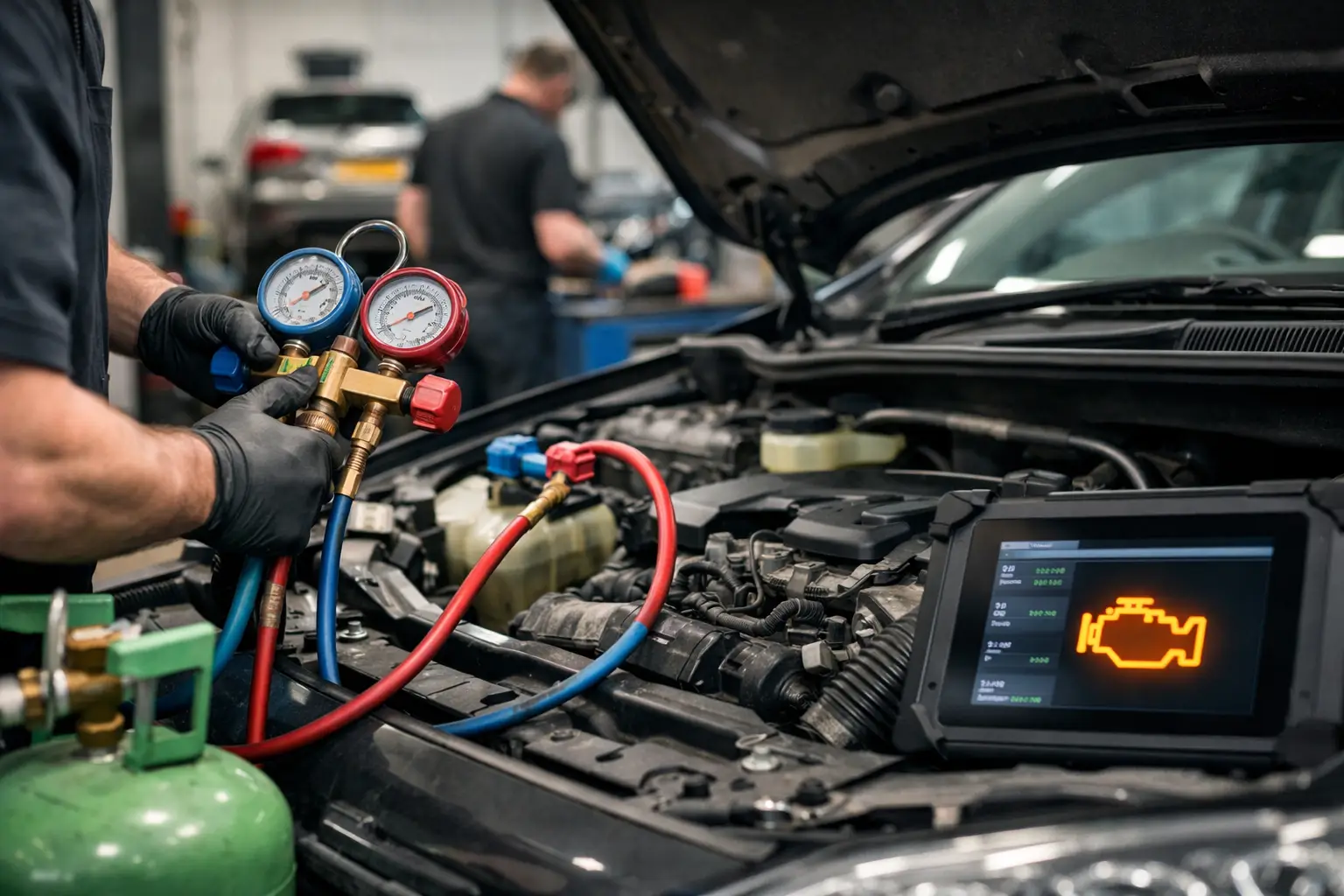
A proper aircon regas is carried out with dedicated equipment by a trained technician. Refrigerant must not be released into the atmosphere, and DIY refill kits do not tell you whether the system has the right amount of gas, moisture inside it, or a leak.
The usual workshop process starts by identifying the refrigerant fitted to your vehicle. The machine then safely recovers and measures what is left in the system. This can be useful information. If very little refrigerant comes out, there may be more than normal gradual loss.
Next, the system is vacuumed. This removes air and moisture, both of which can reduce cooling and cause damage inside the system. The vacuum stage can also show whether the system holds pressure, although it will not always reveal every small leak.
If the system passes the initial checks, it is refilled to the vehicle manufacturer’s exact specification. The technician then runs the air conditioning and checks vent temperature, pressure readings and compressor operation. The aim is not simply to make the air feel colder for five minutes. It is to make sure the system is working properly.
Why your aircon may need more than a regas
Air conditioning gas does not get used up like fuel. If a system is noticeably low, it has normally escaped slowly over time or there is a fault allowing it to leak out. In most cases, a regas is worthwhile if the loss has been gradual. If it stops cooling again quickly, further diagnosis is the sensible next step.
We often see this issue when a condenser has been damaged by road debris, a pipe joint has corroded, or an O-ring seal has deteriorated. The condenser sits at the front of the car, behind the grille area, so it takes plenty of weather, dirt and stone impact. A small leak there can leave the cabin warm even though the blower is working normally.
A weak or non-working compressor can cause similar symptoms. So can an electrical fault, a faulty pressure sensor, a blocked cabin filter or a cooling fan problem. That is why adding gas without checking the rest of the system can waste your money.
Signs you should book an aircon check
Warm air from the vents is the obvious sign, but it is not the only one. You may notice the air is cold when driving but warmer in traffic, a musty smell when the fan is running, unusual clicking when aircon is switched on, or the windscreen taking longer to demist.
If your aircon was regassed recently and has already lost its chill, do not keep paying for refills. Ask for a leak check and diagnostic inspection. Finding the root cause is usually better value than repeatedly treating the symptom.
Can you regas car aircon yourself?
For most drivers, no. DIY kits can look convenient, but air conditioning is not a job to guess at. The system needs the exact refrigerant and charge weight for your vehicle, and it needs to be recovered and handled correctly.
A can of gas may make a system feel cooler temporarily, but it cannot confirm whether it is overfilled, contaminated or leaking. Some sealant-based products can also create problems for professional recovery equipment and make later repairs more difficult.
There is another practical point. If the aircon compressor is not engaging because of a wiring fault, pressure sensor fault or failed component, adding refrigerant will not solve anything. A garage can test the system first and explain what is actually needed.
When is the best time to regas air conditioning?
Do not wait for the first hot week of the year. Air conditioning is useful in colder weather too because it removes moisture from the cabin air and helps clear misted windows. If you notice reduced cooling or poor demisting, arrange a check before it becomes a bigger inconvenience.
As a general guide, many cars benefit from an aircon service or regas every two to three years. It depends on the vehicle, how often the system is used and whether there is any leakage. A car that is rarely driven, or whose aircon is never switched on through winter, can develop issues sooner.
Running the air conditioning for around 10 minutes every week, including in winter, helps circulate oil around the compressor seals. It will not prevent every fault, but it can help keep the system in better condition.
What happens if you ignore weak air conditioning?
The immediate problem is comfort, especially with children or pets in the car during warmer weather. The bigger issue is that low refrigerant can reduce lubrication within the system. If the compressor has to work under poor conditions for a long period, a relatively simple regas can turn into a more involved repair.
Poor air conditioning also makes demisting less effective. That affects visibility on damp mornings, particularly around Lowestoft and the coast where moisture in the air is common. It is worth dealing with before you are relying on it in heavy rain.
Clear advice before any aircon work
A good garage should tell you what they have found before recommending repairs. If your system is simply low on refrigerant and passes its checks, a regas may be all it needs. If a leak or failed component is found, you should receive a clear repair plan first.
There are trade-offs. A basic refill may be appropriate on an older vehicle where refrigerant has reduced gradually over several years. A pressure test, dye inspection or more detailed leak diagnosis makes more sense when the system is empty, has stopped working suddenly, or has been regassed recently.
At AutoFix4u, we keep the explanation plain: what is wrong, what needs doing now, and what can wait. For drivers in Lowestoft and nearby areas, that means clear pricing and no surprise extras before work goes ahead.
If your aircon is blowing warm, smells damp or keeps losing its cooling after a refill, book an air conditioning check rather than guessing. A proper diagnosis now can keep the cabin comfortable, the windscreen clear and the repair manageable.