MOT Fail Repair Case Study: Brake Fault Fixed
A failed MOT can feel like a major problem, especially when you need the car for work, school runs or everyday travel. This MOT fail repair case study shows how a seemingly straightforward brake advisory became a clear safety repair, with the fault identified properly and the vehicle returned for a retest without guesswork.
The customer brought in a family hatchback after it failed its MOT. They had been told the front brakes were binding and the braking performance was uneven. The car still drove, but it had started to pull slightly under braking and one front wheel felt noticeably hotter after short journeys.
Those symptoms are not something to ignore. A binding brake can wear pads and discs quickly, reduce stopping control and, in some cases, leave the vehicle unsafe to drive.
The MOT failure: uneven braking and a binding front brake
The failure report pointed to a front brake issue, but an MOT report does not always explain exactly why it has happened. That is where a proper inspection matters.
In most cases, uneven braking comes down to worn components, a sticking caliper, seized slider pins or corrosion affecting how the brake pads move in their carrier. Replacing parts without checking the cause can get expensive and may not solve the problem for long.
On this vehicle, the driver had noticed a light scraping sound for a few days but assumed it was normal wear. The brake pedal still felt firm, so there was no obvious warning from inside the car. We often see this issue when a vehicle has done a lot of short journeys, has stood unused for periods, or has been driven through wet and salty winter roads.
Diagnosing the cause before fitting parts
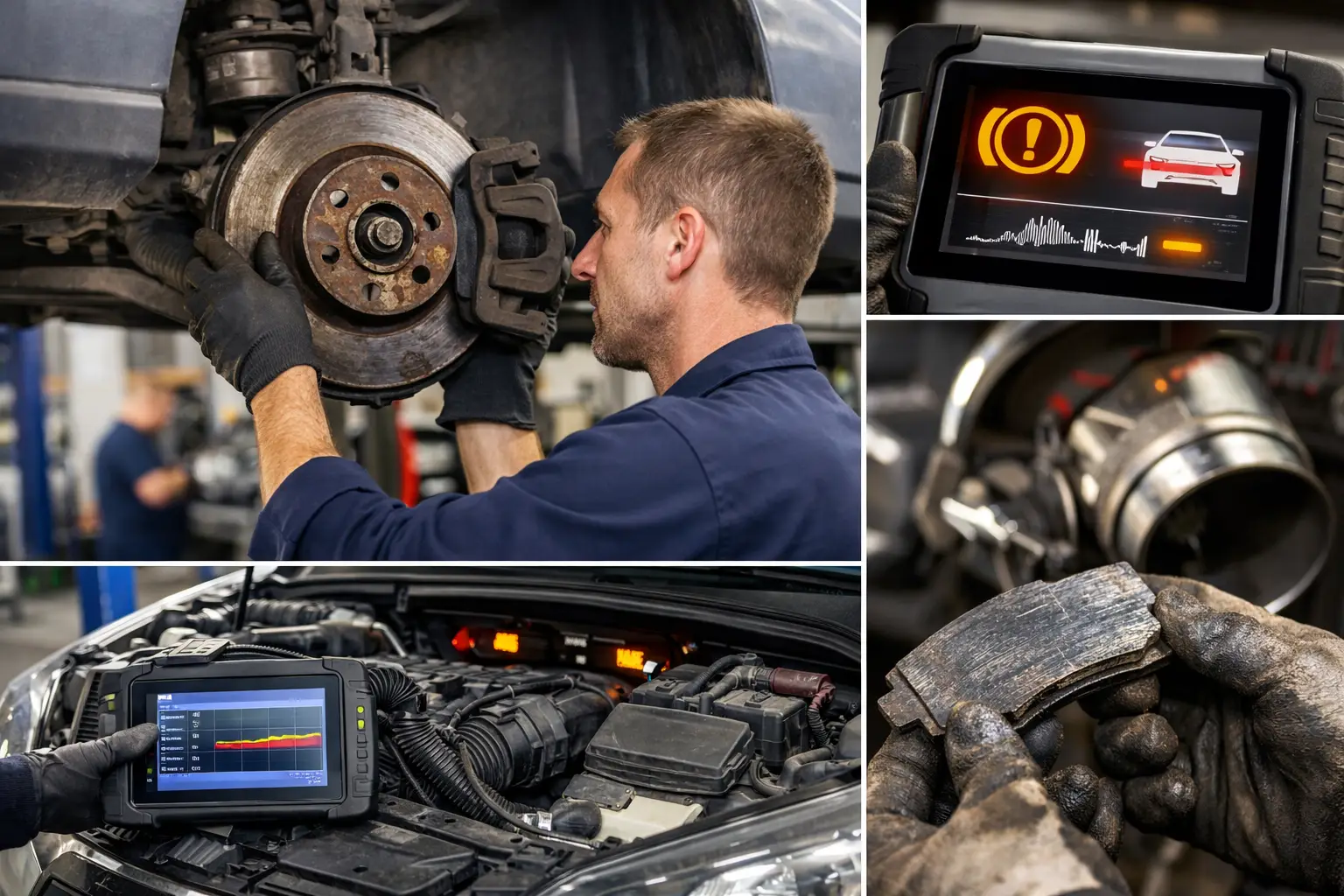
We removed both front wheels and inspected the brakes side by side. One front disc showed signs of overheating, with uneven discolouration across the braking surface. The pad on that side had worn much more quickly than the pad on the opposite wheel.
The caliper itself was still serviceable, but the slider pins were seized in the carrier. These pins allow the caliper to move freely as the brakes are applied. When they seize, one pad can remain in contact with the disc after the brake pedal is released. That creates heat, drag and uneven braking force.
There was a second issue too. The overheated disc had developed a rough surface, and the affected brake pads had glazed. Glazing happens when excess heat hardens the pad material. A glazed pad may still look as though it has material left, but it will not grip the disc as it should.
At that point, simply freeing off the slider pins would not have been the right repair. It might have stopped the brake from binding, but the damaged disc and glazed pads would still affect braking performance. This is why we explain the full picture before work starts, rather than offering a quick fix that leaves the customer returning a few weeks later.
The repair plan explained in plain English
The customer needed the car back promptly, but safety came first. We explained that the repair would involve replacing the front brake discs and pads as an axle set, cleaning and lubricating the caliper carrier correctly, and replacing the seized slider pins.
Brake discs and pads should normally be changed on both sides of the same axle. Fitting new parts to only one front wheel can create another imbalance. The opposite disc had not overheated, but it had worn alongside the damaged side and was near its service limit. Replacing both sides gave consistent braking and avoided another repair in the near future.
We provided a clear repair plan before ordering the parts. There were no surprise extras. The customer understood what had caused the MOT failure, which parts were necessary and why a basic brake clean alone was not enough.
Why the cheaper-looking option was not the right option
There is always a trade-off with brake repairs. If the discs are still in good condition and the pads are not damaged, a seized slider pin can sometimes be repaired without replacing the whole brake set. It depends on what the inspection finds.
In this case, heat damage had already affected the disc and pad. Reusing them could have led to noise, vibration, poor braking or another MOT issue. Quality replacement parts and a full repair were the sensible route for reliable day-to-day driving.
Carrying out the MOT failure repair
The front brake assemblies were stripped down and checked carefully. We replaced the discs and pads on both front wheels, renewed the affected slider pins and cleaned the carriers so the new pads could move correctly. The caliper movement was then checked again before the wheels went back on.
Once rebuilt, the braking system was tested to make sure the brakes applied and released freely. A road test followed, allowing the new components to bed in and confirming there was no pull, scrape or excess heat from either front wheel.
The vehicle was then ready for its MOT retest. It passed, and the customer had the car back the same day.
That turnaround is not always possible. Parts availability, the type of failure and any additional faults found can affect timescales. But when a car is brought in quickly after an MOT failure, there is often a good chance of getting the work completed without leaving the driver off the road for days.
What this case tells drivers about MOT failures
An MOT failure is not always a sign that your car needs a long list of expensive repairs. Sometimes the fault is isolated and straightforward. The key is finding out what has actually failed and what caused it.
With brakes, a warning sign can be subtle. You may notice the vehicle pulling slightly when slowing down, a hot smell after driving, a scraping noise, reduced fuel economy from brake drag, or a wheel that feels hotter than the others. If any of these happen, get the vehicle checked before the MOT is due.
Leaving a binding brake can turn a smaller repair into a larger one. Fresh pads may become damaged, discs can overheat and the caliper may eventually need replacing. More importantly, braking performance can suffer when you need it most.
Need an MOT failure repair in Lowestoft?
If your car has failed its MOT and the report is unclear, bring it in for a proper inspection. AutoFix4u will check the fault, explain what is needed in plain English and give you a clear repair plan before work begins.
Whether the issue is brakes, tyres, suspension, lights, emissions or an engine warning light, the aim is the same: fix the cause, not just the symptom. Same-day slots may be available for urgent MOT failure repairs, depending on the fault and parts required.
Do not keep driving with a brake warning, a pulling vehicle or an MOT failure you are unsure about. Call for advice or get a quote, and get a local mechanic to check it properly before a small issue costs more time and money.


