Trends in Diesel DPF Maintenance for Drivers
A DPF warning light is easy to put off when the car still drives. Then the power drops on the way to work, the vehicle goes into limp mode, or it fails its MOT emissions test. The main trends in diesel DPF maintenance are moving away from simply trying a regeneration and towards finding the reason the filter became blocked in the first place.
For drivers around Lowestoft, this matters because many diesel cars are used for short school runs, local commuting and stop-start journeys. Those trips can prevent the DPF from cleaning itself properly. But short journeys are not always the whole story. A faulty sensor, an engine fault or a problem with the exhaust system can produce the same warning light and needs a different repair.
Why DPF faults are being diagnosed more carefully
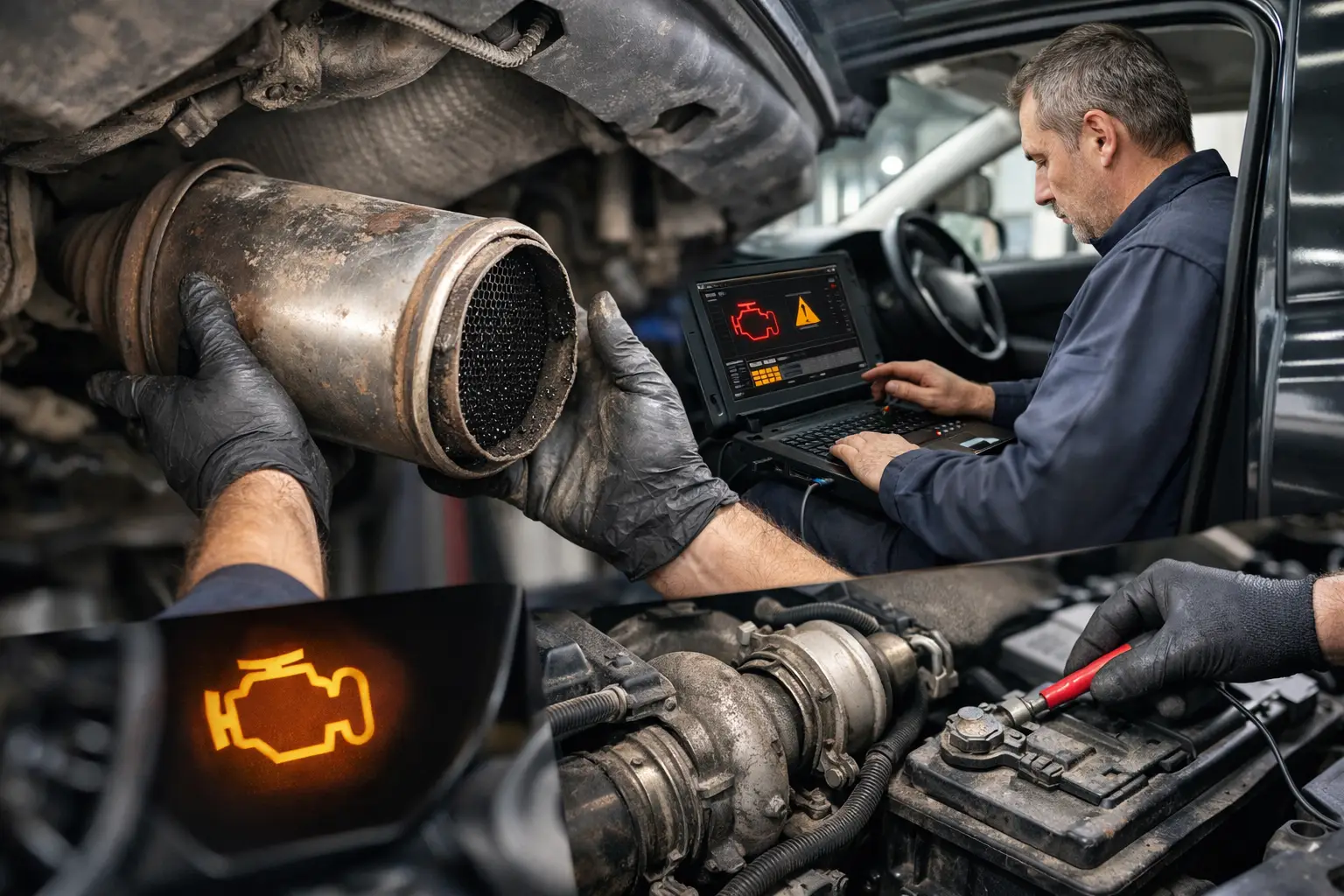
The diesel particulate filter, or DPF, sits in the exhaust and catches soot produced by the engine. When conditions are right, the vehicle raises exhaust temperature and burns that soot away. This is called regeneration.
In the past, a blocked DPF was often treated as the problem on its own. A garage might attempt a forced regeneration, clear the fault code and send the car away. Sometimes that works. In most cases, though, it only works for the long term if the rest of the engine is healthy and the filter is not too full.
We often see this issue when a car has been driven with an engine warning light for weeks, has incomplete regenerations, or has another fault stopping regeneration from starting. The DPF has become the visible symptom, not necessarily the cause.
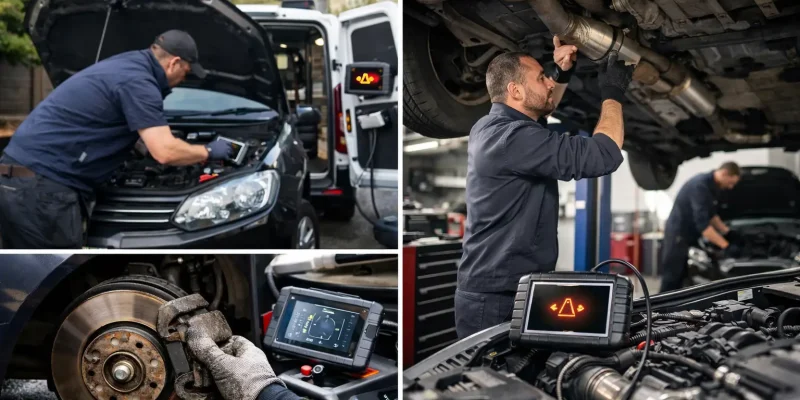
A proper diagnostic check looks at more than a dashboard message. It checks stored fault codes, soot load readings, pressure readings across the filter and whether the engine is reaching normal operating temperature. It also looks for faults affecting combustion and exhaust temperature. That may include an air leak, EGR issue, injector problem, boost fault or temperature sensor fault.
This diagnostic-first approach can save money and repeat visits. Cleaning a DPF while leaving the underlying fault in place often leads to the same warning light returning.
Short journeys are still a major cause – but not the only one
Modern diesels suit drivers who regularly cover enough distance for the engine and exhaust to get hot. A steady run can give the car the chance to complete an active regeneration. Repeated short trips do the opposite. The engine may be switched off halfway through the process, leaving extra soot behind.
That does not mean every driver who makes short trips will block a DPF, or that a motorway run will repair every fault. If the warning light is on, the car is losing power or the cooling fan keeps running after the engine is switched off, do not assume a long drive will sort it out. The vehicle may be attempting regeneration, but there may be too much soot for it to complete safely.
One practical trend is earlier action. Drivers are becoming more aware of the signs before a complete blockage develops: reduced fuel economy, a rise in engine oil level, poor acceleration, frequent fan operation and an engine warning light. Catching the problem at this stage gives more options than waiting until the car enters limp mode.
DPF maintenance trends: cleaning is more targeted
There is no single DPF cleaning method that suits every vehicle. The right option depends on how blocked the filter is, why it blocked and whether it contains soot, ash or both.
Soot can usually be burnt off during a successful regeneration if the vehicle is within safe limits and the faults causing the blockage have been repaired. Ash is different. It is a non-combustible residue left behind over time, mainly from engine oil additives. A regeneration cannot remove ash.
This is why professional DPF maintenance is becoming more targeted. Before any cleaning or regeneration is attempted, a technician should establish the filter condition and check that the engine can regenerate correctly. Where suitable, a controlled workshop regeneration may help. Where the filter is heavily loaded or ash-filled, cleaning may be the better route. In some cases, replacement is the honest recommendation, particularly if the core is damaged.
The trade-off is straightforward. A quick fix may get a warning light out temporarily, but it is poor value if the fault returns next month. The best repair plan is the one that addresses the cause and gives the filter a realistic chance of staying clear.
Sensors and engine faults now matter more than ever
DPF systems rely on accurate information. The engine control unit uses sensors to judge exhaust temperatures, pressure across the filter and operating conditions. If one of those readings is wrong, the car may not regenerate when it should, or it may log a DPF-related fault even when the filter itself is not the main issue.
A differential pressure sensor is a common example. It measures the pressure difference before and after the DPF. A faulty sensor, damaged pipe or blocked pressure hose can give misleading readings. Replacing or cleaning the DPF without checking these parts can waste time and money.
Thermostat faults also catch drivers out. If the engine runs too cool, the vehicle may not meet the conditions needed for a proper regeneration. The car can feel broadly normal, apart from poor heater performance or a temperature gauge that does not settle where it should. Yet that small fault can contribute to repeated DPF problems.
This is why clear fault-finding matters. A diagnostic report should be explained in plain English: what has failed, how it has affected the DPF and what needs doing first. You should not be asked to approve a costly repair based on guesswork.
The link between DPF problems and MOT failures
DPF concerns often come to light at MOT time. Excessive smoke, an engine warning light, emissions-related fault codes or a visibly altered exhaust system can all cause problems. A vehicle that has been driven in limp mode may also have other faults that need attention before it is ready for test.
Removing or bypassing a DPF is not a repair. It can make the vehicle illegal for road use and create an MOT failure. It can also lead to smoke, poor running and further engine management faults. The sensible route is to diagnose the system properly and repair it to the manufacturer’s intended operation.
If an MOT is approaching and the engine warning light is on, book diagnostics early rather than hoping it will disappear. That allows time to identify whether the issue is a sensor, the DPF itself, an emissions control fault or another engine problem affecting the readings.
What to do when the DPF light appears
The right next step depends on the symptoms. If the DPF light has just appeared and the car is driving normally, avoid repeated short trips and arrange a diagnostic check promptly. Do not keep cancelling warning lights or adding treatments without knowing the cause.
If the engine warning light is on alongside loss of power, limp mode, heavy smoke, a flashing glow plug light or a noticeable fuel smell, stop using the car unnecessarily. Continued driving can turn a manageable fault into a blocked filter, diluted engine oil or damage elsewhere in the exhaust system.
Tell the garage exactly what you have noticed: when the warning started, whether you mostly drive short distances, if the car has recently had work done, and whether it has lost power. These details help narrow down the fault faster.
Preventing repeat DPF trouble
There is no magic routine that guarantees a trouble-free DPF. The best prevention is using the vehicle in a way that suits its engine, keeping up with servicing and dealing with warning lights early. If your daily driving is nearly all local, an occasional longer steady journey may help the vehicle complete regeneration, provided there are no faults present.
Use the correct low-ash engine oil at service time. The wrong oil can increase ash build-up inside the filter. Do not ignore changes in fuel economy, oil level or performance either. They can be early signs that a regeneration is failing or that another engine fault is developing.
For a diesel that keeps showing DPF warnings, the answer is not to keep trying the same fix. AutoFix4u can check the fault properly, explain the options clearly and carry out the repair needed to get the vehicle reliable again. Call now to book DPF diagnostics in Lowestoft or ask about same-day availability. Acting while the car is still driveable is usually the simplest way to avoid a breakdown or an MOT problem.