Guide to Car Warning Lights Meanings Explained
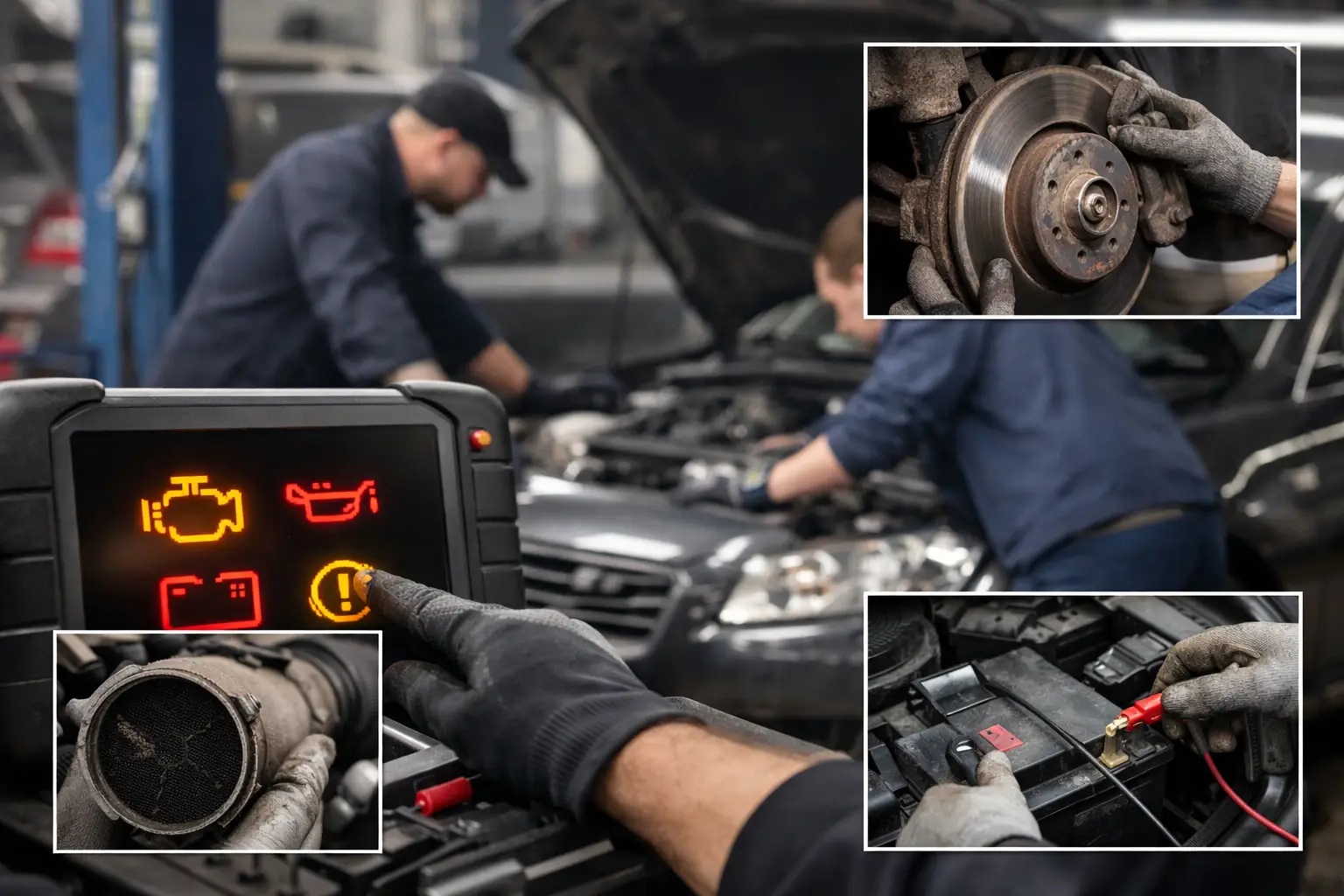
A warning light appearing on the way to work, school drop-off or the weekly shop is never convenient. This guide to car warning lights meanings helps you sort the lights that mean stop now from those that need a booking soon. The symbol is your car telling you there is a fault or condition to deal with. It does not always tell you which part has failed, so guessing can turn a manageable repair into a larger bill.
Start with the colour of the warning light
The colour gives you the first clue. Red means there may be an immediate safety or engine-protection issue. Pull over safely when you can, switch off if appropriate, and do not keep driving simply to see if the light goes out.
Amber or yellow means the car has detected a fault that needs attention, but it is not always an emergency. You can often drive carefully for a short period, provided the vehicle feels normal and there are no red lights, smoke, overheating or serious loss of power. Book diagnostics promptly rather than waiting for the next service.
Green, blue and white lights are usually information lights. They may confirm that your sidelights, main beam, fog lights or cruise control are on. Even so, take notice if a blue temperature light stays on after the engine has warmed up, as this can point to a thermostat issue.
Red dashboard warning lights: when to stop driving
Oil pressure warning light
The red oil-can symbol is one of the most serious lights on the dashboard. It means the engine may not have enough oil pressure to lubricate its moving parts. This usually happens because the oil level is low, there is a leak, the oil pump has a fault, or there is a blockage inside the engine.
Stop as soon as it is safe. Turn the engine off and do not restart it until the oil level has been checked correctly. Adding oil may help if the level is low, but it does not prove the underlying problem is solved. If the light remains on, arrange recovery and get the vehicle checked. Running an engine with no oil pressure can cause severe damage very quickly.
Engine temperature warning light
A red thermometer symbol or temperature warning means the engine is overheating. You may also notice a hot smell, steam, the cooling fan running loudly, or the temperature gauge climbing higher than normal.
Low coolant, a leaking hose, a stuck thermostat, a failed water pump or a radiator fault are common causes. Pull over, switch the engine off and allow it to cool fully. Never remove the coolant cap while the engine is hot. It can release pressurised coolant and cause burns. Once cold, the level can be inspected, but an overheating problem needs diagnosis before regular driving resumes.
Brake system warning light
A red brake warning light may mean the handbrake is still applied. Check that first. If the handbrake is fully released and the light stays on, it can indicate low brake fluid, worn brake components or a hydraulic fault.
If the brake pedal feels soft, travels further than usual, pulls to one side, or the brakes feel weak, do not drive the car. Brakes are not a fault to put off until next week. A garage needs to inspect the system and find the cause, whether that is a fluid leak, worn pads and discs, or another issue.
Battery charging warning light
The battery-shaped light does not necessarily mean you need a new battery. It means the battery is not being charged while the engine is running. In most cases, the alternator, drive belt, wiring or battery connection is the cause.
The car may continue for a short distance using the battery’s stored power, then cut out once that power is depleted. Reduce electrical use where safe to do so and head to a garage if you are close. If you are not, stop somewhere safe and arrange assistance. Continuing to drive can leave you stranded and may affect systems such as power steering.
Guide to car warning lights meanings: common amber lights
Engine warning light
The amber engine warning light is one we see regularly. It can be triggered by many faults, from a loose connection or sensor reading to an ignition fault, air leak, emissions issue or fuel-system problem. The light alone cannot identify the failed part.
If it is steady and the car drives normally, book vehicle diagnostics soon. A diagnostic scan reads the fault codes stored by the engine control unit, but the code is only the starting point. A proper check looks at live readings, wiring and likely causes before recommending parts.
If the engine warning light flashes, treat it more seriously. This often means an active misfire that can damage the catalytic converter. Avoid hard acceleration, pull over safely and arrange a check rather than continuing a longer journey.
DPF warning light
A DPF warning light is common on diesel cars used mainly for short trips. The diesel particulate filter collects soot from the exhaust and normally clears it through a regeneration process when the engine is fully warm and driven at a steady speed. Repeated short journeys can prevent that process from finishing.
Sometimes a suitable longer run may allow a regeneration, but it depends on the car and how blocked the filter is. If the light remains on, the vehicle enters limp mode, or other warning lights appear, do not keep forcing it. The fault may involve the DPF itself, a pressure sensor, temperature sensor, EGR valve or another engine issue. Diagnostics should come first, followed by the right cleaning or repair plan.
Tyre pressure monitoring light
This horseshoe-shaped symbol with an exclamation mark means one or more tyres may be underinflated, or the monitoring system has detected a fault. Check tyre pressures with a reliable gauge when the tyres are cold and look for nails, cuts or obvious damage.
Inflate tyres to the vehicle manufacturer’s recommended pressures, not the number printed on the tyre sidewall. Reset the system if your vehicle requires it. If the light returns, or a tyre is losing pressure, get it inspected. Low pressure affects braking, handling, tyre wear and fuel use.
ABS and stability control lights
The ABS light means the anti-lock braking system has a fault. Your normal brakes will often still work, but the wheels may lock under heavy braking because ABS assistance is unavailable. The stability control light can indicate that the system is actively helping on a slippery surface, which is normal if it flashes briefly. If it stays on, there may be a sensor or system fault.
These faults are not usually an immediate stop situation if the car brakes normally, but they should be checked promptly. Wheel-speed sensors, damaged wiring, reluctor rings and low battery voltage can all cause them.
Airbag warning light
An airbag or SRS warning light means part of the supplementary restraint system has a fault. That could involve an airbag, seat-belt pretensioner, seat wiring or a control-module issue. You may be able to drive the vehicle, but the system may not work as intended in a collision.
Do not ignore it until the MOT is due. Have the fault read and investigated properly. Clearing the light without fixing the cause is not a repair, and it will usually return.
Do not rely on clearing the light
It is tempting to clear a warning light and hope for the best. Sometimes a temporary voltage drop or a one-off sensor reading can trigger a code. More often, the light returns because the original fault is still there.
We often see this issue when a part has been replaced based on a code alone. For example, a code may mention an oxygen sensor, but the real cause could be damaged wiring, an exhaust leak or an air leak affecting the sensor reading. Accurate diagnostics can save money by avoiding unnecessary parts and repeat visits.
Write down when the light came on, whether it was after fuelling up, in wet weather, during motorway driving or following a loss of power. Also note any changes in how the car feels. That information gives a technician a better starting point.
When a warning light needs urgent help
Stop driving and seek help if you have a red oil, temperature or brake warning light, a flashing engine warning light, smoke, burning smells, steam, serious vibration, or a sudden loss of braking or steering assistance. If the car will not start, has gone into limp mode or has multiple warning lights after a battery problem, a diagnostic check is still the sensible next step.
For drivers in Lowestoft and nearby areas, AutoFix4u can identify the fault, explain it in plain English and give you a clear repair plan before work begins. Same-day diagnostic slots may be available, and you will get honest recommendations rather than guesswork or surprise extras. If a dashboard light is worrying you, get it checked while the fault is still small enough to deal with calmly.


