Engine Power Loss Causes and What to Do
You pull away from a roundabout, press the accelerator, and the car just does not respond like it should. That sudden drop in performance is one of the most common problems we see, and engine power loss causes can range from a simple blocked filter to a more serious fault putting the car into limp mode. In most cases, the sooner it is checked, the cheaper and easier it is to sort.
Power loss is not a fault on its own. It is a symptom. The engine, fuel system, air intake, exhaust, sensors or turbo can all play a part, which is why guessing usually wastes time and money. A proper diagnostic check is the quickest way to find the root cause.
Common engine power loss causes
One of the most common causes is restricted airflow. Your engine needs the right amount of clean air to make power. If the air filter is clogged, the intake system is split, or the mass airflow sensor is reading incorrectly, the engine can feel flat and sluggish. This often comes on gradually, so some drivers only notice it when overtaking or driving uphill.
Fuel supply problems are another regular issue. If the fuel filter is blocked, the fuel pump is weak, or the injectors are not delivering fuel properly, the engine cannot produce the power it should. This can show up as hesitation, poor acceleration, rough running or even stalling. Diesel vehicles are especially sensitive to fuel delivery faults.
A blocked DPF is a major cause of power loss on modern diesels. We often see this issue when the car is mainly used for short trips, school runs, or stop-start driving. The filter fills with soot, the engine warning light may come on, and the car may go into limp mode to protect itself. When that happens, performance drops sharply.
Turbocharger faults are also high on the list. If the turbo is not building boost properly because of a split hose, sticking actuator, boost leak or internal wear, the car will feel slow and underpowered. Some drivers describe it as if the turbo has stopped working altogether. That is not always the turbo itself – sometimes it is a control fault or pressure leak somewhere in the system.
Sensor faults can cause major power loss even when the engine sounds normal. The ECU relies on information from sensors such as the MAF sensor, MAP sensor, boost pressure sensor, crank sensor and throttle position sensor. If one of those sends the wrong reading, the engine management system may reduce power as a safety measure.
Ignition problems are more common on petrol cars. Worn spark plugs, failing ignition coils or misfires under load can all make the car feel weak. In some cases the engine warning light flashes, which means the issue should be checked quickly to avoid damage to the catalytic converter.
When power loss means limp mode
If your car suddenly will not rev properly or feels stuck at reduced power, it may be in limp mode. This is the vehicle protecting the engine or emissions system after detecting a fault. It is frustrating, but it is there for a reason.
Limp mode can be triggered by turbo problems, DPF issues, EGR valve faults, sensor errors, overheating, transmission faults or low fuel pressure. Sometimes switching the ignition off and back on seems to clear it for a short while, but that does not mean the problem has gone away. It usually comes back, often at the worst possible time.
If the car is still driveable, keep the journey short and avoid hard acceleration. If there is excessive smoke, rough running, or the vehicle struggles badly, it is better not to keep driving it.
Engine power loss causes linked to the exhaust system
The exhaust system does more than carry gases away. On many modern cars, it is tied closely to engine performance. If the DPF is blocked or the catalytic converter is restricted, exhaust gases cannot flow properly, and power drops.
The EGR valve is another common problem area. Its job is to recirculate a small amount of exhaust gas back into the engine to reduce emissions. When it sticks open or becomes clogged with carbon, the engine can run poorly, hesitate and lose power. This usually happens because soot builds up over time, especially on vehicles doing lots of shorter journeys.
There is a trade-off here. Some faults build slowly and feel manageable at first, but continued driving can turn a smaller repair into a larger one. A partially blocked DPF, for example, may still allow the car to run, but leave it too long and it can become much harder to recover.
Warning signs that help point to the cause
The way the car behaves matters. If power loss happens only under hard acceleration, that can point to turbo or fuel pressure issues. If it struggles all the time, airflow restriction, DPF blockage or a sensor fault may be more likely. If the engine runs rough as well as lacking power, misfires or injector faults move higher up the list.
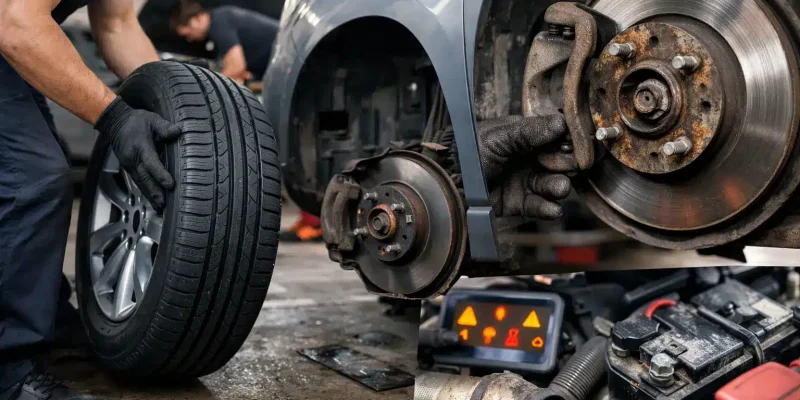
Dashboard warnings are another clue. The engine warning light, glow plug light on a diesel, DPF light, or traction-related warnings can all appear alongside power loss. Sometimes several warning lights come on together because one fault affects multiple systems.
Smoke can also tell you something. Black smoke often suggests too much fuel or not enough air. Blue smoke can point to oil burning. White smoke may suggest incomplete combustion or, in some cases, a more serious engine issue. None of these should be ignored.
What to do if your car has lost power
Start with the basics. If there is a warning light, note what came on and when it happened. Think about whether the problem started suddenly or got worse over time. That helps narrow things down.
If the car is in limp mode, avoid long journeys and do not force it. If the engine is overheating, misfiring badly, or making unusual noises, stop driving and get it checked. Carrying on can turn a repairable fault into engine damage.
Avoid replacing parts on guesswork. We often see customers who have already changed a sensor or filter because someone said it was the likely cause, only to find the actual issue was elsewhere. Modern vehicles need proper fault code reading and live data testing, not trial and error.
How the fault is diagnosed properly
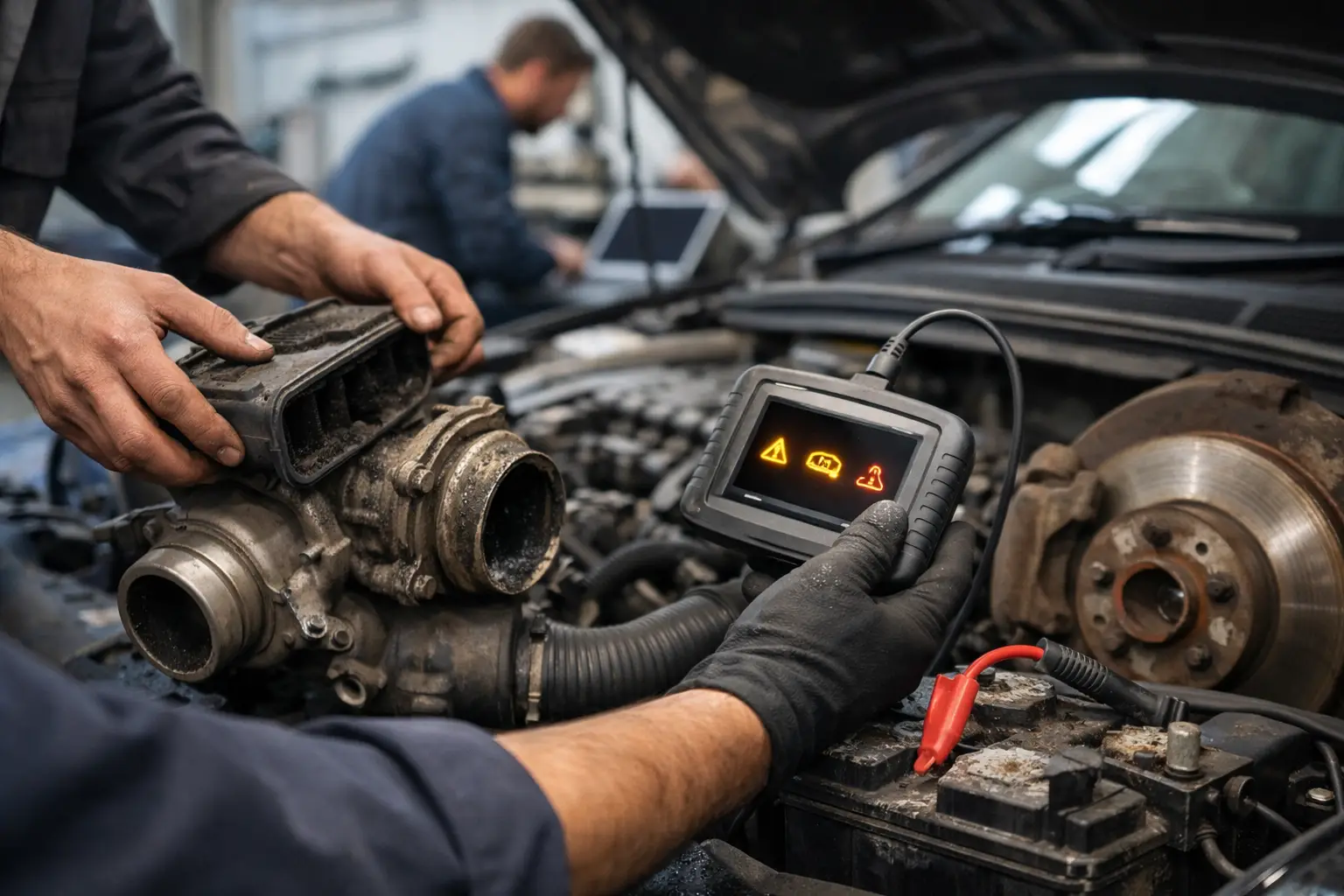
A good diagnostic process does more than plug in a machine and read fault codes. Fault codes point you in the right direction, but they do not always tell the full story. For example, a boost pressure code does not automatically mean the turbo has failed. It could be a split hose, sticking actuator, vacuum issue or sensor reading problem.
That is why a proper check includes code reading, live data, visual inspection and, where needed, road testing. Fuel pressure can be checked. Air leaks can be found. DPF soot levels can be measured. Turbo operation can be assessed. This is how you get to the root cause instead of treating symptoms.
At a local garage like AutoFix4u, that practical approach matters. Most drivers do not want a lesson in engine management. They want to know what is wrong, what needs doing, and whether it is safe to keep driving.
Can power loss be prevented?
Sometimes yes, sometimes no. A split turbo hose or failed sensor can happen without much warning. But a lot of power loss issues build up gradually and can be reduced with regular servicing and the right driving pattern.
Clean filters, good-quality oil and timely servicing help the engine breathe and run properly. Diesel drivers who mainly do short trips may also need to be more aware of DPF build-up. Giving the car a proper run when appropriate can help the system regenerate, but once the DPF is heavily blocked, that usually will not fix it on its own.
It also helps not to ignore early signs. A small hesitation, occasional warning light, or slight drop in pulling power is easier to deal with than a breakdown on the way to work.
When to book diagnostics
If your car feels noticeably slower, struggles uphill, hesitates when accelerating, or has gone into limp mode, it is time to get it checked. The same applies if the engine warning light is on or if the fault keeps coming and going.
In most cases, power loss will not sort itself out. It usually gets worse, especially if the cause is linked to fuel pressure, turbo boost or a blocked DPF. A quick diagnostic check can save a lot of wasted time and prevent bigger repair bills later.
If you are in Lowestoft or nearby and your car has lost power, book a diagnostic inspection and get a clear answer. You will know what has failed, what needs doing next, and whether a same-day repair is possible. Better to deal with it now than wait until the car decides it will not pull away at all.