Check Engine Light Diagnostics Cost UK
That engine warning light always seems to appear at the worst time – on the school run, before work, or just before a longer trip. If you are searching for check engine light diagnostics cost UK, what you usually want is simple: how much will it cost to find the fault, and are you about to be landed with a big repair bill?
In most cases, the first step is not the repair. It is the diagnosis. That matters because the same warning light can be caused by something minor, such as a sensor reading issue, or something more serious like a misfire, emissions fault, DPF problem or fuel system issue. Until the fault is properly checked, any quote is just guesswork.
What does check engine light diagnostics cost in the UK?
For most local garages, engine warning light diagnostics will usually cost somewhere from around £40 to £120. That is the normal range for an initial diagnostic check, but the final figure depends on what the garage includes.
Some workshops offer a basic fault code scan at the lower end. That may tell you what system the car is unhappy with, but not always the exact cause. A more thorough diagnostic session costs more because it includes live data checks, testing components, clearing and rechecking faults, and working out why the light came on in the first place.
This is where drivers often get caught out. A cheap scan is not always a proper diagnosis. We often see cars arrive after someone has already had the codes read elsewhere, but the real problem has still not been identified. The light comes back on, the car goes into limp mode again, and they end up paying twice.
Why the price can vary
The cost depends on the fault, the vehicle, and how much time is needed to trace it properly. On some cars, the problem is clear quite quickly. On others, the warning light can be linked to several possible causes.
A petrol car with a loose intake hose or failed ignition coil may be straightforward to diagnose. A diesel with intermittent power loss, DPF issues and multiple stored fault codes can take longer. The same applies to electrical faults. If the fault only appears under certain conditions, the technician may need extra testing time.
Vehicle make and age also make a difference. Newer cars have more sensors, more control units and more complex emissions systems. That does not always mean higher repair costs, but it can mean a more involved diagnostic process.
What should be included in a proper diagnostic check?
A proper engine warning light diagnostic is more than plugging in a machine and reading a code. The code only points you in a direction. It does not confirm which part to replace.
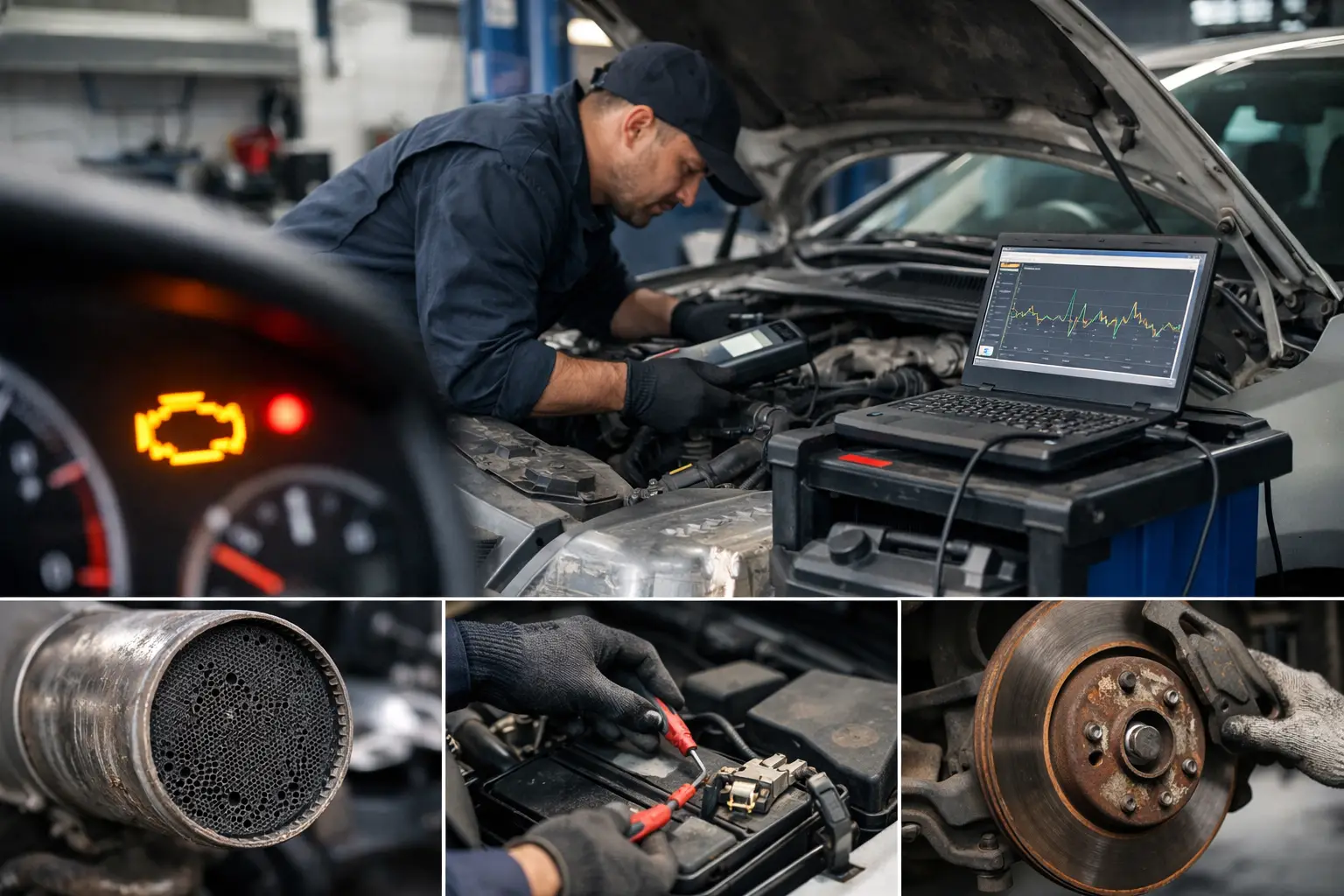
In most cases, a good diagnostic check should include a scan of the fault memory, a review of live readings from the engine management system, and some hands-on inspection where needed. If the light relates to a misfire, air flow issue, DPF loading, EGR fault or sensor problem, the garage should be checking the system around it, not just naming the code.
That is the difference between fault reading and fault finding. One gives you information. The other gives you an answer.
Cheap scan or full diagnosis?
This is usually where the decision comes down to cost versus value. If you only want to know why the light may have come on, a low-cost scan can help as a starting point. But if the car is running badly, losing power, smoking, struggling to start, or cutting into limp mode, a full diagnosis is the better option.
A cheaper scan may show an oxygen sensor code, for example. But that does not always mean the sensor itself has failed. The real issue could be a vacuum leak, fuel trim problem, exhaust leak, or another fault affecting the readings. Replace the wrong part and the money saved on the scan disappears very quickly.
Common causes behind the engine warning light
We often see this issue when there is a problem with ignition, fuel delivery, air intake, emissions equipment or sensor readings. On diesel cars, DPF and EGR faults are common. On petrol vehicles, misfires, coil pack faults and lambda sensor issues come up regularly.
Sometimes the car still feels normal and the light is the only symptom. Other times there is rough running, hesitation, poor fuel economy, a burning smell, reduced power or trouble starting. The warning light itself does not tell you how serious the problem is. That is why diagnosis matters.
If the light is flashing rather than staying on steadily, that usually points to a more urgent fault, often linked to a misfire that could damage the catalytic converter. In that case, it is best not to keep driving any further than necessary.
Can a garage waive the diagnostic fee?
Sometimes, yes. Some independent garages may absorb part of the diagnostic cost if you go ahead with the repair. Others keep the diagnostic charge separate because fault finding is skilled labour in its own right.
That is not a bad sign. In fact, it is often the more honest approach. If a technician spends time tracing the problem properly, there is value in that work whether the repair is carried out on the day or not.
The key thing is clarity. You should know before booking whether the price is for a basic code read, a full diagnostic session, or an inspection with additional testing if needed.
When diagnostics can cost more
There are cases where the normal price range does not cover the full job. If the fault is intermittent, if several systems are involved, or if earlier repair attempts have muddied the picture, more diagnostic time may be needed.
For example, a warning light linked to turbo performance could involve a boost leak, actuator fault, vacuum issue, sticking vane mechanism or sensor problem. The fault code alone will not separate those. The same applies to electrical problems, where wiring checks or circuit testing may be needed.
This usually happens because the warning light is a symptom, not the cause. A good garage should explain that clearly before carrying out extra work.
Is it safe to keep driving?
It depends on how the car is behaving. If the engine warning light is on but the car is driving normally, you may be able to continue for a short time, but it is still worth booking it in soon. Ignoring it can turn a smaller issue into a bigger one.
If the car is misfiring, shaking, losing power, smoking, or going into limp mode, do not leave it. That is when faults can lead to breakdowns or more expensive damage. DPF and emissions faults are a good example. Caught early, they can often be dealt with more simply. Left too long, they can lead to blocked filters, forced regens failing, or deeper engine problems.
What to ask before you book
Before agreeing to diagnostics, ask what is included and what happens next. A decent garage should be able to tell you whether the price covers fault code scanning only or proper investigation, how long they expect the check to take, and whether they will call you before any extra time is added.
You should also ask whether they will explain the fault in plain English and give you a repair quote before any parts are fitted. That should be standard. Clear pricing matters, especially when the warning light has come on without warning and you need the car back quickly.
What drivers in the Lowestoft area usually need
Most people are not looking for a technical lesson. They want to know why the light is on, whether the car is safe, and what it will cost to sort. That is why a diagnostic-first approach makes sense. It gives you a proper answer before money is spent on the wrong repair.
If your engine warning light has come on and the car is not running as it should, get it checked sooner rather than later. Same-day slots may be available depending on the fault and workload. Call now, get a quote, and book diagnostics with a local garage that will explain the problem clearly and tell you the next step without any surprise extras.
A warning light does not always mean a major repair, but it does mean the car needs attention.


2 thoughts on “Check Engine Light Diagnostics Cost UK”