
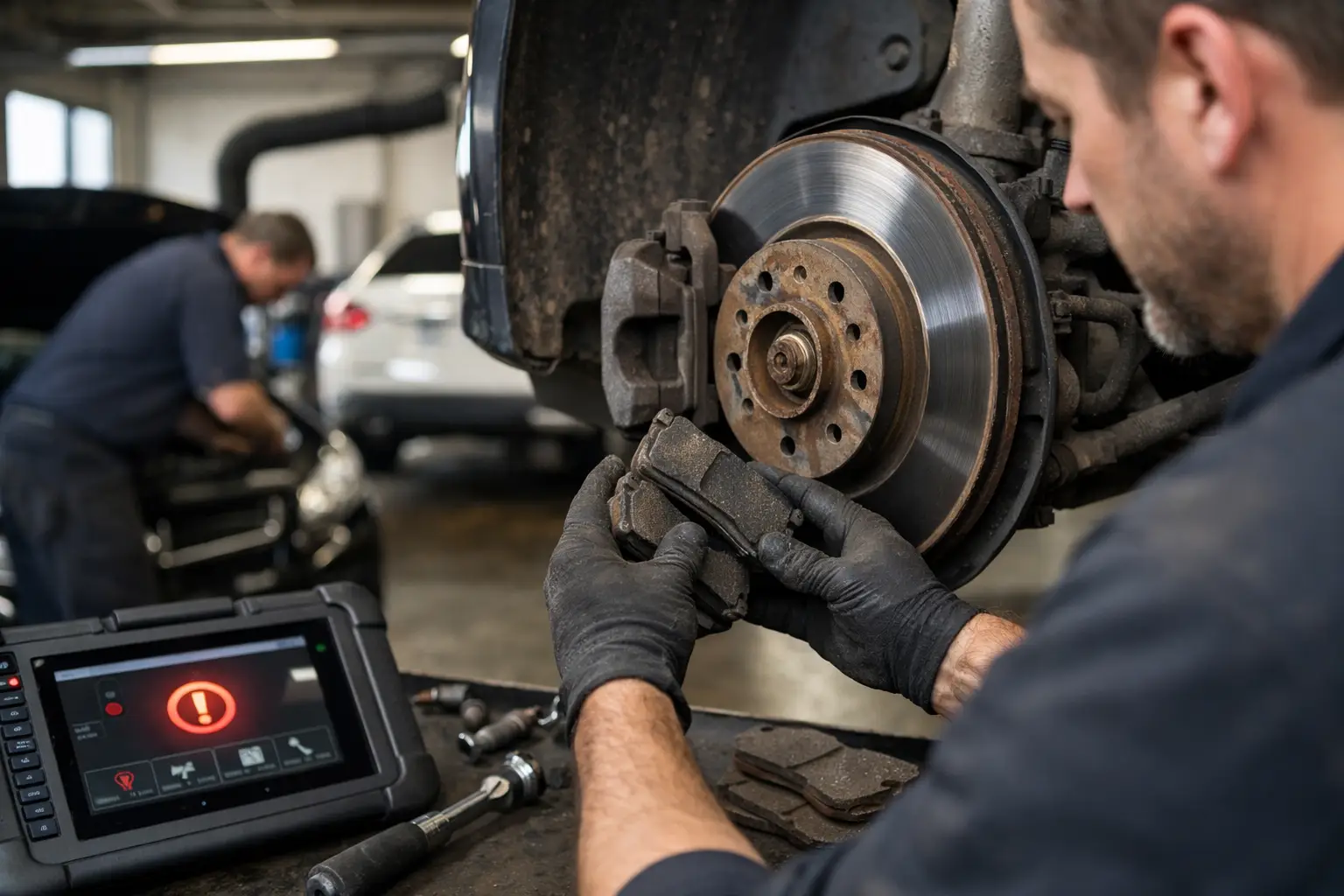
How Often to Change Brake Pads in the UK
That slight grinding sound when you slow down for traffic is usually where this question starts. If you are wondering how often UK drivers who use their cars every day should change brake pads, the honest answer is that there is no single mileage that suits every car. In most cases, brake pads last somewhere between 25,000 and 50,000 miles, but we often see them wear out sooner on cars used for school runs, short trips and stop-start town driving.
Brake pads are a wearing part. Every time you press the brake pedal, a small amount of material is used up. That is completely normal. The problem comes when drivers leave it too long, because worn pads can damage the brake discs as well, turning a straightforward brake job into a more expensive repair.
How often UK drivers should expect to change brake pads
For most everyday vehicles in the UK, front brake pads usually wear faster than the rears. That is because the front brakes do more of the work when the car slows down. A front set may need changing around every 25,000 to 40,000 miles, while rear pads can often last 40,000 to 70,000 miles. That said, mileage is only part of the picture.
We often see two cars of the same make and model with very different brake wear. One might still have plenty of life left at 30,000 miles, while the other is down to the backing plate. This usually happens because driving style, road type, vehicle weight and the quality of the parts all make a difference.
If you drive mainly in town, sit in queues, or do lots of short local journeys, your pads will wear faster. If you cover more motorway miles and brake more gently, they can last much longer. Drivers carrying heavy loads, towing, or regularly travelling hilly roads will also get through pads sooner.
What causes brake pads to wear out faster?
The most common cause is stop-start driving. Every junction, roundabout and traffic light means more braking. In places where drivers mostly do short urban runs, we see brake wear build up quickly even when annual mileage is fairly low.
Driving habits matter too. Late, hard braking puts more heat into the pads and discs. That extra heat speeds up wear. Riding the brakes downhill can do the same thing.
Sometimes the issue is not just normal wear. A sticking caliper, seized slider or badly fitted pad can cause one side to wear much faster than the other. We often see this when a customer comes in with the car pulling slightly under braking, a hot wheel, or one pad worn right down while the opposite side still looks usable. In that case, simply fitting new pads is not the full fix. The root cause needs sorting first.
Low-quality parts can also wear out sooner. Cheaper pads may look like a saving at first, but they can create more dust, more noise and shorter service life. In some cases they also wear the discs more aggressively.
Signs your brake pads need changing
Mileage gives you a rough guide, but the symptoms matter more. In most cases, your car will give some warning before the pads wear out completely.
A squealing noise is a common early sign. Many pads have a wear indicator that starts to make noise when the material gets low. Grinding is more serious. That often means the friction material has gone and metal is contacting the disc. If that happens, stop using the car more than necessary and get it checked.
You may also notice braking feels less sharp than usual, or the pedal feels different. Some drivers say the car takes longer to stop, especially in wet weather. Others notice a vibration through the pedal or steering wheel. That can point to disc wear as well as pad wear.
The brake warning light can come on in some vehicles, but not all cars will warn you electronically. That is why routine inspections matter. If you wait for a dashboard light, you may already be close to metal-on-metal contact.
Common warning signs not to ignore
If your brakes are making noise, the car pulls to one side, or you can see very little pad material through the wheel, do not leave it for weeks. These problems usually get worse, not better. What starts as worn pads can turn into damaged discs, overheating brakes or an MOT failure.
Can brake pads fail an MOT?
Yes, absolutely. Worn brake pads are a common reason for MOT failure or advisories. If the tester finds the pads are excessively worn or the braking performance is affected, the car can fail.
We often see customers come in after an MOT with an advisory for low brake pad material. That is the best time to deal with it. If you leave it until the next noise starts, there is a good chance the discs will need replacing too.
Brake condition is also tied into overall road safety. If your stopping distance increases because the pads are worn out, that puts you and other road users at risk. There is no benefit in stretching the last bit of life out of them.
How often should brakes be checked?
A sensible approach is to have the brakes checked at every service and any time a noise starts. If you do a lot of mileage, or heavy town driving, it is worth having them inspected more often.
You do not need to wait until something feels badly wrong. In many cases, a quick brake inspection can spot uneven wear, low pad thickness, corroded discs or a sticking caliper before it becomes a bigger repair. That gives you more choice about timing and avoids the last-minute panic when the car suddenly starts grinding.
If you are preparing for an MOT, a brake check beforehand is a good idea. It can save time and help avoid a fail for something that could have been sorted the same day.
How often to change brake pads for UK vehicles used for short trips
If your car mainly does local runs, school drop-offs, shopping trips and town traffic, expect brake pads to wear on the earlier side of the range. We often see front pads needing replacement closer to 20,000 to 30,000 miles on cars used this way.
Short journeys can be harder on brakes than longer ones. The car rarely gets into a steady driving pattern, so the brakes are used more often. If the vehicle also sits for periods between short trips, surface corrosion can build on the discs, which does not help braking feel or pad wear.
That is why service history matters more than guessing by age alone. A car with low mileage is not automatically fine. We have seen vehicles with modest miles still need brake work because their use pattern is harsh on the braking system.
Should you change pads and discs together?
Not always, but quite often it makes sense. If the discs are worn, heavily lipped, scored or heat-marked, fitting new pads alone is rarely the best move. New pads need a good disc surface to bed in properly.
In some cases, pads can be replaced on their own if the discs are still within specification and in good condition. In other cases, trying to save the discs only leads to noise, poor braking or uneven wear, and the job has to be done again.
This is where a proper inspection matters. A good garage should tell you clearly whether the discs are still serviceable or whether replacing both is the more reliable option. It should never be guesswork.
What to do if you think your brake pads are worn
If the brakes are squealing, grinding, feeling weak or the car has an MOT advisory for pads, get them checked sooner rather than later. The longer you leave it, the more likely it is that discs or calipers will be affected as well.
At AutoFix4u, we take a diagnostic-first approach. That means checking the full braking setup properly, explaining what has worn and why, and giving you a clear repair plan with no surprise extras. If it is just pads, we will say so. If there is an underlying issue causing uneven wear, we will point that out too.
If you are in Lowestoft or nearby and your brakes do not feel right, call now or get a quote. Same-day slots may be available, and a quick inspection can save a much bigger repair later.
Brakes rarely fail without warning. Most of the time, the car gives you a sign first. The key is not to ignore it.


