DPF Regeneration Lowestoft: Signs and Fixes
If your diesel has suddenly gone into limp mode on the way to work, lost power pulling out of a junction, or put the engine warning light on without much warning, a blocked DPF is often the reason. We deal with dpf regeneration Lowestoft drivers need when the car is no longer clearing itself properly and the problem starts affecting daily use.
For most people, this starts with a small change. The car feels sluggish. Fuel use gets worse. The cooling fan may keep running after you switch off. Then a warning light appears, and before long the vehicle is struggling on short trips around town. That is usually the point where the car needs proper diagnosis, not guesswork.
What DPF regeneration means
The DPF, or diesel particulate filter, is fitted to catch soot from the exhaust. Once it starts filling up, the vehicle needs to burn that soot off. That process is called regeneration.
In normal driving, the car will try to do this by itself. If you are doing regular longer runs at a steady speed, it often clears without you noticing. The trouble starts when the vehicle mostly does short journeys, stop-start driving, school runs, or local trips where the exhaust never gets hot enough for long enough.
In most cases, the DPF itself is not the first thing to fail. The filter blocks because the car has not been able to complete regeneration properly, or because another fault is stopping it from doing so.
Common signs you may need DPF regeneration in Lowestoft
We often see this issue when drivers report a warning light and say the car still runs, but not quite right. Sometimes it is mild at first. Sometimes the car drops straight into reduced power.
Typical signs include poor acceleration, limp mode, higher fuel consumption, a DPF warning light, the engine warning light, rougher running, and a strong hot smell after driving. Some vehicles may also start trying to regenerate more often, which can show up as raised idle speed or the radiator fan staying on.
If the car is also smoking, struggling to start, or showing multiple warning lights, there may be more going on than just soot build-up. That is why a proper diagnostic check matters.
Why DPF problems happen
Short trips are the big one. A diesel that spends most of its time around Lowestoft, Oulton Broad or Carlton Colville on local roads can struggle to complete a full regen cycle. That does not mean diesel is a bad engine. It just means the driving pattern has to suit it.
But driving style is only part of it. This usually happens because something else is pushing the soot level up or preventing the regen from starting. We see faults with pressure sensors, temperature sensors, EGR valves, glow plugs, injectors, turbo issues and air leaks. If one of those is present, forcing a regeneration without fixing the cause can bring the same problem back very quickly.
That is the bit many drivers do not get told. You can clear the symptom and still keep the fault.
Why a warning light should not be ignored
A blocked DPF rarely sorts itself once the warning stage has passed. If you keep driving with the light on, the soot load can get too high. At that point, the car may refuse to regenerate on its own and will often switch to limp mode to protect the engine.
Leave it longer and it can start affecting other parts. Exhaust back pressure rises, performance drops, fuel use goes up, and in some cases engine oil can become contaminated during repeated failed regen attempts. That turns a manageable repair into a much bigger job.
So if the vehicle has lost power or the warning light has come on, the sensible next step is to get it checked before it becomes a breakdown or MOT problem.
How we approach dpf regeneration Lowestoft drivers actually need
The first step is not pressing a button and hoping for the best. It is checking why the DPF has blocked in the first place.
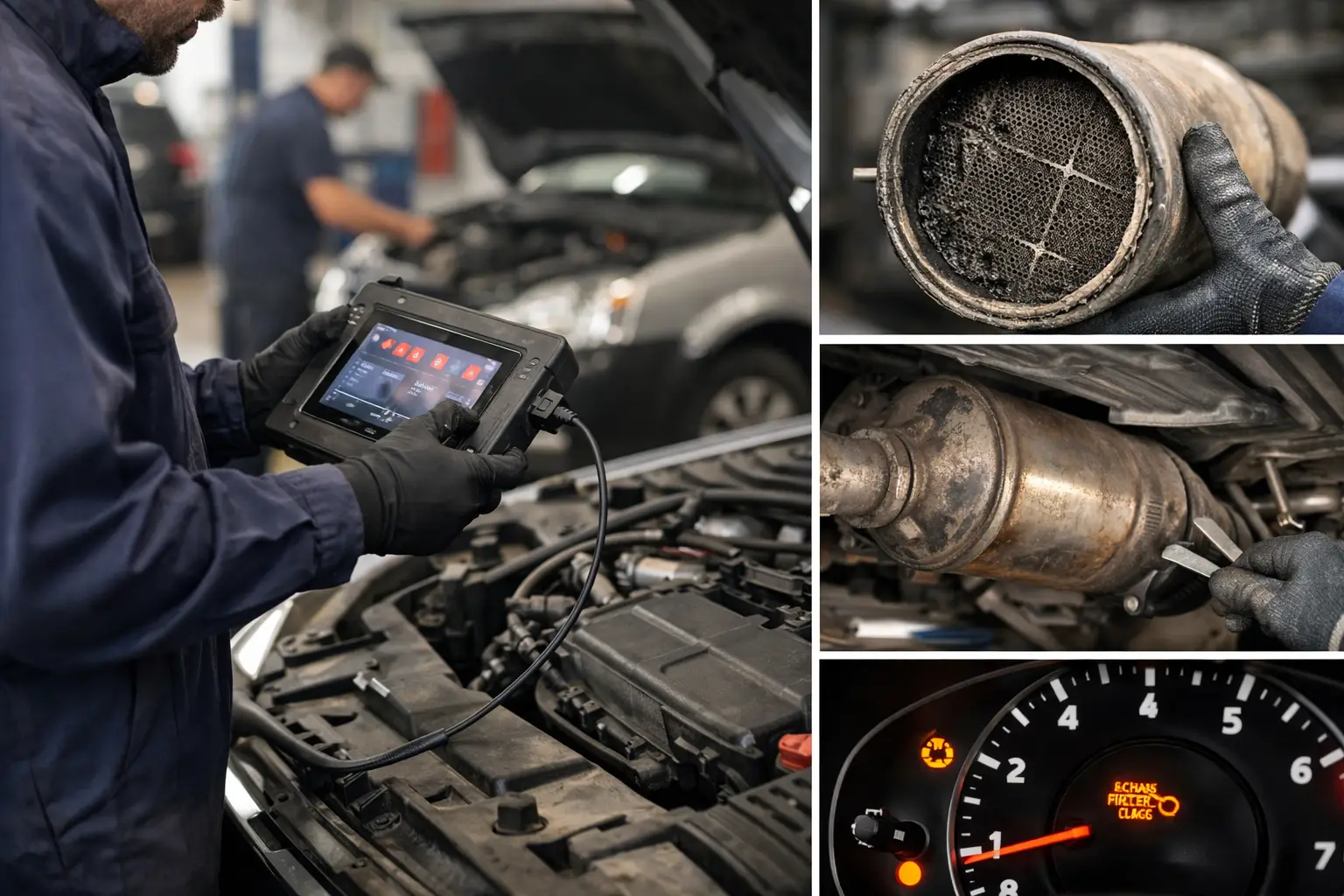
A proper diagnostic process usually includes reading fault codes, checking live data, looking at soot load and ash content, and testing whether the sensors are giving believable readings. We also look at how the vehicle has been used and whether there are signs of another running fault behind it.
If the system is suitable for regeneration, that may be the right next step. If it is too heavily blocked, or if another fault is active, trying to force a regen too early can waste time and money. In some cases the DPF may need to be removed and cleaned properly. In others, the main issue is a failed sensor or an engine fault that has to be put right first.
That is why the answer is not always the same from one diesel to the next.
Forced regeneration versus DPF cleaning
A forced regeneration uses diagnostic equipment to help the vehicle burn off the soot under controlled conditions. This can work well when the blockage is moderate and the rest of the system is healthy.
If the filter is heavily loaded, a deeper clean may be needed. That is especially true if the car has been driven for a while with the warning light on, or if previous regen attempts have failed. A heavily blocked filter can reach the point where a simple regen is no longer enough.
There is also a difference between soot and ash. Soot can be burned off. Ash is the leftover material that builds over time and cannot be removed through normal regeneration. On higher-mileage vehicles, that matters.
Can you clear it by driving?
Sometimes, yes. But only at the early stage, and only if the car is still allowing active regeneration.
If the DPF light has just appeared and the vehicle is otherwise driving normally, a sustained run at the right speed and engine load may help the car complete a regen. If the car is already in limp mode, has multiple warning lights, or keeps failing to clear the problem, more driving usually will not fix it.
That is where drivers can lose time. They are told to “take it for a run”, but the underlying issue is a sensor fault, an EGR problem, or a DPF that is already too blocked. By then, the better option is booking diagnostics and finding the cause properly.
DPF faults and MOT failures
A DPF issue can easily turn into an MOT fail. If the warning lights are on, emissions are affected, or the vehicle is not running correctly, it may not pass. Even if it gets through this time, a blocked DPF often leads to bigger reliability issues soon after.
We often see customers come in after an MOT advisory, a failed emissions test, or when the car has started losing power just before a test. That is common with vehicles doing mostly short local journeys.
Sorting it early gives you more options. Leave it too long and the repair path becomes more limited.
Local driving and diesel problems
Around this area, a lot of vehicles are used for mixed driving – local commuting, school runs, shopping trips, and occasional longer journeys. That pattern is fine for many petrol cars, but some diesels struggle with it over time.
If your car rarely gets a proper run and you have had one DPF warning already, it is worth treating the next one seriously. The issue tends to repeat if the cause is ignored. Drivers from places like Kessingland, Pakefield, Beccles and Hopton-on-Sea often tell us the same thing: the car was fine until it suddenly was not.
That is how DPF faults usually feel. Not dramatic at first, then all at once inconvenient.
What to do next
If your diesel has a DPF warning light, has gone into limp mode, or is using more fuel than normal, do not keep pushing it and hope it clears. Get it checked while the problem is still manageable.
At AutoFix4u, the focus is on finding the cause first, explaining it clearly, and only recommending the work that actually makes sense. That may be a regeneration, a sensor repair, further cleaning, or fixing the fault that caused the blockage in the first place. Same-day slots may be available depending on workload.
If you rely on the car every day, the best time to act is when the warning first appears, not when the vehicle stops doing the journeys you need it to do.


3 thoughts on “DPF Regeneration Lowestoft: Signs and Fixes”