Brake Repair Lowestoft – Signs You Shouldn’t Ignore
If your brakes have started squeaking on the school run, grinding in traffic, or feeling weak when you come up to a roundabout, do not leave it and hope it settles down. When people search for brake repair Lowestoft, it is usually because something has changed in the way the car stops. In most cases, that change means wear, damage, or a fault that needs checking properly before it turns into a bigger repair.
Brakes do not usually fail without warning. Most cars give you signs first. The problem is that many drivers are busy, the car is still moving, and it is easy to put it off for another week. We often see customers after an MOT failure, after a warning light comes on, or when the noise gets too loud to ignore. By that point, what could have been a straightforward brake job sometimes becomes discs, pads, sensors, and extra labour.
Common brake problems we see in Lowestoft
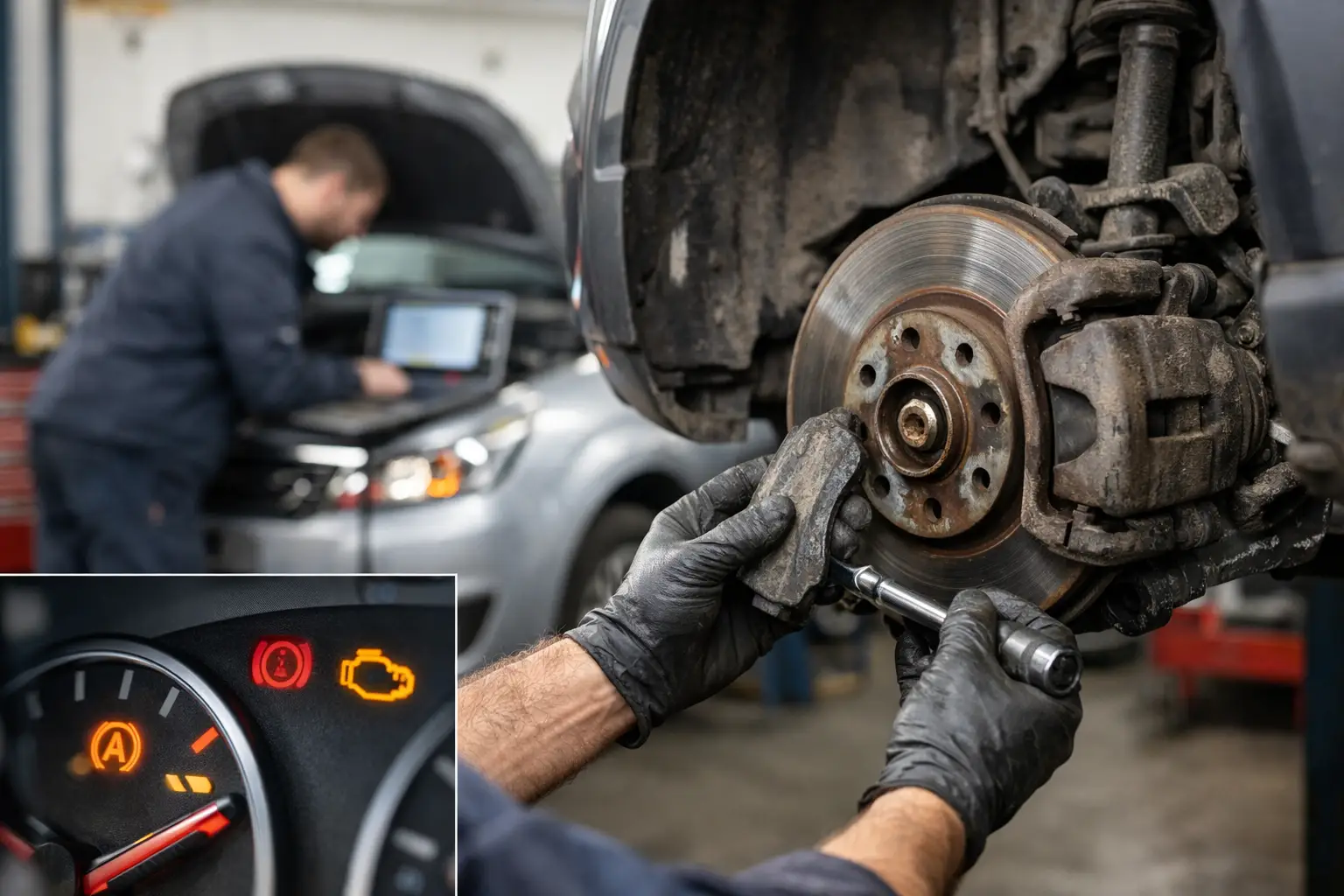
The most common issue is worn brake pads. This usually starts as a light squeal or scraping noise, especially at low speed. Pads are designed to wear down over time, but once the friction material gets too thin, braking performance drops and the metal backing can start damaging the disc.
Worn brake discs are another regular problem. If the car shudders when braking, the steering wheel vibrates, or the pedal feels uneven under your foot, the discs may be worn or warped. This can happen through age, heat, heavy use, or simply because pads were left too long and have scored the disc surface.
We also see sticking calipers, seized sliders, damaged brake hoses, and faults with the ABS system. These are less obvious at first. A car might pull to one side, feel like it is holding back, or show an ABS warning light on the dash. In some cases, one wheel gets much hotter than the others after a short drive. That usually points to a brake binding issue rather than normal wear.
Signs you may need brake repair in Lowestoft
Brake problems are not always dramatic. Sometimes the warning signs are small, but they still matter. If you notice any of the following, it is worth getting the car checked sooner rather than later.
A squealing or grinding noise is one of the clearest signs. Squealing often means the pads are worn low. Grinding can mean the pad material has gone and metal is now contacting the disc. Once that happens, the repair usually gets more expensive.
A soft brake pedal can point to several causes. It might be air in the system, worn parts, a fluid issue, or a leak. If the pedal feels spongy or goes lower than usual, that is not something to ignore.
If the car pulls left or right when braking, one side may not be working properly. That could be a seized caliper, uneven pad wear, or a problem in the hydraulic system. It affects both safety and tyre wear.
If a brake warning light or ABS light comes on, the fault needs diagnosing properly. Warning lights are useful, but they do not tell the full story on their own. The right next step is to inspect the braking system and find the root cause.
Why brake faults happen
In most cases, brake issues come down to wear and tear. Pads, discs, and fluid all have a service life. If you drive locally with lots of stopping and starting, brake components tend to wear faster than they would on long, steady runs.
Driving style makes a difference as well. Heavy braking, carrying extra weight, and repeated short journeys can all speed up wear. Coastal conditions around Lowestoft can also play a part. Moisture and road grime can lead to corrosion on discs, sliders, and other metal parts, especially if the vehicle is not being used regularly.
Sometimes the cause is not wear at all. We often see brake problems after another issue has been missed. A sticking caliper might wear one pad out much faster than the others. A damaged ABS sensor ring can trigger warning lights even when the pads look fine. That is why a proper inspection matters. Replacing parts without checking the full system can mean the same problem comes back.
What happens during a brake inspection
A proper brake check should do more than confirm the pads are low. The first step is to inspect the condition of the pads and discs on each wheel. That tells you how much wear there is and whether it is even across the axle.
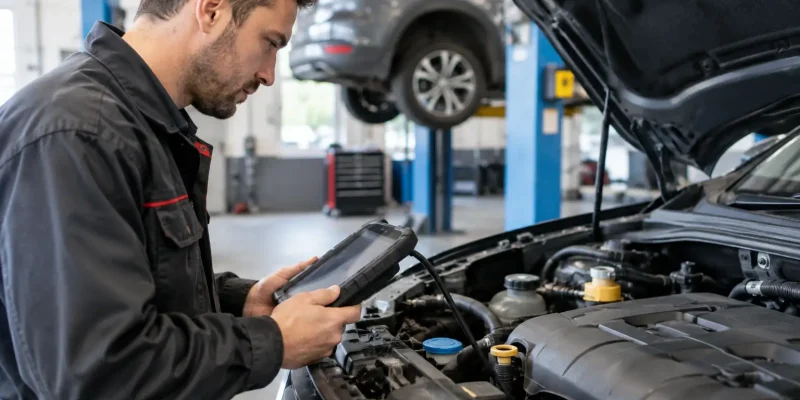
After that, the calipers, sliders, hoses, and fluid condition should be checked. If there is a warning light or braking fault, diagnostics may also be needed to test sensors and the ABS system. This matters because not every brake problem is mechanical. Some faults sit in the electronic side of the system and need identifying properly before any repair starts.
At a good local garage, you should get a plain English explanation of what has been found, what needs doing now, and what can reasonably wait. That is the difference between being sold parts and being given honest advice.
Brake repair Lowestoft – when it is urgent
Some brake issues can wait a day or two for booking. Others need immediate attention. If the pedal suddenly feels very soft, the car is not stopping properly, there is a strong grinding noise, or the vehicle pulls hard under braking, it is best not to keep driving it.
The same applies if a wheel feels excessively hot, there is a burning smell, or the brake warning light comes on with a noticeable change in braking performance. Those signs can point to binding brakes, severe wear, or hydraulic faults. Driving further can damage more components and increase the risk.
If the car still moves but does not feel safe, the sensible next step is to get advice before using it again. In some cases, recovery or transport support is the better option than trying to limp it in.
MOT failures and brake repairs
A lot of brake work starts with an MOT failure or advisory. Common reasons include pads worn too low, discs excessively worn or scored, binding brakes, imbalance across the axle, and ABS warning lights.
The problem for most drivers is not the wording on the test sheet. It is knowing what actually needs doing. We often speak to people who have been told the car failed on brakes but are not sure whether it needs pads, discs, a caliper, or something more. The answer depends on what caused the failure in the first place.
This is where a diagnostic-first approach helps. If the issue is just normal wear, the repair is usually straightforward. If there is an underlying fault causing uneven braking or warning lights, that needs sorting at the same time. Otherwise the new parts may not last as they should.
Choosing a local garage for brake work
When you need brake repairs, speed matters, but so does accuracy. You want the fault identified properly, clear pricing before work starts, and a repair that solves the issue rather than patches it up.
That is why many local drivers prefer an independent garage over a bigger chain. You are more likely to get a direct answer, a realistic timescale, and advice based on the actual condition of the car. If same-day repair is possible, you should be told. If parts need ordering or more investigation is needed, that should be explained clearly as well.
If you are in Lowestoft, Oulton Broad, Carlton Colville, Kessingland, Beccles or nearby, local access makes a real difference when the car is not safe to use for long. Brake problems are not something most people want to plan around for a week.
What to do if your brakes do not feel right
If something feels off, trust that instinct. Most drivers know when their car has changed. A new noise, a longer stopping distance, a warning light, or a vibration through the pedal is enough reason to get it checked.
Do not wait for the next service if the fault has already started. Do not assume it is just because the car has been standing. And do not settle for a guess when the system can be inspected properly.
At AutoFix4u, the aim is simple – find the cause, explain it clearly, and get you back on the road safely with no surprise extras. Same-day slots may be available depending on the fault and parts. Call now or get a quote if your brakes are making noise, feeling weak, or have failed an MOT. A quick check today is often the difference between a routine repair and a much bigger job next week.