Cheap Tyres Lowestoft – What to Check First
A tyre usually becomes urgent at the worst possible time – on the school run, before work, or a day or two before the MOT. When people search for cheap tyres Lowestoft, they are normally not browsing for fun. They need a safe, quick fix that does not turn into a bigger bill later.
That is where a bit of straight advice helps. A low tyre price can be the right choice in some cases. In others, the real problem is wheel alignment, worn suspension, a puncture that can be repaired, or uneven wear caused by a fault elsewhere on the car. If you only replace the tyre and ignore the cause, the next one can wear out just as quickly.
Cheap tyres Lowestoft – when they make sense
In most cases, a budget tyre is fine if the car is used for local driving, the correct size and load rating are fitted, and the tyre comes from a known manufacturer rather than an unknown brand with no real track record. For a lot of everyday drivers, that is enough. If you mainly drive around Lowestoft, Oulton Broad, Carlton Colville or nearby areas, and you are not doing high motorway mileage every week, a cheaper tyre can be a sensible option.
The main thing is matching the tyre to how you actually use the car. A driver doing short local trips in a small hatchback has different needs from someone carrying family, luggage and shopping every day in all weather. We often see people ask for the lowest price possible, but what they really want is value – something safe, legal and dependable that will not leave them back at the garage too soon.
That is why the best answer is not always the cheapest tyre on the shelf. It depends on your mileage, your driving style, and whether there is another issue causing the tyre problem in the first place.
The problem is not always the tyre
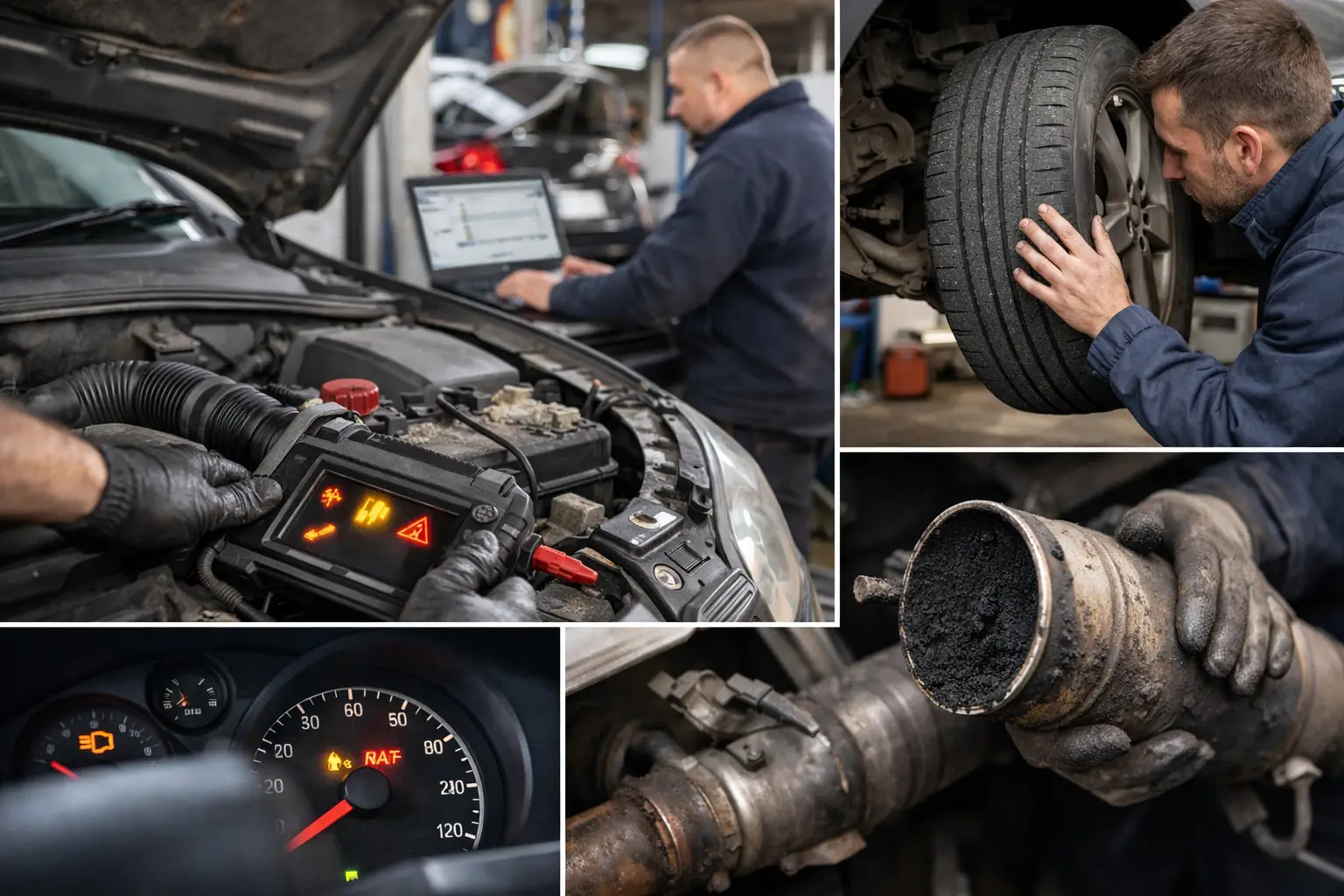
If one tyre keeps going down, wears on one edge, or starts looking rough much sooner than the others, there is usually a reason. This often happens because the tracking is out, the suspension has wear in it, the pressures have been wrong for a while, or the wheel has taken a knock from a pothole or kerb.
We also see cars come in after an MOT advisory for tyres, when the owner assumes all four need replacing. Sometimes they do. Sometimes only one or two are actually near the legal limit, and the bigger issue is that the inside edge is wearing away where you cannot easily see it.
That is why a proper check matters. It saves guesswork. It also helps avoid paying for new tyres when a puncture repair, alignment check or suspension repair would solve the real issue.
Signs you need more than just a replacement tyre
If the steering pulls to one side, the car feels unsettled over bumps, the steering wheel sits off-centre, or the tread is wearing unevenly, there may be a fault behind it. The tyre is the part you can see, but it is not always the cause.
A vibration through the steering wheel is another common one. People often assume the tyre itself is poor quality, but it may be a balancing issue, wheel damage, or wear elsewhere. Fitting another tyre without checking can mean the same complaint comes straight back.
What to check before you buy the cheapest option
Start with the basics. Check the tread depth across the full width of the tyre, not just the middle. Look for cracks in the sidewall, cuts, bulges, nails and signs of uneven wear. If the tyre keeps losing pressure, do not assume it needs replacing. A slow puncture can come from a screw, a damaged valve, or corrosion around the wheel rim.
Then think about the age and condition of the other tyres. If one tyre has failed but the tyre on the other side is nearly worn out, replacing both on the same axle is often the better move for handling and grip. It is not about selling more tyres. It is about keeping the car balanced and predictable, especially in wet weather.
You also need to make sure the tyre fitted is correct for the vehicle. Size, speed rating and load rating matter. A cheap tyre that is wrong for the car is not a bargain.
Cheap tyres are only good value if they last reasonably well
This is where trade-offs come in. Budget tyres can keep costs down upfront, but some wear faster or give less grip in heavy rain than mid-range options. That does not mean every cheaper tyre is poor. It means there is a difference between a sensible low-cost option and one that only looks good on the invoice.
For some drivers, spending a bit more saves money over time. For others, a well-chosen budget tyre is perfectly adequate. The right answer depends on how you use the car and what condition the rest of it is in.
Common tyre problems we see around MOT time
A lot of tyre enquiries come in just before an MOT or just after a failure. The usual issues are tread below the legal limit, cuts in the sidewall, exposed cords, damage from potholes, or tyres worn badly on the inner edge. That last one catches many drivers out because from the outside the tyre can still look acceptable.
This usually happens because alignment has been out for a while, or because a suspension part is worn. If the car has had a knock, drives oddly, or has started wearing tyres faster than normal, it is worth getting it checked properly before fitting replacements.
For motorists trying to keep the car on the road without spending more than they need to, this matters. A tyre replacement may be part of the fix, but not always the whole fix.
Cheap tyres Lowestoft drivers should still expect proper fitting
No matter what tyre you choose, fitting needs to be done properly. That means checking the old tyre condition, inspecting the wheel, fitting the new tyre correctly, balancing it, setting the pressure, and making sure there is no obvious sign of an underlying issue.
It should also include clear advice. If a tyre can be safely repaired, you should be told. If the tyre wear points to alignment or suspension trouble, you should be told that as well. Good service is not about making a simple job complicated. It is about being honest about what the car is showing.
That is especially important if you rely on one vehicle for work, family travel or daily errands. A tyre is not just another item on the car. It affects braking, grip, steering and fuel use. Getting it wrong can cost more later.
When to act straight away
Some tyre issues can wait a day or two. Others should not. If you have a bulge in the sidewall, cords showing, a rapid loss of pressure, or the car feels unstable, get it checked as soon as possible. Driving on a damaged tyre is a risk not worth taking.
The same goes for severe uneven wear. If one edge is bald and the rest still has tread, there is likely another problem in the background. Replacing the tyre without checking the cause is only half a job.
If you are not sure whether the tyre is safe, a quick inspection gives you a clear answer. That is often the fastest way to avoid a breakdown, an MOT fail, or being stuck with a car you cannot use.
A practical way to choose the right tyre
If your main priority is keeping the car safe and roadworthy without overspending, start with the condition of the vehicle rather than the lowest advertised tyre. Ask what has caused the wear. Ask whether the tyre can be repaired. Ask whether matching tyres on the axle would be better. Ask whether alignment or suspension needs attention.
That way, you are not just buying a tyre. You are solving the problem that brought you in.
For local drivers in and around Lowestoft, that is usually the difference between a quick fix that lasts and one that turns into another booking a few weeks later. At AutoFix4u, the best approach is the same as with any repair – find the cause, explain it clearly, and sort what actually needs sorting.
If your tyre is worn, damaged or losing pressure, get it checked before it becomes a bigger issue. A cheap option can be the right one, but only when it is also the safe and sensible one.