
Fix Car Air Conditioning Before It Fails
A car air conditioning fault usually starts small. The vents feel a bit warm in traffic, the windscreen takes longer to clear, or there is a damp smell when you switch the system on. Then one hot day, or one wet morning, it stops doing the job properly. If you need to fix car air conditioning issues, the main thing is not to guess. In most cases, the problem is simple enough to diagnose, but the right repair depends on what has actually failed.
For most drivers, this is not just about comfort. Air conditioning helps demist the glass, reduces fatigue on longer journeys, and makes the car easier to live with day to day. If you use your vehicle for commuting, school runs or work, a weak or failed system quickly becomes a nuisance.
Why car air conditioning stops working
We often see this issue when a driver assumes the system just needs a regas. Sometimes that is true, but not always. Air conditioning is a sealed system. If the petrol has dropped too low, there is usually a reason.
The common causes include a refrigerant leak, a failed compressor, electrical faults, a pressure sensor issue, a blocked condenser, or a cooling fan problem. On some cars, the system may appear dead simply because a fuse, relay or control module fault is stopping it from switching on properly.
That is why a diagnostic-first approach matters. If the root cause is a leak and you only refill the petrol, the cold air may come back for a short time and then disappear again. You are back where you started, only after spending more money than needed.
Signs you need to fix car air conditioning
Not every fault looks the same. Some systems stop completely. Others work on and off, which can be harder to pin down.
Warm air from the vents is the obvious one, but there are other signs worth paying attention to. If the airflow is normal but never gets properly cold, that often points to low refrigerant, a compressor problem or a sensor issue. If the airflow itself is weak, the fault may be linked to the cabin filter, blower motor or flaps inside the heater box rather than the air conditioning petrol.
A bad smell from the vents usually means bacteria and moisture have built up in the system, especially if the air conditioning has not been used regularly. A rattling or clicking noise when the system is turned on can suggest compressor or pulley trouble. If the windows mist up more than usual, that can also mean the system is not drying the air as it should.
Some vehicles will also trigger a warning light or store fault codes in the control system. Others will not show anything on the dash at all, even when the air conditioning has stopped working.
Regas or repair – what is the right fix?
This is where a lot of confusion starts. A regas is maintenance if the system has gradually lost efficiency over time. A repair is needed when a component has failed or the refrigerant is escaping.
If the system is low on petrol because of age-related loss, a regas may be all it needs. If there is a leak from a pipe, condenser, seal or compressor, the petrol will not stay in. In that case, the leak needs to be found and repaired first.
We often see cars where the condenser has taken stone damage from normal road use. It sits at the front of the vehicle and can be exposed to moisture, salt and debris. Corrosion is also common, especially on older vehicles. In other cases, the compressor clutch does not engage, or the pressure readings show the system cannot operate safely.
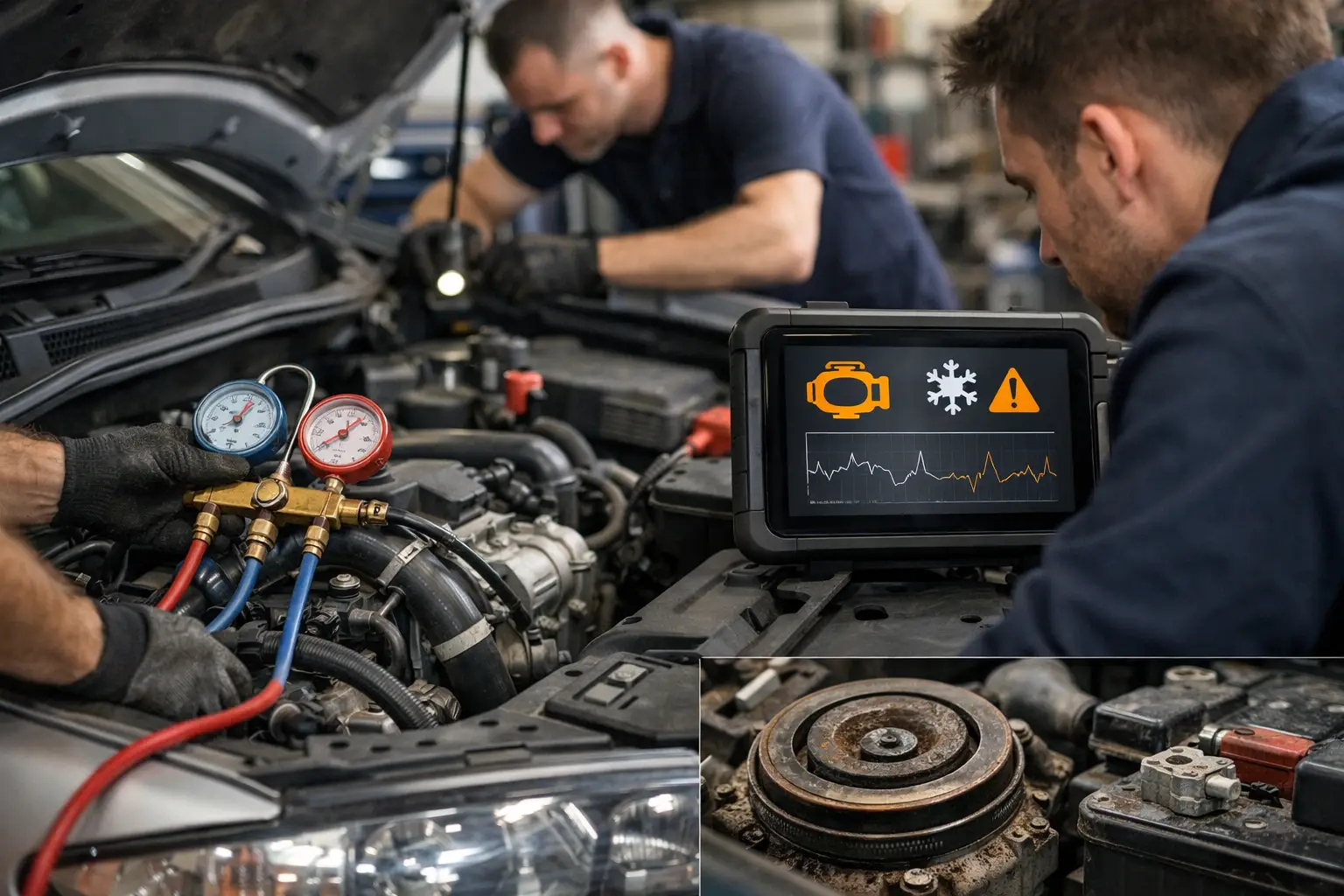
The right approach is simple. Test the system, check pressures, inspect for leaks, and confirm whether the compressor and electrical controls are working. Once that is clear, the repair plan becomes much more straightforward.
What happens during air conditioning diagnostics
A proper check should do more than confirm that the air is not cold. It should explain why.
The first step is usually a visual inspection. This can reveal damaged pipework, oil staining around joints, corrosion on the condenser, or obvious wiring issues. After that, the system pressures are checked to see whether the refrigerant level is too low or whether there is another fault affecting performance.
If needed, leak detection dye or specialist testing equipment can be used to pinpoint where the petrol is escaping. Electrical testing may also be needed if the compressor is not cutting in, the fans are not operating, or the control panel is not sending the right signals.
This is the difference between a proper diagnosis and a quick guess. It saves time and usually saves money as well, because the repair is based on evidence rather than trial and error.
Common air conditioning repairs we see
Most faults fall into a handful of categories. Leaks are one of the biggest. These can come from condenser damage, corroded pipes, worn seals or failed valves. If the leak is confirmed, the faulty part needs replacing before the system is vacuum tested and recharged.
Compressors are another common issue. If the compressor fails internally, the system may stop producing cold air altogether. Sometimes there will be noise. Sometimes there will be none. On certain vehicles, the clutch or control valve fails rather than the whole unit, so it depends on the design.
Electrical faults can be less obvious. A pressure sensor, fuse, relay, wiring break or fan control problem can stop the system from operating even when the refrigerant level is acceptable. We also see blocked or damaged condensers that cannot remove heat properly, which means the air from the vents never gets as cold as it should.
Then there are the simpler cases. A heavily clogged pollen filter, bacteria build-up or poor airflow can make drivers think the air conditioning has failed when the issue is partly ventilation-related. That still needs sorting, but it is usually less serious than a major component failure.
Can you keep driving with a faulty system?
Usually, yes, but that does not mean you should leave it for months.
If the only problem is weak cooling, the car may still be safe to drive. But if the windows are slow to demist, visibility becomes an issue. If the compressor or pulley is making noise, leaving it can lead to bigger damage. And if there is a leak, moisture can get into the system and create more expensive problems later.
Air conditioning faults are often cheaper to deal with when caught early. A small leak or minor electrical issue is one thing. A failed compressor and contaminated system is another.
How to avoid repeat air conditioning problems
Air conditioning systems tend to last longer when they are used regularly. Even in winter, it helps to run the system for a short time every week or two. That keeps seals lubricated and helps prevent stale smells building up.
It also makes sense to deal with weak performance early. If the air is not as cold as it used to be, get it checked before the system runs too low. Replacing a cabin filter when due, keeping the front of the condenser clear of heavy debris, and not ignoring strange noises all help.
There is also a practical point here. A lot of drivers wait until the first hot spell, then discover the system is not working and want it fixed immediately. By that stage, workshop demand is always higher. If you have noticed it slipping, booking it in sooner gives you more options.
When to book a proper check
If the air conditioning is blowing warm, cutting in and out, making noise, or struggling to clear the windows, it is worth getting it looked at. The same applies if it has needed repeated regassing in the past. A healthy system should not keep losing performance for no reason.
For drivers around Lowestoft, Oulton Broad, Carlton Colville, Kessingland, Beccles and nearby areas, the best next step is a proper diagnostic check rather than another guess. That way you know whether it needs a regas, a repair, or a deeper electrical inspection.
At AutoFix4u, the focus is always on finding the fault properly, explaining it in plain English, and giving you a clear repair plan with no surprise extras. If your system is not cooling as it should, call now, get a quote, and get it checked before a small air conditioning fault turns into a bigger repair.


3 thoughts on “Fix Car Air Conditioning Before It Fails”