Auto Repair Lowestoft: Fast Local Fixes
When your car starts playing up on the school run, on the way to work, or just before an MOT, you do not need a long lecture. You need proper auto repair Lowestoft drivers can rely on – fast fault finding, a clear answer, and a repair that actually solves the problem.
That is usually where things go wrong with rushed garages. A warning light gets cleared without finding the cause. A part gets replaced because it is the likely culprit, not because it has been properly tested. The car seems better for a few days, then the same fault comes back. We see this all the time with engine warning lights, loss of power, DPF faults, brake problems, and MOT failures.
What drivers usually need from auto repair in Lowestoft
Most people are not looking for technical detail. They want to know three things. What is wrong, how serious it is, and what it will take to put it right.
In most cases, the real issue is not just the repair itself. It is the uncertainty. If the car will not start, if it drops into limp mode, or if the brakes feel wrong, you need an answer quickly because life does not stop while the car is off the road.
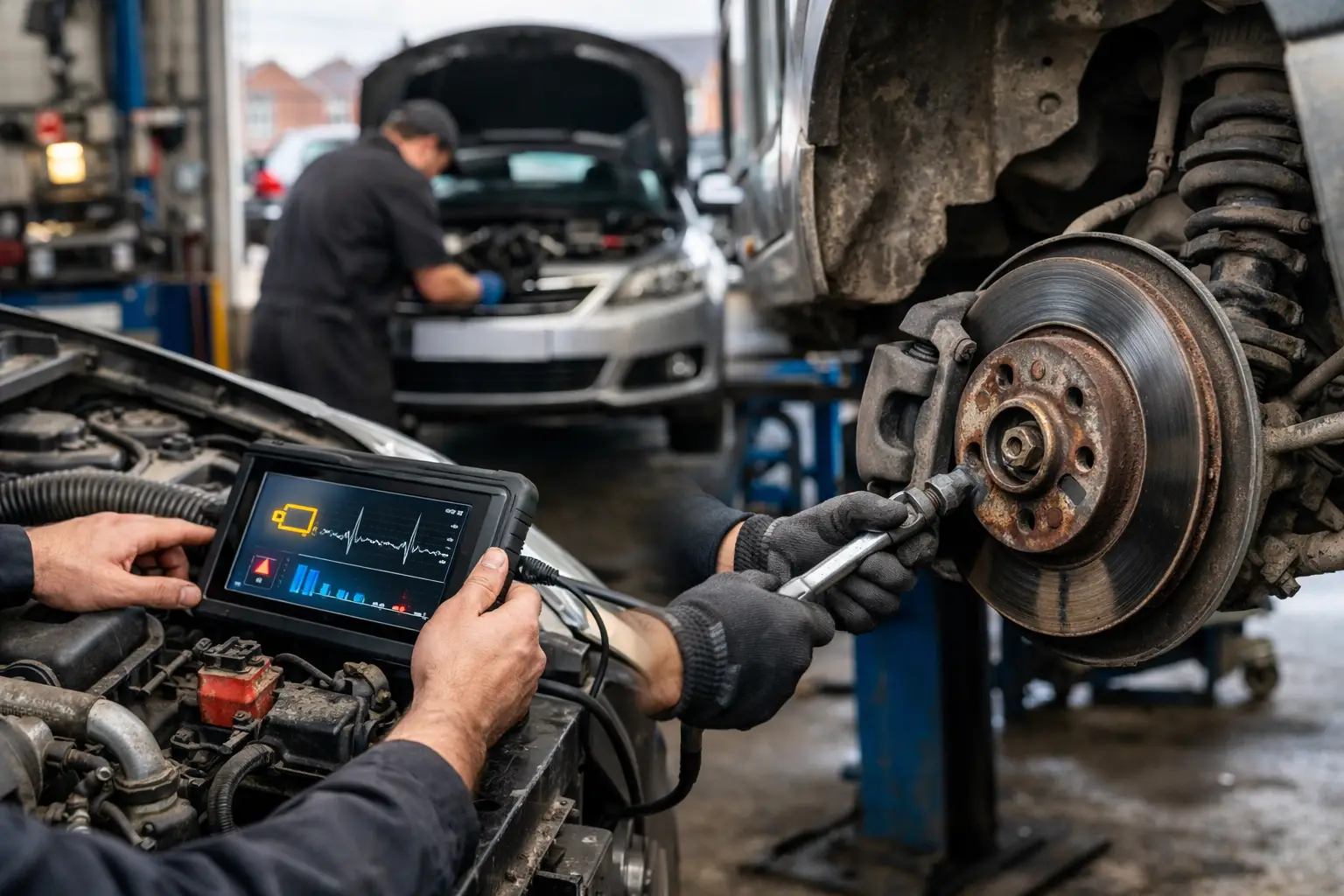
That is why a diagnostic-first approach matters. Before talking about parts, the fault needs to be identified properly. That might mean reading fault codes, but it should not stop there. Codes point you in a direction. They do not always tell you exactly what has failed.
A good local garage should explain the problem in plain English, tell you what needs doing now, and be honest if something can wait. Not every issue needs a major repair. Not every symptom has one simple cause either.
The faults we see most often
Warning lights and electrical faults
A dashboard light can mean anything from a minor sensor issue to a fault that affects how the engine runs. We often see this issue when a car has intermittent starting trouble, rough running, reduced fuel economy, or random warning lights that come and go.
This usually happens because modern vehicles rely on multiple sensors, control units, and wiring connections. If one part of that system starts feeding bad information, the car can behave strangely even if the actual mechanical parts are fine.
The solution is proper testing, not guesswork. If the engine warning light is on, the fault needs to be checked before it turns into a bigger repair. In some cases, it is a straightforward fix. In others, leaving it too long can lead to poor running, failed emissions, or breakdowns.
Loss of power and limp mode
When a car suddenly feels flat, struggles to accelerate, or will not go beyond a certain speed, drivers often assume the engine is finished. In reality, there are a few common causes.
We often see loss of power linked to air flow faults, boost leaks, fuel delivery issues, sensor problems, or DPF blockage. The car limits performance to protect itself, which is why limp mode feels so dramatic.
The trade-off here is simple. Keep driving and you may still get home, but you also risk making the underlying problem worse. The better option is to have it checked quickly and find the root cause before another part is affected.
DPF problems
DPF faults are common on diesel cars used for short trips around town. If the filter cannot get hot enough to clear itself, soot builds up. Eventually the car starts warning you, goes into limp mode, or struggles to regenerate.
This usually happens because the driving pattern does not suit the system, but that is not always the full story. A failed sensor, boost fault, injector issue, or EGR problem can stop regeneration as well. That is why forced regeneration on its own is not always the answer.
A proper repair means checking why the DPF blocked in the first place. If the cause is not fixed, the same issue often returns.
Brake and clutch problems
If the brakes are grinding, pulling, squealing, or feeling soft, it needs looking at sooner rather than later. The same goes for a clutch that slips, bites too high, or makes gear changes difficult.
Some brake repairs are straightforward, such as worn pads and discs. Others involve seized calipers, worn hoses, or issues picked up during MOT preparation. Clutch faults can be down to wear, but they can also involve hydraulics or gearbox-related problems. It depends on the symptoms.
The key is not to wait until the car becomes unsafe or undrivable. Small signs usually turn into bigger repair bills if ignored.
MOT failures with no clear explanation
A failed MOT is frustrating enough without a vague list of advisories and defects. Many drivers just want someone to explain what actually matters and what needs doing first.
We often see failures caused by worn suspension parts, tyre damage, brake imbalance, exhaust leaks, warning lights, and emissions faults. Some are quick fixes. Some need further testing before the right repair can be confirmed.
That is where clear communication matters. If your car fails, you need a practical repair plan, not a confusing list of jobs with no context.
Why proper diagnostics save time and money
Auto repair Lowestoft drivers can trust starts with the cause
It is tempting to replace the most obvious part and hope for the best. Sometimes that works. Quite often, it does not.
For example, a battery warning can be the battery, the alternator, the wiring, or a charging issue caused by something else. An air conditioning fault might need a regas, but it could also be a leak, a failed compressor, or an electrical fault stopping the system from working.
Proper diagnostics reduce wasted money on the wrong parts. They also shorten repair time because the garage is not chasing symptoms. For busy drivers in Lowestoft, Oulton Broad, Carlton Colville, Kessingland, Beccles, and nearby areas, that makes a real difference.
What to expect from a local repair garage
A decent garage should keep things simple. First, identify the issue properly. Next, explain what has been found in plain English. Then give a clear repair recommendation with transparent pricing and no surprise extras.
Same-day repairs are possible in many cases, especially when the fault is caught early and parts are available. But honesty matters here too. Some problems take longer because they need deeper testing or more than one component has failed. A good workshop will tell you that up front instead of making promises it cannot keep.
Local accountability matters as well. If you use your car every day, you want to deal with a garage that knows the area, understands how disruptive a breakdown is, and takes responsibility for the work. That is the benefit of using a local independent workshop rather than feeling like just another booking.
When to stop driving and book it in
Some faults can wait a day or two. Others really should not.
If the car is overheating, has a serious loss of power, is making heavy knocking noises, struggles to stop properly, or shows multiple warning lights at once, get it checked as soon as possible. The same applies if it will not restart after a short journey, keeps cutting out, or smells strongly of fuel or burning.
If the issue seems minor, such as a single warning light with no obvious change in how the car drives, it may still be safe for a short period. But minor faults have a habit of becoming inconvenient at the worst moment. Early diagnosis is usually the cheaper option.
Fast help for everyday car problems
At a working garage, most bookings are not glamorous jobs. They are everyday problems affecting everyday drivers. A van that will not start before work. A family car that fails its MOT on brakes and tyres. A diesel with a blocked DPF after weeks of short runs. An engine warning light that came on over the weekend and now the car feels different.
That is why the service needs to be practical. Clear answers. Honest recommendations. Quality parts. Repairs that are meant to last.
If you need help, the next step is simple. Book diagnostics, ask for a quote, or call the garage and explain the symptoms. AutoFix4u supports drivers across Lowestoft and nearby Suffolk and Norfolk areas with straightforward repairs and same-day solutions where possible. You can find us at https://autofix4u.co.uk/.
The best time to deal with a fault is usually when it first shows up, not when it leaves you stranded.


There’s definately a lot to learn about this
issue. I really like all the points you have made.