Suspension Knocking Noise While Driving?
A knock from the suspension rarely stays as “just a noise” for long. One day it is a faint clunk over a pothole. A week later the car feels unsettled on bends, the steering seems less precise, and you are wondering if it is still safe to keep driving.
That is usually how suspension faults start – small symptoms, then bigger ones. If you can hear a suspension knocking noise when driving, the sensible move is to get it checked before it turns into tyre wear, poor handling, or damage to other parts.
What a suspension knocking noise when driving usually means
In plain English, a knocking noise normally means there is movement somewhere that should not be there. Suspension parts are designed to control how the wheels move over bumps and keep the car stable. When a bush wears out, a joint develops play, or a fixing works loose, you start to hear that movement as a knock, clunk, or rattle.
The exact sound matters. A dull clunk over speed bumps can point to one issue, while a sharper knocking on rough roads can suggest another. The road surface, your speed, whether you are braking or turning, and whether the sound comes from the front or rear all help narrow it down.
That is why guessing rarely saves money. The noise itself is only the symptom. The real job is finding the actual fault.
Common causes of suspension knocking noise when driving
A few faults come up again and again.
Worn drop links
Drop links are small suspension links connected to the anti-roll bar. When they wear, they often cause a light knocking noise over uneven roads, especially at lower speeds. It can sound minor, but worn links affect stability and can make the car feel less settled in corners.
Anti-roll bar bushes
These bushes hold the anti-roll bar in place. As rubber ages, it hardens, cracks, or develops play. That can create a knock or creak as the suspension loads up and releases. Some drivers notice it more when going over sleeping policemen or pulling onto a driveway at an angle.
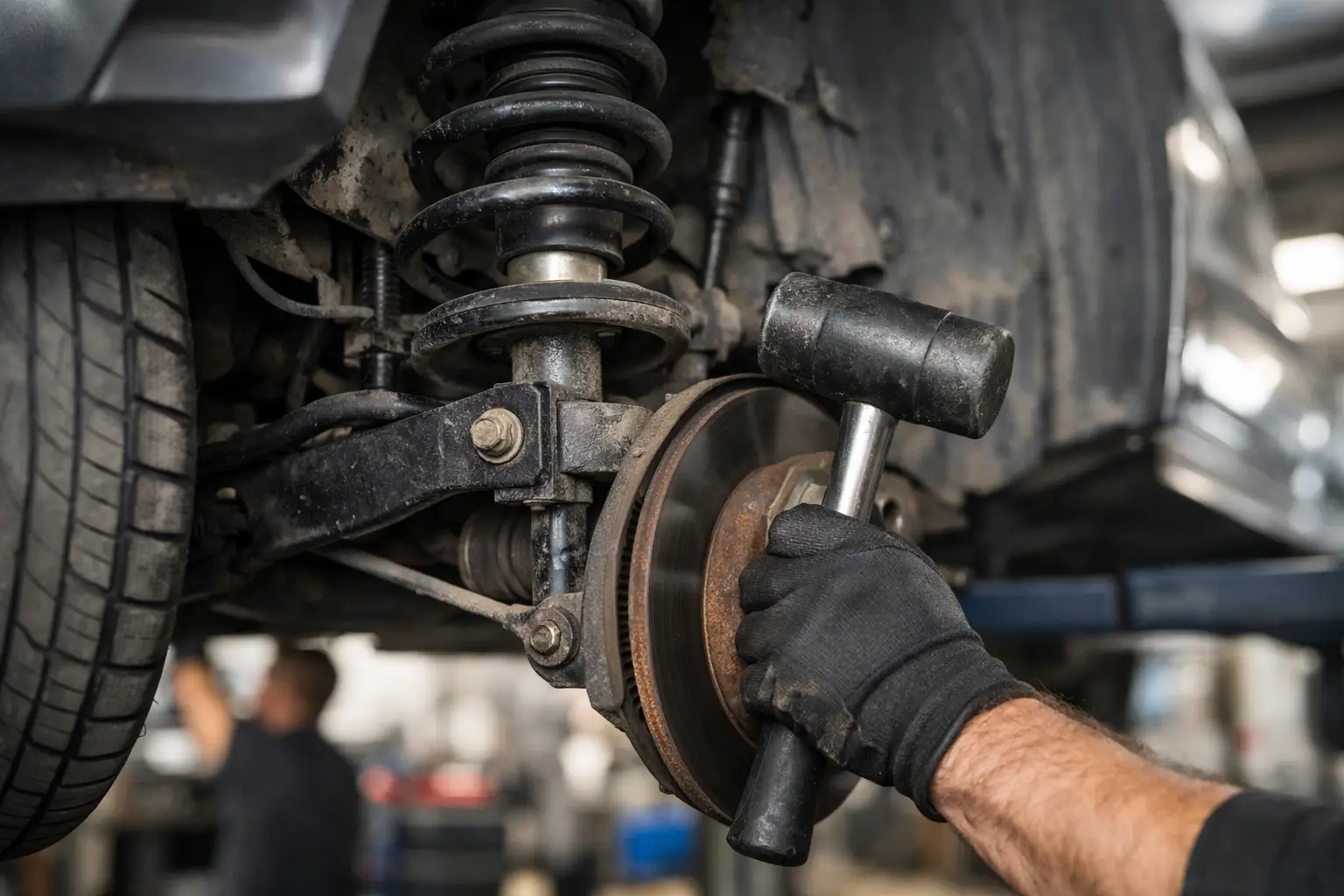
Worn suspension arm bushes or ball joints
These parts take a lot of stress. When they wear, the wheel can move more than it should, which can cause knocking, vague steering, and uneven tyre wear. Left too long, a worn ball joint becomes a proper safety issue.
Faulty shock absorbers or top mounts
If the shock absorber is leaking or the top mount is worn, the car may knock over bumps and feel bouncy or unsettled. Top mounts can also create noise when turning the steering, particularly at low speed.
Coil spring damage
A cracked or broken spring can make a knocking or twanging sound and may alter the ride height on one corner of the car. Sometimes the break is obvious. Sometimes it is hidden in the lower part of the spring seat and only shows up on inspection.
Loose brake or steering components
Not every knock blamed on the suspension is actually a suspension part. Loose calipers, worn track rod ends, or steering rack play can sound very similar. That is one reason proper diagnostics matter. Replacing the wrong part wastes time and money.
When the noise happens tells you a lot
If the knock only happens over bumps, that often points towards worn bushes, drop links, shock absorbers, or top mounts. If it happens when turning, the issue may be linked to top mounts, springs, or steering joints. If you hear it under braking or pulling away, suspension arm bushes or ball joints are more likely.
Rear suspension knocks can be trickier because sound travels through the shell of the car. Many drivers are convinced the noise is from the boot area when it is actually underneath. Exhaust mountings, rear shocks, springs, and suspension bushes can all be involved.
The key point is this: pattern matters. The more clearly you can describe when it happens, the easier it is to pinpoint the fault quickly.
Is it safe to drive with suspension knocking?
Sometimes yes, for a short trip to a garage. Sometimes no.
It depends on what is causing the noise and how severe the wear is. A mildly worn drop link is not in the same category as a badly worn ball joint or broken spring. The trouble is, from the driver’s seat, those problems can sound surprisingly similar.
If the knock is getting louder, the steering feels loose, the car pulls to one side, the ride height looks uneven, or you can feel vibration through the wheel, do not ignore it. The same goes if the car feels unstable when braking or cornering.
Suspension is not just about comfort. It affects braking, steering control, tyre contact with the road, and how stable the car is in an emergency manoeuvre. A fault that starts as an annoyance can become a safety problem very quickly.
Why DIY guesswork often gets expensive
It is tempting to search the noise online, order the cheapest likely part, and hope for the best. Sometimes that works. Quite often it does not.
A knock from a front corner could be a bush, ball joint, drop link, top mount, shock absorber, spring seat, steering joint, or even a loose undertray. Replacing parts one by one can cost more than diagnosing it properly in the first place.
There is also the issue of related wear. If one suspension component has failed, another part may already be under strain. Fitting one new item without checking the rest of the assembly can leave the original problem partly unresolved.
A proper inspection should look at the whole area, not just the first worn part that appears obvious.
How a garage should diagnose a suspension knock
A good suspension check is not just a quick look with the wheels on. It should involve inspecting the vehicle safely raised, checking for play in joints and bushes, looking for leaks or spring damage, and assessing related steering and braking components where relevant.
Road testing can help too, especially if the noise only occurs under certain conditions. The aim is simple: find the fault causing the knock, confirm whether anything else is worn, and explain what needs doing now versus what can reasonably wait.
That matters for cost as well as safety. Drivers want clear pricing, not vague advice and a list of maybe parts.
What the repair might involve
The repair depends entirely on the fault. It could be as straightforward as replacing a worn drop link or anti-roll bar bush. It could be a more involved job such as suspension arms, top mounts, shock absorbers, or springs.
In some cases, it makes sense to replace parts in pairs across the same axle, especially with shocks or springs, to keep handling even. In other cases, replacing the failed part alone is the right call. There is no one-size-fits-all answer.
Wheel alignment may also be needed after suspension or steering work. Skip that step when it is required and you can end up with poor handling or uneven tyre wear, even after the knock has gone.
Signs you should book it in sooner rather than later
A light occasional knock is worth checking. A heavy clunk, repeated rattling, or any change in how the car drives should move up the list quickly.
If you have an MOT coming up, do not leave it to chance. Worn suspension components are a common reason for advisories and failures. Sorting the issue early gives you time to fix the real cause without added stress.
This is especially true if you rely on one car for work, school runs, or daily commuting. A small repair booked at the right time is usually less disruptive than a breakdown or an unsafe car you cannot use.
Getting the right fix, not just a quieter car
A knocking noise can sometimes disappear temporarily. Colder weather changes rubber stiffness. Road conditions change. The fault does not fix itself.
What matters is finding out whether the issue is minor wear or the start of something more serious. At AutoFix4u, we focus on proper fault finding, clear quotes, and repairs that deal with the cause rather than masking the symptom. Same-day diagnostic slots are often available for common suspension and steering faults around Lowestoft, which helps if the car is needed every day.
If your car has started knocking over bumps, through turns, or under braking, trust the noise. Cars usually give some warning before a bigger failure. Getting it checked now is the straightforward way to protect your safety, your tyres, and your wallet later.


3 thoughts on “Suspension Knocking Noise While Driving?”