
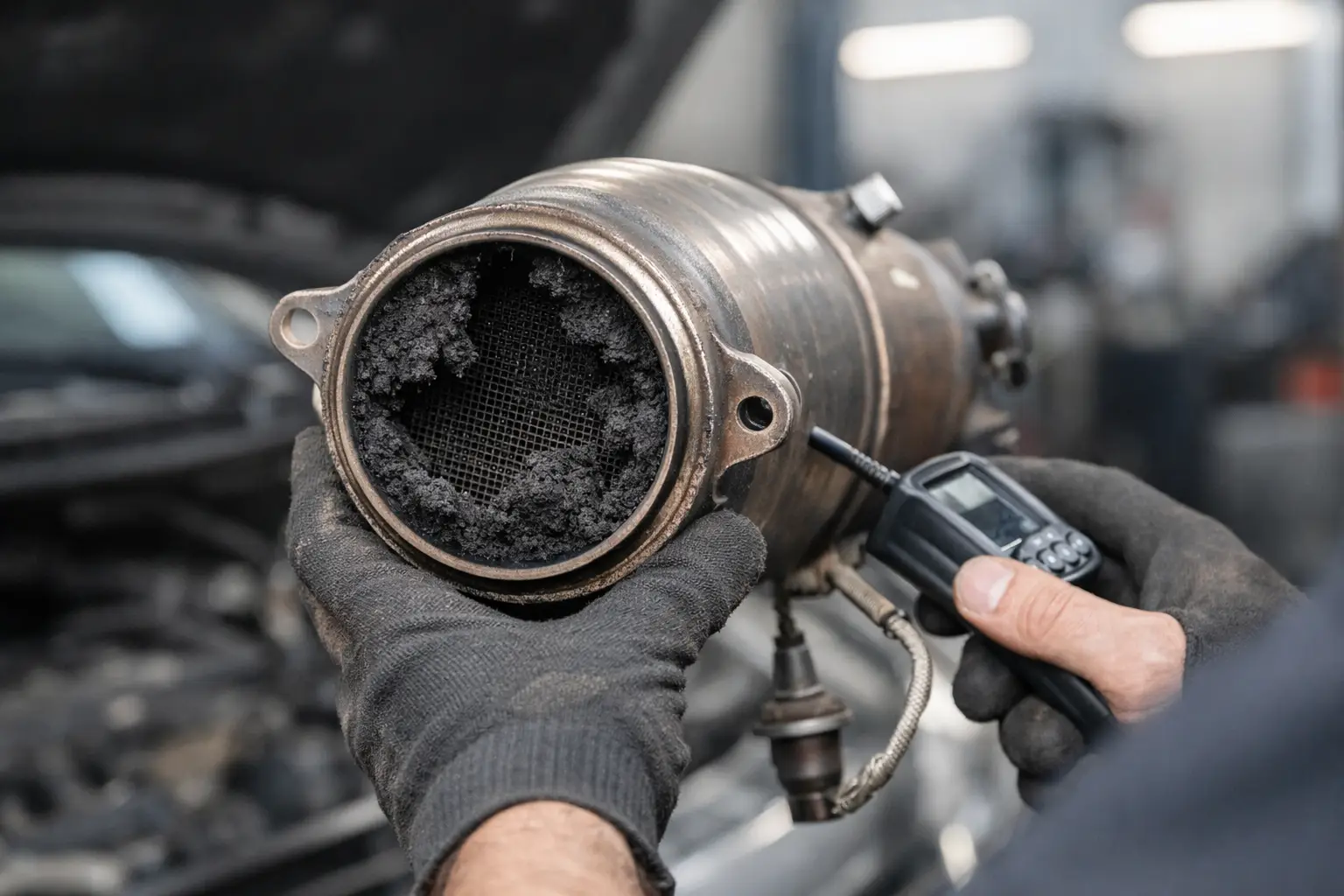
7 Signs Your DPF Might Be Blocked
If your diesel car suddenly feels flat, uses more fuel than usual, or throws up a warning light on the dash, the DPF is one of the first things worth checking. A blocked diesel particulate filter can start as a minor issue and turn into poor performance, failed regeneration, limp mode, or a car that simply will not drive properly.
The good news is that the signs are usually there before things get that far. The trick is knowing what they mean and acting before the blockage gets worse.
How to tell if DPF is blocked
The most obvious clue is a DPF warning light, but that is not the only one. In many cases, the car starts behaving differently before the dashboard tells you anything.
A blocked DPF often shows up as reduced engine power, sluggish acceleration, higher fuel consumption, rough running, frequent cooling fan operation, a stronger exhaust smell, or the engine dropping into limp mode. Some drivers also notice the stop-start system stops working, because the car is trying to protect itself while the fault is active.
One symptom on its own does not always confirm a blocked DPF. A turbo fault, EGR issue, pressure sensor problem, or injector fault can cause similar complaints. That is why proper diagnostics matter. The aim is to fix the actual fault, not just clear a light and hope for the best.
1. A DPF warning light appears
This is the clearest sign, but it still needs context. A DPF light usually means soot levels have built up and the filter needs to regenerate, or that it has already failed to do so.
If the light comes on and the car still drives normally, the blockage may be at an earlier stage. If you leave it too long, that warning can turn into an engine management light, glow plug light, or limp mode. At that point, the car may need more than a simple regeneration.
Some vehicles are more sensitive than others. On one diesel, the light may come on early as a warning. On another, you may get poor running first and the light later.
2. The car feels sluggish or will not rev freely
One of the most common complaints is that the car feels strangled. You press the accelerator and it responds, but not properly. Overtaking feels harder. Hills feel steeper. The engine may seem like it is holding back.
That happens because exhaust gases cannot flow as they should when the filter is heavily restricted. The engine ends up working against that back pressure.
This can creep up gradually, which is why some drivers do not notice straight away. They only realise something is wrong when the car drops into limp mode or struggles far more than usual.
3. Fuel consumption gets worse
If you are filling up more often and your driving has not changed, a blocked DPF could be part of the reason. During repeated failed regenerations, the engine may use extra fuel trying to raise exhaust temperatures enough to burn the soot away.
That extra fuel use is not always dramatic at first. It can just be enough to make the car feel more expensive to run than it was a few weeks ago.
Fuel economy can also worsen if another issue is causing the DPF to clog in the first place. Faulty injectors, EGR problems, sensor faults, and short journeys all play a part.
4. The radiator fan keeps running
This catches a lot of drivers out because it does not seem related to the exhaust system. If the cooling fan is running after you switch off, or cutting in more often than normal, the car may be attempting an active regeneration.
That process raises temperatures to burn soot from the filter. On some cars, you might also notice a hot smell, a slightly different idle speed, or the engine sounding busier than normal.
One fan cycle on its own is not enough to diagnose a blocked DPF. But if it keeps happening alongside a warning light, poor fuel economy, or weak performance, it points in that direction.
5. The engine goes into limp mode
If the blockage gets bad enough, the car may protect itself by limiting power. This is what drivers call limp mode. The car will often still move, but acceleration is poor and it may not go beyond certain speeds or revs.
At this stage, it is no longer a case of waiting to see if it clears. Continuing to drive with a badly blocked DPF can increase the risk of further problems, including excess back pressure and stress on other engine components.
Limp mode can also be triggered by faults linked to the DPF system rather than the filter itself. Differential pressure sensors, temperature sensors, and wiring faults can all cause similar behaviour. Again, this is where proper testing saves time and money.
6. You mainly do short trips
This is not a symptom, but it is one of the biggest warning factors. If your diesel spends most of its life on short school runs, local errands, or stop-start town driving, the DPF may not be getting hot enough to regenerate properly.
Diesel particulate filters work best when the engine reaches full operating temperature and stays there long enough for the regeneration cycle to complete. If journeys are too short, soot builds up faster than the system can clear it.
That does not mean every diesel used locally will have DPF trouble. But if your use is mostly short runs and the car starts showing any of the signs above, the DPF moves higher up the suspect list.
7. There is a strong smell or more smoke than usual
Modern diesels with a healthy DPF should not produce obvious exhaust smoke in normal use. If you notice a harsher exhaust smell, smoke under load, or unusual fumes during regeneration, something is not right.
Sometimes that points to a blocked DPF. Sometimes it points to the cause behind it, such as an air flow issue, injector problem, or incomplete combustion. Either way, it should not be ignored.
What causes a DPF to block?
Soot build-up is normal. The problem starts when the car cannot clear it. Short journeys are a major cause, but they are not the only one.
A DPF can block because of failed regenerations, faulty pressure or temperature sensors, EGR faults, injector issues, turbo problems, oil contamination, or using the wrong engine oil. In some cases, the filter itself is simply too full of ash after years of use and cleaning is the better route than repeated forced regens.
This is why there is no one-size-fits-all fix. If a garage only forces a regeneration without checking why the filter blocked, the problem often comes back.
Can you keep driving with a blocked DPF?
It depends how far gone it is. If the warning has only just appeared and the car is still driving normally, there may still be time to deal with it before it becomes a bigger repair. If it is already in limp mode, struggling badly, or showing multiple warning lights, carrying on can make things worse.
The risk is not just the DPF itself. Excess soot, failed regens, and high exhaust back pressure can affect engine performance and lead to further faults. That usually means more downtime and a larger bill than if it had been checked earlier.
What should happen next?
If you are trying to work out how to tell if DPF is blocked, treat the dashboard light and the way the car is driving as early warnings, not something to put off until next week. The right next step is a proper diagnostic check.
That should confirm soot load, pressure readings, sensor operation, fault codes, and whether the car is suitable for regeneration or needs further repair first. Sometimes the answer is a successful regen. Sometimes the filter needs cleaning. Sometimes the real fault sits elsewhere and the DPF is only part of the story.
At AutoFix4u, we keep it simple. Clear quotes, no surprise extras, and diagnostics aimed at finding the root cause so you are not back with the same issue a few days later. If your diesel is showing DPF warning signs and you need a fast answer, call now and get it checked before a minor blockage becomes a bigger job.
A diesel will usually tell you when something is starting to go wrong. The key is listening early enough to do something useful about it.


3 thoughts on “7 Signs Your DPF Might Be Blocked”