
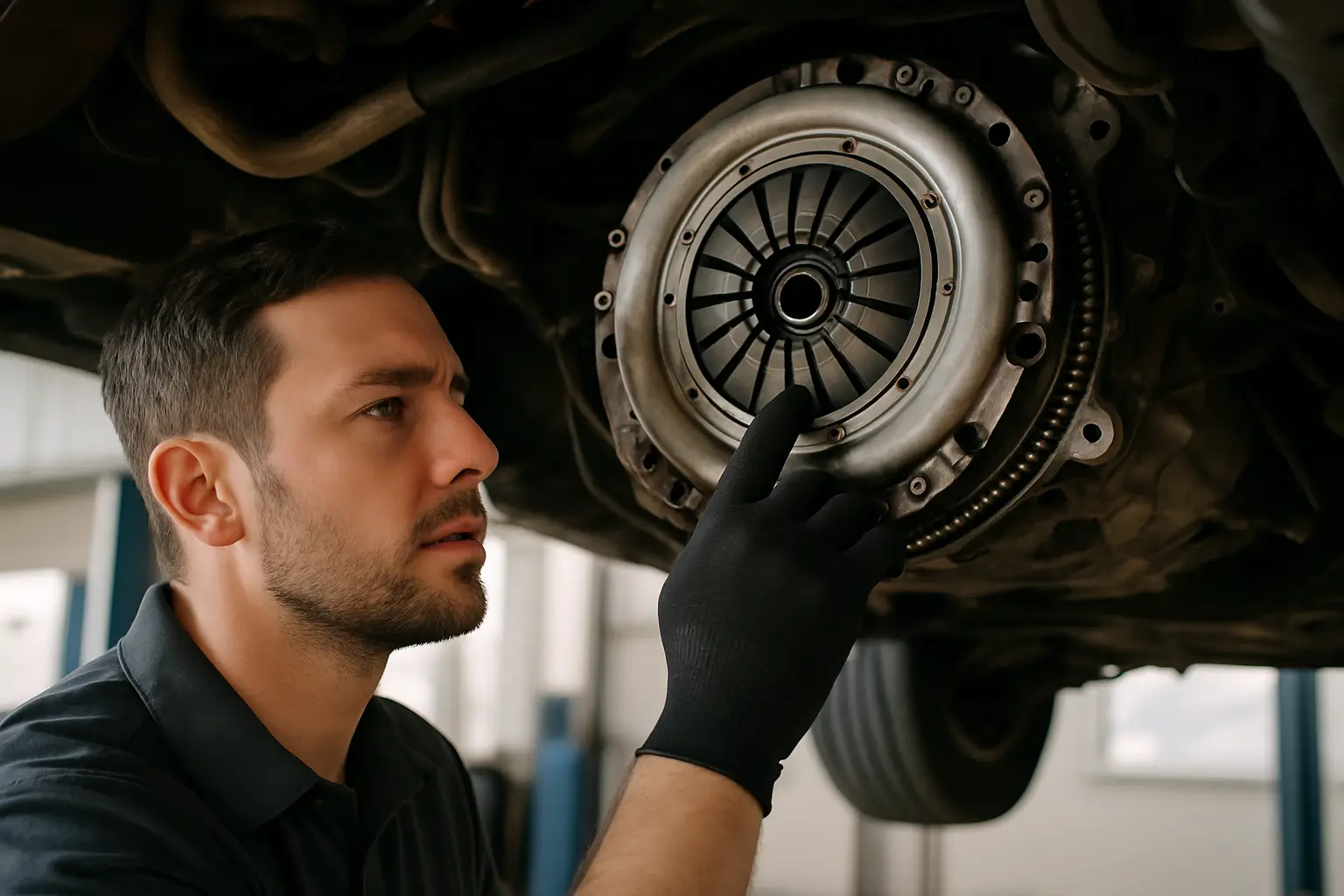
Clutch Slipping: Symptoms, Causes and Repairs
You pull out of a junction, press the accelerator, and the engine revs rise – but the car does not pick up speed the way it should. It feels like something is “letting go” between the engine and the wheels. That’s the moment many drivers first notice clutch slip.
Clutch slip is one of those faults that can go from mildly annoying to properly inconvenient, quickly. Left too long, it can start to affect drivability, increase the risk of breaking down, and in some cases add extra strain to other components. This guide covers clutch slipping symptoms and repair in plain English – what you will notice, what usually causes it, what you can check safely, and what a proper fix looks like.
What clutch slip actually is (and why it matters)
Your clutch is designed to grip. When it’s engaged, it clamps the engine’s drive to the gearbox so power goes to the wheels. When it slips, that clamping force is not strong enough – so some of the engine power turns into heat instead of forward motion.
That heat is the big problem. A slipping clutch gets hotter, the friction material wears faster, and the slip often gets worse. Sometimes you can nurse it for a bit. Sometimes it suddenly reaches the point where it will not drive properly at all.
Clutch slipping symptoms you can feel straight away
Most people describe the first sign as “revs with no go”. You accelerate, the rev counter climbs, but road speed lags behind. It’s often more obvious in higher gears (4th, 5th, 6th) because the clutch has to transmit more torque with less mechanical advantage.
You might also feel the clutch biting point change. If the bite is right at the top of the pedal travel, that can be a sign the clutch is worn. It does not guarantee slip on its own, but it’s a common pattern.
A slipping clutch can also show up as poor acceleration up hills, or when the car is loaded with passengers and shopping. In those moments the engine needs to deliver more torque, and a weak clutch will struggle to hold.
Smell and heat signs
If you notice a sharp burning smell after a manoeuvre like reversing uphill, creeping in traffic, or pulling away quickly, pay attention. A hot clutch often smells similar to overheated brakes. One smell after a tricky move is not proof of failure, but repeated burning smells are a warning.
Other signs that get mistaken for clutch slip
Not every “lack of pull” is the clutch. A turbo boost leak, EGR issue, blocked fuel filter, or DPF problems can also make a car feel flat. The difference is that clutch slip usually comes with a rev flare – the engine speed jumps without a matching increase in vehicle speed.
Common causes: why clutches start slipping
Most clutch slip comes down to wear, but the route to that wear varies.
Worn friction plate (normal wear and tear)
The clutch friction plate is a consumable, like brake pads. City driving, lots of stop-start, towing, and habitual clutch riding will shorten its life. Once the friction material gets thin, it cannot grip as well, especially under load.
Weak pressure plate
The pressure plate provides the clamping force. Springs weaken with age and heat cycles. A pressure plate can be the reason a clutch slips even when the friction plate does not look completely finished.
Oil contamination
If oil gets onto the clutch, it can slip badly. The usual causes are a leaking crankshaft rear main seal or gearbox input shaft seal. This is important because replacing “just the clutch” without fixing the leak is false economy – it can contaminate the new parts.
Hydraulic issues (on hydraulic clutches)
Some vehicles use a hydraulic system with a master and slave cylinder. If the system is not releasing properly, or the clutch is partially held disengaged due to a fault, it can mimic slip. It depends on the vehicle, but this is exactly why proper diagnosis matters.
Driving style and repeated overheating
Holding the car on the clutch on hills, lots of half-clutch creeping, or slipping it to smooth out low-speed driving creates heat. Over time the surface can glaze, reducing grip. You will often notice it starts slipping sooner after it has warmed up.
Quick checks you can do (safely) before booking in
You do not need to be a mechanic to spot a likely clutch slip, but keep it sensible and safe.
A simple road check is to drive at a steady speed in a higher gear (where safe and legal), then accelerate firmly. If the revs jump sharply without a matching surge in speed, that points towards clutch slip.
You can also pay attention to whether it is worse when the car is hot, or when climbing hills. Note down what you felt and when it happened. That information helps a garage confirm the fault faster.
What you should not do is repeated “stall tests” or aggressive checks that deliberately overheat the clutch. If it is already slipping, you can finish it off.
Can you keep driving with a slipping clutch?
Sometimes you can – but it depends how bad it is and what your daily routes look like.
If it only slips occasionally under heavy acceleration, you may be able to drive gently for a short period while you plan the repair. The trade-off is that it can deteriorate quickly, and if it starts slipping in normal driving you can end up stranded or unable to pull away safely at a junction.
If you have a long commute, carry family in the car, or regularly drive in stop-start traffic around Lowestoft and the surrounding roads, it’s usually not worth pushing your luck. A clutch that fails fully rarely gives you a convenient moment.
Clutch slipping symptoms and repair: what a proper fix looks like
A correct repair starts with confirming the cause. “Clutch slip” is the symptom. The real fault might be wear, contamination, a release issue, or a related problem affecting drivability.
Diagnosis first, not guesswork
A good garage will road test the vehicle (where appropriate), check pedal feel and bite point, and look for signs of leaks or hydraulic faults. If there are other symptoms – difficulty selecting gears, clutch pedal sticking, noises when pressing the clutch – those clues can change the repair plan.
Replacing the clutch assembly
In many cases the right repair is a clutch kit replacement, typically including the friction plate and pressure plate, and usually the release bearing. Mixing old and new parts is risky because the labour to get to the clutch is the expensive part, and a weak pressure plate or noisy release bearing can bring you back to the same job.
On some vehicles it also makes sense to replace other related components at the same time, depending on condition and access. This is where honest advice matters. Sometimes it’s genuinely sensible preventative work. Sometimes it’s unnecessary upselling. Ask for the reason behind any recommendation.
Fixing leaks if oil contamination is involved
If the clutch has been contaminated with oil, the leak must be fixed. Otherwise the new clutch can start slipping again. This can involve replacing a seal and cleaning up any residue properly before fitting new parts.
Checking the flywheel (especially dual-mass flywheels)
Many modern diesels use a dual-mass flywheel (DMF). If it has excessive play, hot spots, or damage, it can cause vibration, noise, or premature clutch wear. Not every clutch job needs a flywheel, but when a DMF is failing, ignoring it can mean paying for the labour twice.
A decent workshop will inspect and advise based on what they find, not on a one-size-fits-all rule.
How long does a clutch repair take?
Clutch work is labour-heavy because the gearbox often needs to be removed. The exact time depends on the vehicle and the type of clutch system. Some cars are relatively straightforward. Others are tight, and that adds time.
If you rely on one car and need a quick turnaround, the practical step is to book in as soon as you recognise the symptoms and describe them clearly. The sooner it’s diagnosed, the easier it is to plan parts and minimise downtime.
If you want fast, clear next steps locally, AutoFix4u can diagnose clutch faults and advise the right repair with transparent quotes and no surprise extras. Book via https://autofix4u.co.uk/.
What you can do to make the new clutch last
A new clutch should feel positive and consistent. To help it stay that way, avoid holding the car on the clutch at lights or on hills – use the handbrake. Try not to ride the pedal, even lightly. If you do a lot of stop-start driving, leave a little more gap and creep less where you can.
If you’ve had a clutch replaced because of a leak, keep an eye out for any new oil drips or smells. It’s rare to have issues when the underlying fault is fixed properly, but spotting a leak early is always cheaper than waiting.
A slipping clutch is one of the clearer “do something now” warnings a car gives you. If your revs are rising without the matching pull, treat it as a booking prompt, not something to wait out – your car is telling you the grip is going, and it will not improve on its own.


2 thoughts on “Clutch Slipping: Symptoms, Causes and Repairs”