
Car diagnostic scan cost UK: what you’ll pay
A warning light comes on the dash and your first thought is usually the same as everyone else’s: “How much is this going to cost me?” The frustrating bit is that the light itself rarely tells you the real story. A diagnostic scan is often the quickest way to turn guesswork into a clear next step – and to stop you paying for parts you don’t actually need.
Car diagnostic scan cost UK: the realistic range
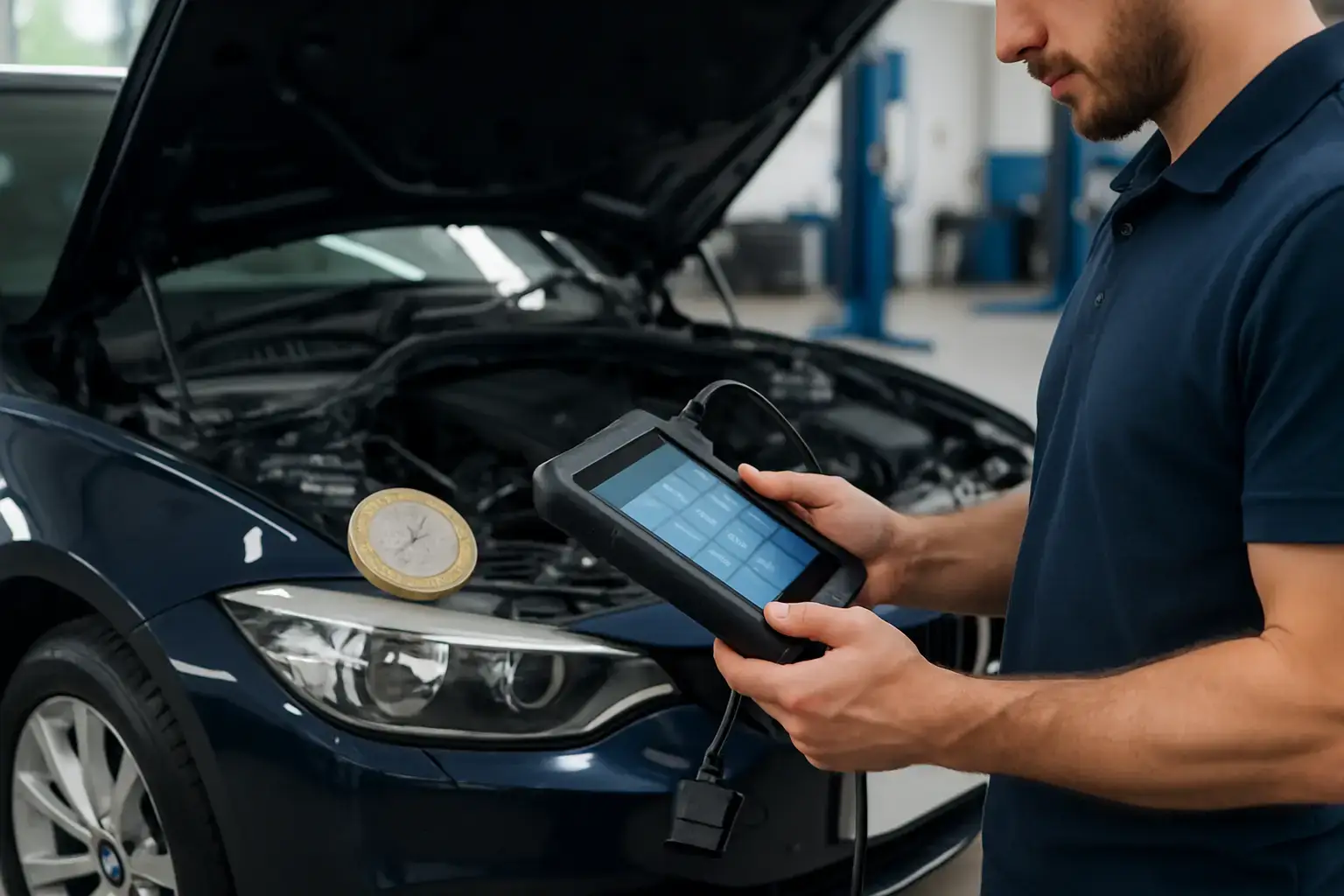
For most everyday cars in the UK, a basic diagnostic scan usually sits somewhere around the £40-£100 mark, depending on where you go and what’s included. That’s the quick plug-in check where a technician reads fault codes, looks at live data if needed, and gives you an initial direction.
You might see cheaper “code read” offers, and sometimes they’re fine – but be clear on what you’re buying. A budget read often means exactly that: a list of codes with little interpretation. At the other end, a more involved diagnostic session can run higher because it includes time – proper testing, guided fault-finding, and checking the system the code relates to.
If a garage quotes you without asking what light is on, what the car is doing, or whether you’ve had recent work done, be cautious. Diagnostic pricing should reflect time, not just plugging in a tool.
Why prices vary so much (and why that’s not always a bad thing)
A diagnostic scan sounds simple, but the cost depends on three things: how long it takes, how complex the system is, and whether the garage is actually diagnosing or just reading codes.
1) Code reading vs real diagnostics
A fault code is a clue, not a verdict. For example, a code might point at an oxygen sensor, but the real issue could be an exhaust leak, wiring damage, or an air leak further upstream. Replacing the sensor because the code mentions it is how people end up paying twice.
Real diagnostics means the technician uses the code as a starting point, then checks what would genuinely cause it. That takes experience and time, and that’s what you’re paying for.
2) The type of fault and which system is involved
Some systems are quick to assess. A straightforward battery voltage issue or a clear misfire with obvious live data can be fast. Other faults are time-hungry: intermittent electrical problems, CAN communication issues, DPF-related faults, and anything that only shows up under certain driving conditions.
Air conditioning faults are another good example. An AC warning, poor cooling, or a compressor that won’t engage can’t be solved by a generic scan alone. You often need pressure checks, leak detection, and component testing.
3) The car itself
Modern cars have more modules than most people realise – engine ECU, gearbox control, ABS, airbags, steering, body control, parking sensors, infotainment. A cheap handheld scanner may only speak to the engine side. A proper workshop-level tool can access manufacturer-specific modules and run deeper tests.
That matters, because the cheapest scan isn’t always the best value if it can’t talk to the module that’s actually complaining.
What you should get for the money
If you’re paying for a diagnostic scan, you deserve more than a printout and a shrug. A decent scan appointment should leave you with clarity, even if the car needs more investigation.
In plain terms, you should expect:
- A confirmed list of fault codes with an explanation of what they mean in real-world terms
- A sense-check against symptoms (what you’re noticing when driving)
- An initial plan: repair now, further testing, or monitor and recheck
- A clear quote for the next step, not “we’ll see”
Sometimes the honest answer is “we’ve found the area, but we need more time to pinpoint the exact cause”. That’s still progress – and it’s better than guessing.
When a diagnostic scan can save you money
The scan cost can feel annoying when you just want the light off. But it’s often the cheapest part of the whole situation.
It can stop you replacing parts on speculation, which is common with:
- EML (engine management light) faults linked to sensors and emissions components
- ABS and traction control warnings where the issue might be a wheel speed sensor, wiring, or a bearing
- Misfires where the cause could be plugs, coils, injectors, air leaks, or low compression
- Charging faults where the real problem might be a battery, alternator, cable, or poor earth connection
If the scan turns your problem into one correct repair instead of three wrong ones, it’s paid for itself.
When a scan won’t be enough on its own
There are times a scan gives you a direction but not the full answer. That’s not a fault of diagnostics – it’s just how cars fail.
A few common examples:
Intermittent faults
If the issue comes and goes, the code might be historic, stored, or not present at the time of testing. You may need a road test with live data logging, or time to reproduce the fault.
Mechanical problems
A scan doesn’t measure compression, fuel pressure (unless the car has sensors for it), or physical wear. A noise, a vibration, or a clutch slipping is usually diagnosed with inspection and testing rather than a laptop.
“Multiple codes” caused by one root issue
Low voltage from a weak battery can throw up a messy list of faults across different modules. If someone just clears codes and sends you away, the problem will return. A proper check includes voltage and charging health, because modern electronics are fussy.
Main dealer vs independent garage: what’s the difference?
Main dealers can be excellent, and for certain manufacturer-specific issues they may have access to technical bulletins and updates. But their labour rates tend to be higher, and diagnostic bookings may be less flexible.
A good independent garage often gives you better value because:
- You’re paying for the time and skill, not the showroom
- You can usually speak directly to the technician or service team
- The focus is often on practical repair, not part replacement by default
The key is transparency. Ask what the diagnostic price includes, what happens if more time is needed, and whether you’ll get a firm quote before work continues.
How to avoid wasting money on diagnostics
You don’t need to know cars to get a better outcome. You just need to arrive with the right information and ask two or three direct questions.
Tell the garage what the car is doing, not just what light is on. Mention when it happens (cold start, motorway speeds, after filling up, when using the air con). If the car has been jump-started recently, had a battery fitted, or had any work done, say so.
Then ask:
- Is this a code read or a diagnostic appointment with testing?
- If you can’t confirm the cause in the first session, what’s the next step and cost before you continue?
- Will you clear codes, and if you do, will you record them first?
A decent garage won’t be offended by those questions. It’s your car and your money.
Should you buy your own OBD scanner?
For some drivers, a basic OBD reader is useful. If you do lots of miles and want to check a recurring EML or see if a code returns after a repair, it can be handy.
But it has limits. Generic readers often miss manufacturer-specific faults, can’t run proper actuator tests, and can mislead you into buying parts based on a vague description. The bigger risk is false confidence – clearing codes without fixing the cause can mask a developing fault until it turns into a breakdown.
If you use a reader, treat it as a “symptom checker”, not a diagnosis.
What happens after the scan
After diagnostics, the next step should be simple and written down in plain English.
Sometimes it’s a straightforward repair with a clear quote: replace a failed sensor, repair damaged wiring, sort a boost leak, fit a battery and reset the system properly. Other times it’s staged: test A, then decide whether part B is needed.
What you don’t want is open-ended work. If extra diagnostic time is needed, you should be asked first, told what will be tested, and what decision it will enable. That’s how you keep control of the spend.
Same-day diagnostics locally, without the run-around
If you’re within 10-15 miles of Lowestoft and you need answers quickly, AutoFix4u offers same-day diagnostics where possible with clear quotes and no surprise extras. The point is simple: identify the actual fault, explain your options, and get you back to a safe, reliable car with minimal downtime.
If your warning light has just come on, don’t panic and don’t start guessing. Get the car checked properly, ask for a clear next step, and you’ll spend your money once – on the right fix.


8 thoughts on “Car diagnostic scan cost UK: what you’ll pay”