What Causes Clutch Pedal to Stick?
A clutch pedal that stays down, feels slow to come back up, or goes stiff without warning is not something to ignore. If you are asking what causes clutch pedal to stick, the short answer is this: something in the clutch system is starting to fail, and it usually gets worse rather than better.
We often see this when a driver notices the pedal feels odd for a day or two, then suddenly the car becomes difficult to drive. You might struggle to get into gear at traffic lights, the biting point may change, or the pedal may stay near the floor. In most cases, the fault is not with the pedal itself. It is usually a hydraulic issue, a worn clutch part, or a problem around the pedal linkage.
What causes clutch pedal to stick in most cases?
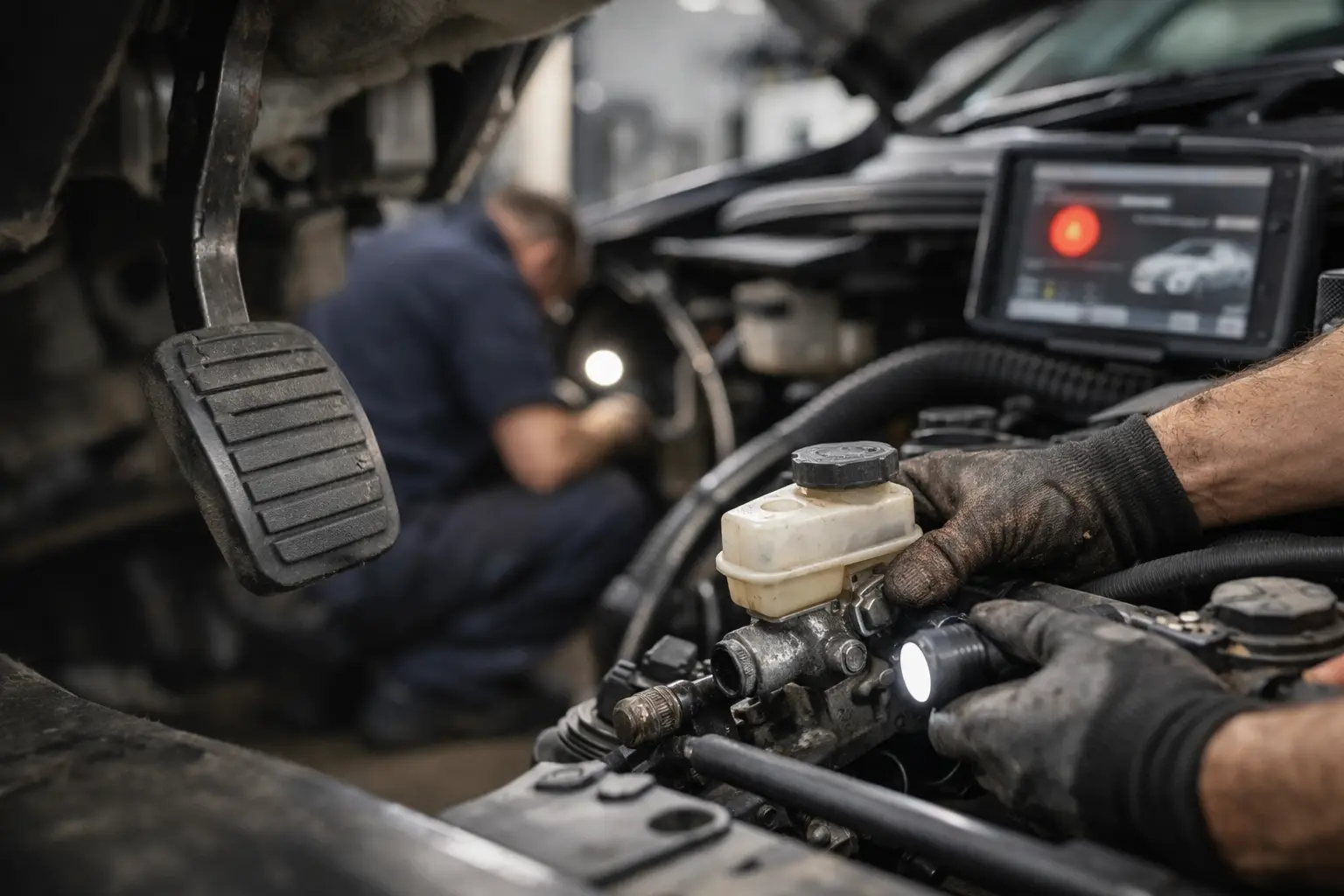
Most modern cars use a hydraulic clutch system. That means the pedal works through fluid pressure rather than a simple cable. When you press the pedal, fluid moves through the master cylinder and slave cylinder to disengage the clutch. If any part of that system leaks, sticks, or loses pressure, the pedal can start misbehaving.
The most common cause is a failing master cylinder or slave cylinder. These parts wear out over time. Internal seals can fail, fluid can leak, and pressure becomes inconsistent. That is when the pedal may feel soft one moment and stiff the next, or stay down and need lifting back up with your foot.
Low clutch fluid can also cause the same symptom. If the fluid level drops, there is usually a reason for it. Clutch fluid does not just vanish. In most cases, there is a leak somewhere in the hydraulic system. Sometimes the leak is obvious. Sometimes it is hidden under the dashboard near the pedal box, or around the gearbox where the slave cylinder sits.
On older vehicles, or some cars with cable-operated clutches, the cable itself can be the issue. A clutch cable can fray, stretch, dry out, or partly seize. That often causes a heavy or sticking pedal before it fails completely.
Hydraulic faults that make the pedal stick
When a clutch pedal sticks, hydraulic faults are high on the list. The master cylinder is connected to the pedal. The slave cylinder is usually mounted on or inside the gearbox housing. Both need to work smoothly and hold proper pressure.
If the master cylinder starts failing, you may notice the pedal sinks slowly, does not return properly, or feels inconsistent. If the slave cylinder is leaking or binding, the clutch may not release fully, and gear changes become harder. Reverse and first gear are often the first to feel awkward.
Air in the hydraulic line can also create problems. This usually happens after a leak or poor previous repair. Air stops the system building pressure properly, so the pedal can feel spongy, slow to return, or weak underfoot. Bleeding the system may help, but only if the root cause is dealt with first.
Signs the hydraulic system may be at fault
You may notice fluid loss, a soft pedal, trouble selecting gears, or fluid around the pedal area or gearbox. Sometimes there is no visible leak at all, but the pedal behaviour gives it away. That is why proper diagnostics matter. Replacing parts without checking the full system can waste time and money.
Worn clutch components inside the gearbox
Sometimes the answer to what causes clutch pedal to stick is not the hydraulics but the clutch assembly itself. Inside the bell housing, the release bearing, pressure plate, and clutch fork all need to move freely. If one of those parts wears badly, binds, or breaks, the pedal can feel wrong.
A worn release bearing may make noise when you press the pedal. A damaged pressure plate can cause inconsistent pedal feel and poor clutch disengagement. If the clutch fork is bent or stiff on its pivot, the pedal may not return normally.
This kind of fault often comes with other symptoms. You might notice clutch slip, judder when pulling away, difficulty getting into gear, or a very high biting point. In those cases, the fix is usually more than a simple adjustment. The gearbox often needs to come out so the clutch can be inspected properly.
That is why it depends on the full symptom picture. A sticking pedal on its own may point to hydraulics. A sticking pedal plus noise, slip, or poor gear change may suggest the clutch kit itself is worn out.
Pedal box and linkage problems
Not every sticking clutch pedal is caused by the clutch assembly. We also see faults at the top end of the system, around the pedal itself. The pedal pivot can wear, bushes can seize, and return springs can weaken or break.
If the spring is weak, the pedal may feel lazy coming back up. If the pivot is dry or worn, the movement can feel rough or notchy. In some cases, the issue is made worse by corrosion or dirt getting into moving parts.
These faults are less common than hydraulic problems, but they do happen. They are also easy to miss if someone only focuses on the gearbox side. A proper inspection should include the pedal mechanism as well as the clutch hydraulics and gearbox components.
Can cold weather or lack of use cause it?
Yes, sometimes they can make an existing problem more obvious. In colder weather, worn seals can stiffen up, old fluid can behave poorly, and grease on moving parts can thicken. A car that has been sitting for a while may also develop a sticky pedal if a cable has started to seize or a pivot point has dried out.
That said, cold weather is usually not the true fault. It is more often the reason the fault becomes noticeable. If the pedal sticks once on a freezing morning and then feels normal later, it is still worth getting checked. Small clutch issues have a habit of turning into breakdowns at the worst time.
Is it safe to keep driving?
Sometimes you can still drive with a sticking clutch pedal, but that does not mean you should leave it. The risk is simple. If the clutch does not disengage properly, you may struggle to change gear or stop safely in traffic. If the pedal drops to the floor completely, the car may become undriveable without warning.
In mild cases, you might get away with a short trip to a garage. In worse cases, especially if gears are difficult to select or the pedal stays down, it is better not to force it. Continuing to drive can add wear to the gearbox synchros and other clutch parts.
If the issue has just started, getting it looked at early usually gives you more repair options. Leave it too long and a smaller hydraulic repair can turn into a full clutch job.
How we usually diagnose a sticking clutch pedal
At a working garage level, the first job is to confirm whether the fault is hydraulic, mechanical, or pedal-related. We check the fluid level and condition, inspect for leaks, and test pedal movement. We also look at how the clutch engages and whether the gears select properly with the engine running.
If there are signs of hydraulic failure, the master cylinder, slave cylinder, and pipework need checking. If the pedal feels normal but the clutch still does not release right, attention shifts towards the clutch assembly inside the gearbox.
This is why guessing does not help much. Two cars can show the same symptom but need completely different repairs. One may only need a cylinder and fluid change. Another may need a full clutch kit and release components.
What to do next if your clutch pedal is sticking
If your clutch pedal has started sticking, do not wait for it to fail completely. In most cases, the earlier you catch it, the simpler the repair. Even if the car still drives, a sticking pedal is a warning sign that something is wearing out or losing pressure.
If you are in Lowestoft or nearby and want a clear answer without the guesswork, book a proper clutch check at https://autofix4u.co.uk/. We will inspect the system, explain the fault in plain English, and tell you exactly what needs doing.
A clutch pedal should move smoothly every time. If it does not, the car is already telling you something is wrong. Better to deal with it now than when it leaves you stuck at a roundabout or unable to get home.