Tyre Fitting in Lowestoft: What to Expect
You usually notice tyre trouble at the worst possible moment – heading to work, doing the school run, or setting off to see family. The steering feels vague, the car pulls slightly, or the tyre warning light appears and you cannot ignore it. When you need tyre fitting in Lowestoft, you want it handled quickly, properly, and with no guesswork.
This is what a good tyre fitting job should look like, what you should ask for, and how to avoid paying twice because the real issue was missed.
When you actually need new tyres
Tyres wear out in obvious ways, but plenty of cars come in with tyres that look fine at a glance and are still unsafe. The legal tread depth in the UK is 1.6mm across the central three-quarters of the tyre, but waiting until you are right on the limit is false economy. Wet grip drops off well before that, and braking distances creep up without you noticing.
If you can see wear bars level with the tread, that tyre is done. If the tyre is close to the limit, you are better replacing it before winter weather or a long motorway run.
Damage matters as much as tread. Sidewall cuts, bulges, or cracking are not “keep an eye on it” issues – they are replacement jobs. The sidewall is where the tyre carries load, and once that structure is compromised you cannot safely patch it.
Then there is uneven wear, which is often your car telling you something. If one edge is bald, the middle is worn more than the shoulders, or the inside is chewed up, you may need alignment, correct pressures, or suspension checks as well as tyres. Replacing tyres without fixing the cause is how people end up buying another set sooner than they should.
What tyre fitting should include (and what gets missed)
“Fitting a tyre” is not just swapping rubber. Done properly, it is a small chain of checks that keeps the car stable and predictable.
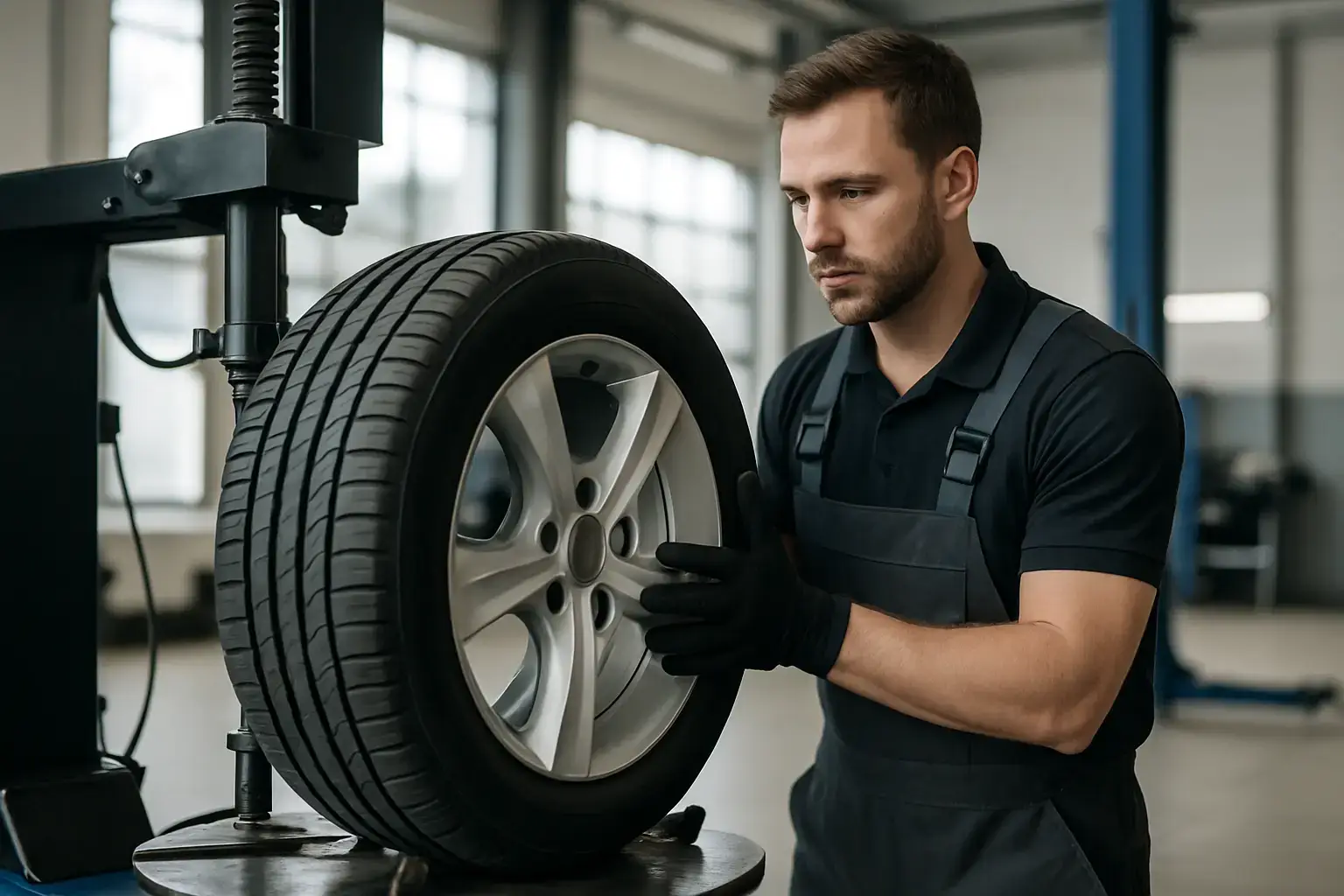
A proper fitting includes removing the wheel, inspecting the old tyre, checking the rim condition, fitting the correct tyre size and load rating, and inflating it to the right pressure for your vehicle. It should be balanced on a machine before it goes back on the car. Balancing is what stops vibration through the steering wheel and prevents premature wear.
The valve matters too. Valves age, leak slowly, and can fail. Replacing the valve when tyres are fitted is a simple step that avoids the “mystery pressure loss” that sends you back to a garage a week later.
After refitting, wheel nuts should be torqued correctly. Under-tightening risks movement. Over-tightening can damage threads or make it impossible to remove a wheel at the roadside.
If you are booking tyre fitting Lowestoft drivers rely on for day-to-day safety, ask whether balancing and valve replacement are included. If the answer is vague, that is a red flag.
Tyre repairs: when a puncture can be fixed
Not every puncture means a new tyre, but not every puncture is repairable either. A repair is only safe when the damage is in the main tread area, the hole is within the permitted repair zone, and the tyre has not been driven on while flat.
If you have run the tyre at low pressure, the sidewalls can be damaged internally. That damage is not always visible from the outside, which is why a proper puncture inspection involves checking inside the tyre.
Sidewall punctures and shoulder damage generally mean replacement. It is not about upselling – it is about the structure of the tyre and how it flexes under load.
If you are unsure, do not keep topping it up and hoping for the best. A slow leak can turn into a blowout when the tyre heats up on a faster road.
Choosing the right tyres without overpaying
Most people just want a safe, reliable tyre that lasts a sensible amount of time. You do not need to become a tyre expert, but you should know what you are buying.
Your car will have a specified tyre size, plus a load index and speed rating. Those markings are there for a reason. Fitting the wrong rating can affect handling, braking, insurance validity, and MOT outcomes.
Budget, mid-range, and premium tyres all have their place. If you do mainly local driving and modest mileage, a good mid-range tyre often makes sense. If you do frequent motorway miles, carry heavy loads, or drive in a lot of wet conditions, paying more for stronger wet grip and better wear can be worth it.
What you want to avoid is fitting two brand new tyres on an axle and leaving two dangerously old tyres on the other. As a general rule, tyres should match across an axle, and the better tyres should be on the rear for stability in wet conditions. If you are replacing just one tyre, it needs to be compatible with the tyre on the other side – mixing patterns and types can make the car behave unpredictably.
Alignment: the quiet money-waster
If you have fitted new tyres and they wear out quickly, alignment is one of the first things to check. The signs are easy to miss until the damage is done.
A car that drifts left or right on a straight road, a steering wheel that is off-centre, or a tyre that is worn more on one edge can all point to alignment issues. Potholes and kerb knocks can do it, and you do not need a major impact for it to happen.
Alignment is not a “nice to have” if the wear pattern suggests a problem. It is what protects your new tyres and keeps braking and handling consistent.
TPMS and warning lights: don’t ignore them
Many vehicles now have tyre pressure monitoring systems (TPMS). Sometimes a tyre fitting visit triggers a warning light that needs resetting, and sometimes the light is the first clue you have a slow leak.
If a TPMS light comes on repeatedly after tyres have been checked and inflated, that is a reason to investigate, not a reason to cover it up with a bit more air. The right approach is to find the cause – puncture, valve leak, sensor issue, or a wheel problem.
A garage that offers diagnostics alongside tyres can save you time here, because tyre problems and warning lights often overlap.
How to book tyres without losing your day
When you rely on one car, you cannot afford a drawn-out process. The quickest way to get sorted is to have the basics ready when you call: your registration number, your tyre size if you know it, and a clear description of the problem (puncture, worn tread, vibration, or pulling).
Same-day help often depends on tyre availability and how safe the car is to drive. If a tyre is losing pressure quickly or has sidewall damage, it may be safer to arrange recovery rather than risk driving it.
If you need a local option for tyre supply and fitting alongside day-to-day repairs and diagnostics, you can book with AutoFix4u for clear quotes, no surprise extras, and fast turnaround where possible.
A quick word on safety checks worth doing at the same time
Tyres are only one part of how your car grips and stops. If you have noticed knocking, steering vibration, or a change in braking feel, mention it at booking. It could be as simple as balancing, or it could point to worn suspension joints or brake issues that will also chew through tyres.
A short inspection while the wheels are off can spot problems early. That is not about making the job bigger – it is about avoiding the situation where you fit new tyres and then immediately fight with uneven wear or poor handling.
What “transparent” looks like in tyre fitting
Transparent tyre fitting is straightforward. You should be told what tyres are being fitted (brand, size, rating), what is included (balancing, valves, disposal of old tyres), and what the technician found when the wheels were off.
If there is an additional issue – cracked rim, seized wheel nut, badly worn inner edge, or a suspension problem – you should get a clear explanation and a choice. Fix now if it is safety-critical, or plan it in if it can wait. Either way, you should not be ambushed at collection.
If you are dealing with tyres soon, do yourself a favour: check your tread and pressures this week, not the night before an MOT or a long drive. It is the easiest way to keep the car feeling right and to avoid turning a small job into an urgent one.