
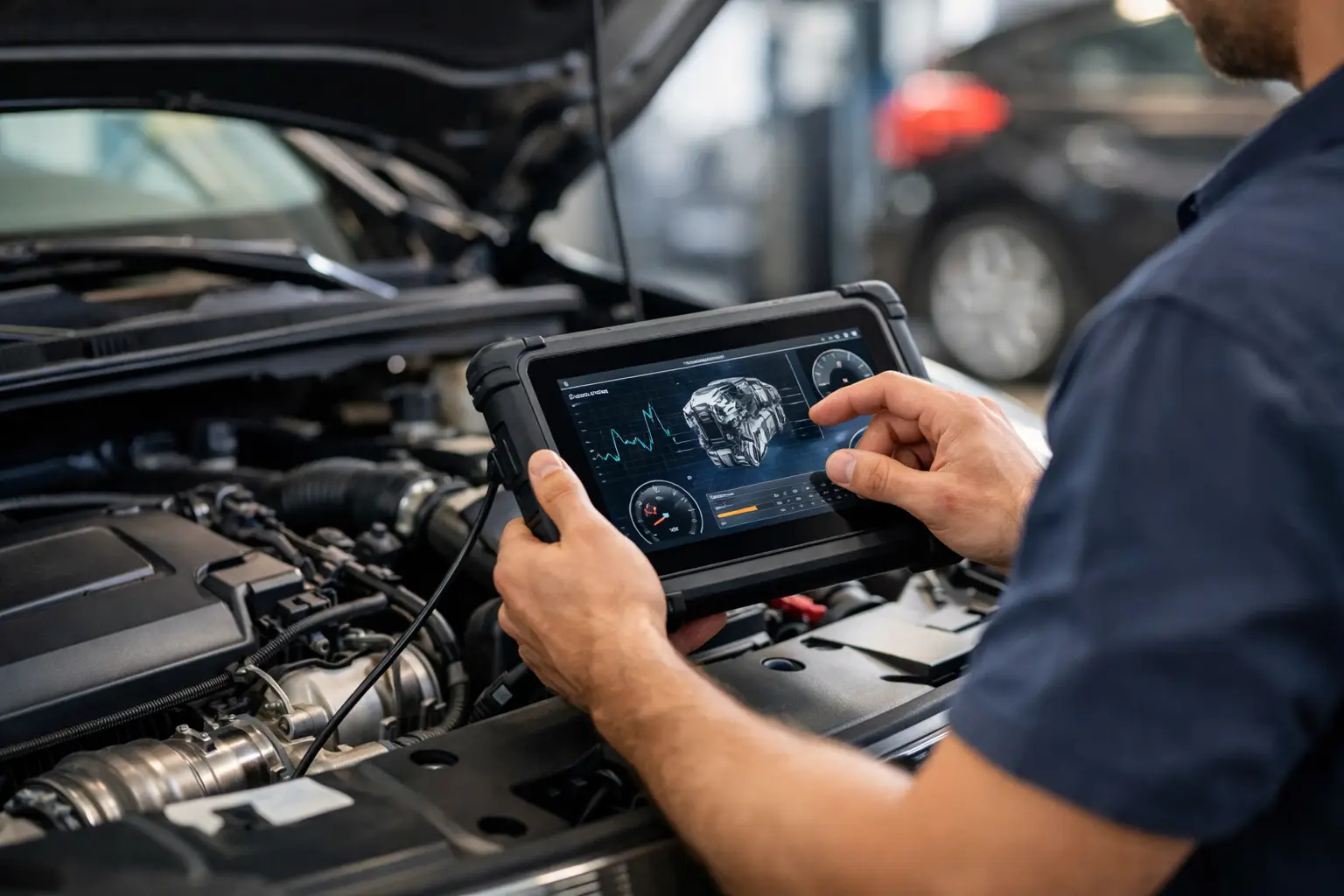
Engine Diagnostic Scan Service Review
That warning light rarely comes on at a convenient time. Usually it appears on the school run, on the way to work, or just before a longer trip when you need the car to behave itself. The problem is not just the light itself. It is the doubt that comes with it. Is it safe to keep driving? Is it something minor, or the start of a bigger repair?
A proper engine diagnostic scan service helps take the guesswork out of that situation. It gives you a starting point based on what the car’s systems are reporting, rather than a rough assumption. But not all diagnostic checks are equal, and that is where many drivers get caught out.
What to expect from a review engine diagnostic scan service
If you are trying to review engine diagnostic scan service options, the first thing to know is this: a scan is a tool, not a full repair in itself. It reads fault codes stored by the vehicle’s control systems and points a technician in the right direction. That is useful, but it is only part of the job.
A good garage will use the scan results alongside symptoms, warning lights, vehicle behaviour and hands-on testing. If your engine management light is on, for example, the code might suggest a sensor issue. That does not always mean the sensor itself has failed. Wiring faults, air leaks, fuel delivery issues or another underlying problem can trigger the same code.
This is why a quick plug-in and printout is not the same as proper fault finding. The scan tells you where to look. Experience tells you what to check next.
Why drivers ask for reviews before booking
Most people searching for diagnostics are not browsing out of curiosity. They need an answer quickly and do not want to waste money on the wrong fix. That is why people often search for a review engine diagnostic scan service before they pick up the phone.
They are usually looking for three things. First, they want to know whether the garage explains faults clearly. Second, they want to know if the quote is upfront. Third, they want confidence that the technician is aiming to fix the actual issue, not just clear the warning light and send them away.
That last point matters. Clearing codes without sorting the cause may switch the light off for a short time, but it does not make the fault disappear. In some cases, it can delay a repair until it becomes more expensive or leaves the car unreliable.
What an engine scan can actually reveal
Modern vehicles monitor a wide range of systems. During a diagnostic scan, technicians can often pull fault codes linked to engine performance, emissions, ignition, fuel mixture, sensors, electrical communication and other control units depending on the vehicle.
If the car is misfiring, cutting power, using more fuel than normal or struggling to start, the scan may show a trail of faults that helps narrow things down. It can also help with intermittent problems, where the car misbehaves once and then seems fine by the time it reaches the workshop.
That said, diagnostics are not magic. Some mechanical issues do not create clear fault codes straight away. A worn timing component, an air leak, a weak battery or a developing wiring problem can sometimes produce vague symptoms before the system logs anything useful. That is why a garage that relies only on the scanner may miss the real cause.
When a cheap scan is a false economy
A very basic scan can sound appealing if you just want an answer fast. Sometimes that is enough, especially if the fault is straightforward and the code is specific. But often, cheap scan services only tell you what system has noticed a problem, not what has caused it.
For example, a fault code related to emissions could come from several different issues. Replacing the first part named by the code without testing is a gamble. You might spend money on a part that was not faulty in the first place, then still have the warning light come back.
A proper diagnostic service should save time and money over the full repair, even if it costs more than a quick code read. The point is accuracy. Good diagnostics reduce guesswork, cut down repeat visits and make it more likely that the repair is right first time.
Signs a garage takes diagnostics seriously
When you review engine diagnostic scan service providers, pay attention to how they talk about the process. If they promise a simple scan will identify every fault immediately, be cautious. Real diagnostics sometimes need staged testing, especially on electrical faults or intermittent issues.
A trustworthy garage will usually explain what the initial scan includes, what happens if further testing is needed, and what they know versus what still needs confirming. That is not a lack of confidence. It is honest fault finding.
You should also expect plain English. Most drivers do not need a lecture on live data values or control module logic. They need to know what the car is doing, what the likely cause is, whether it is safe to drive, and what the next step will be.
That is the approach at AutoFix4u. We carry out same-day diagnostics where possible, explain what the scan shows in straightforward terms, and focus on fixing the root cause rather than masking the symptom. Clear quote first. No surprise extras.
Common problems that lead to a scan service
An engine diagnostic check is not only for the engine management light. Drivers often book one because the car feels wrong before any dash warning appears. Rough running, hesitation under acceleration, poor fuel economy, difficult starting and sudden loss of power are all common reasons.
Sometimes the issue is linked to another system entirely. A battery or charging fault can trigger electrical warnings and odd behaviour across the vehicle. Sensor communication problems can affect drivability. On some cars, even a minor issue in one area can create fault codes elsewhere.
That is why context matters. If your car has recently had a flat battery, failed its MOT on emissions, or started making the cooling fan run constantly, that information can help guide the diagnostic process.
What happens after the scan
The best outcome after a scan is not just a list of codes. It is a clear plan. You should come away knowing whether the problem has been confirmed, what repair is recommended, and whether more testing is genuinely needed.
In straightforward cases, the garage may be able to move straight from diagnosis to repair, especially if parts are available and same-day time slots are open. In more complex cases, you may need a second stage of testing to confirm the fault before any parts are fitted.
Neither option is automatically better. It depends on the car, the symptoms and how precise the initial results are. The key is transparency. You should never feel pushed into a repair without understanding why it is needed.
How to judge value, not just price
If you are comparing one diagnostic service with another, ask what you are actually getting. Does the service include only a code read, or proper fault investigation? Will the findings be explained clearly? Is there a repair path afterwards, or are you left to work it out yourself?
The cheapest option can be fine for a simple warning light reset request, but most people with a real fault need more than that. They need a technician who can connect the scan data with the car in front of them. That is where experience earns its keep.
For local drivers who rely on one vehicle, speed matters too. A garage that can diagnose promptly and move quickly into repair work when needed is worth more than one that leaves you waiting days for an answer.
Choosing a local garage with confidence
Booking diagnostics should not feel like a gamble. Look for a workshop that gives clear pricing, explains the process without jargon, and treats the scan as the start of proper fault finding, not the whole job. If they can tell you what the car is saying, what that likely means and what they want to test next, you are in safer hands.
When your warning light comes on, you do not need drama. You need a straight answer, a sensible next step and a repair that deals with the fault properly. That is what a good diagnostic service is really for.
If your car is showing a warning light, losing power or simply not driving as it should, get it checked before a small issue turns into a breakdown. A proper diagnosis now is often the fastest route back to a reliable car.


