Engine Warning Light On? Get It Checked Fast
If your engine warning light has popped on during the school run or your commute, the stress is the same every time – is it safe to drive, and how bad is it going to be?
The honest answer is: it depends. That light is your car’s way of saying the engine management system has spotted something outside its normal readings. Sometimes it’s minor. Sometimes it’s the early warning before a breakdown. What matters is getting a proper diagnosis quickly, so you fix the actual fault rather than guessing.
What the engine warning light is really telling you
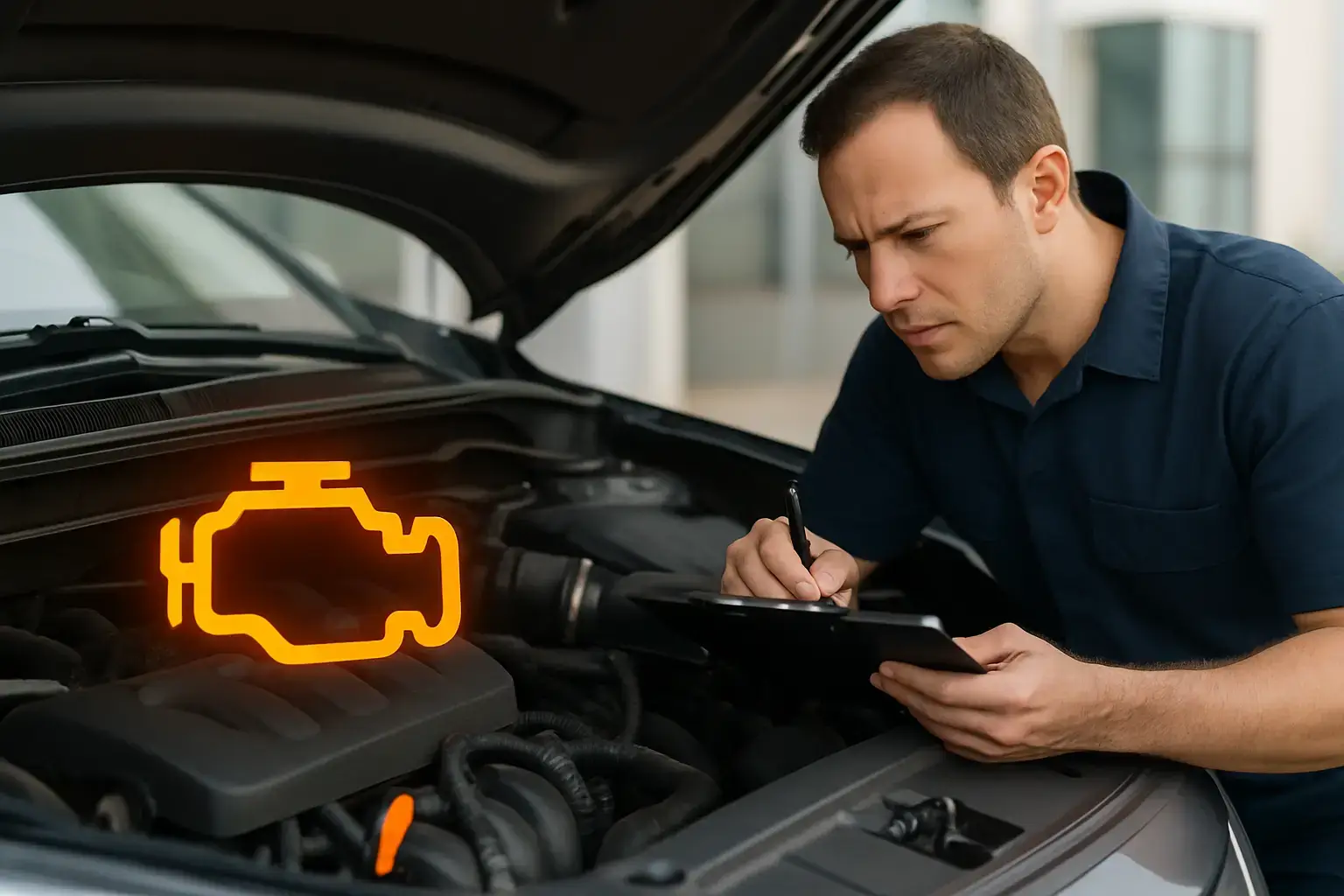
The engine warning light (often called the MIL) comes on when the ECU – your car’s computer – sees a problem that could affect emissions, performance, or reliability. The ECU doesn’t diagnose the cause in plain English. It logs fault codes and live data, and that’s what a proper scan reads.
A common misconception is that the light means “new engine”. In reality, it can be triggered by a loose intake hose, a tired sensor, a misfire, or an emissions issue that’s starting to develop. The key is not to clear the code and hope. If the underlying issue is still there, the light will come back – and if it’s something that gets worse, you may end up stranded.
Flashing vs steady: this bit matters
A steady engine warning light usually means the car has detected a fault but it’s not currently severe enough to demand an immediate shut-down. You should still book it in soon, because many “non-urgent” faults can lead to higher fuel use, DPF trouble, or further damage over time.
A flashing engine warning light is different. That often points to an active misfire that can overheat and damage the catalytic converter. If it’s flashing, don’t keep driving “to see if it clears”. Reduce load, find somewhere safe, and get advice. The same goes if you’ve got severe shaking, loss of power, strong fuel smells, or the temperature warning appearing alongside.
When it’s safe to drive – and when it isn’t
People often ask for a simple yes or no. Here’s the practical way to judge it.
If the light is on but the car drives normally, no odd noises, no overheating, and no other warnings, you can usually make a short, gentle trip. Avoid hard acceleration and long motorway runs until it’s checked.
If you notice rough running, a noticeable drop in power, heavy smoke, loud knocking, or the light is flashing, treat it as urgent. Modern engines are efficient, but they’re also sensitive. Continuing to drive can turn a repairable fault into an expensive chain reaction.
Why a quick code read is not the same as a diagnostic
You can buy a cheap plug-in reader or pop into a place that does a quick scan, and you’ll often get a code like “P0420 catalyst efficiency” or “P0302 misfire cylinder 2”. Helpful, but not a complete answer.
A proper engine warning light diagnostic in Lowestoft should go further than pulling a code and selling a part. The same code can have different causes. A misfire could be a coil pack, a plug, a wiring issue, low compression, an injector fault, or even a vacuum leak. Fit the wrong part and you’ve paid twice.
Good diagnostics looks at fault code history, freeze frame data (what was happening when the fault set), live sensor readings, and then backs it up with physical checks. That’s how you get from “the car says it’s unhappy” to “this is the specific reason and this is the fix”.
Common causes we see behind engine warning lights
There’s no single culprit, but some faults come up again and again on everyday cars.
Sensor issues are common, especially oxygen (lambda) sensors and airflow readings. Sensors don’t always fail outright – they can drift out of range, which makes the engine run richer or leaner than it should. You might not feel much difference at first, but fuel economy drops and emissions rise.
Misfires are another big one. Sometimes it’s as simple as worn spark plugs. Sometimes it’s an ignition coil breaking down under load. On some cars, oil leaking into plug wells can also cause intermittent misfires that come and go.
Air leaks and intake issues can trigger warning lights too. A split hose, loose clamp, or stuck PCV valve can let unmetered air in. The ECU sees the mixture is wrong, tries to correct it, and eventually logs a fault.
Then there are emissions and exhaust-related faults. If a DPF is struggling, if the EGR is sticking, or if there’s a boost leak on a turbo diesel, you can get warning lights, limp mode, and poor performance. These problems are fixable, but the right approach depends on how far the issue has progressed.
What a proper diagnostic appointment looks like
When you book an engine warning light diagnostic Lowestoft drivers usually want two things: a straight answer and a clear next step.
A proper check starts by confirming your symptoms. Does it happen only when cold? Only on the motorway? Did it appear after a battery change or a service? Those details save time and stop false leads.
Next comes the scan. We read stored codes, pending codes (faults that are building but not fully logged yet), and any relevant modules. Then we look at live data. Things like fuel trims, boost pressure, coolant temperature, MAF readings, and oxygen sensor switching can tell you whether the engine is running correctly.
After that, you verify. That could mean a smoke test for air leaks, checking spark and coil performance, inspecting wiring and connectors, checking vacuum lines, or measuring fuel pressure if needed. The point is to prove the fault, not guess.
Finally, you get a clear recommendation. Sometimes it’s a straightforward repair. Sometimes it’s a choice – for example, an older car where a sensor is borderline and you want to weigh the cost against how long you plan to keep the vehicle. A good garage will tell you what’s urgent, what can wait, and what risks come with delaying.
Why “clearing the light” is rarely a win
Clearing codes without fixing the cause can mask a developing problem. You lose the stored evidence that helps track down intermittent faults, and you risk the issue returning at the worst time.
It can also affect MOT outcomes. If you clear codes just before a test, the car may show emissions monitors as “not ready”. That can mean a failed test or a delayed retest because the car needs a full drive cycle to re-learn readings.
If you’ve had the light cleared recently and it’s come back, that’s a sign you need proper fault finding, not another reset.
If you’ve got an MOT coming up
An engine warning light on is a common reason for MOT failure if it indicates an emissions-related fault. Even if the car feels fine, the tester can’t ignore a warning light that should not be illuminated.
If you’re close to test date, the best move is to book diagnostics first. That way you’re not gambling on a pass, and you can plan repairs with clear pricing and a realistic timeframe. Leaving it until the day before often creates panic decisions, and that’s when money gets wasted.
Same-day diagnosis helps – but quality still matters
When you rely on one car for work and family life, you don’t want it off the road for days while someone “has a look”. Same-day diagnostic slots can make the difference between a quick fix and a week of disruption.
That said, not every fault can be resolved instantly. Some issues need parts ordering, more in-depth testing, or time to replicate an intermittent problem. The right balance is speed with proper process – fast answers, but no cutting corners.
If you’re local and you want a straightforward, warranty-backed approach, AutoFix4u can carry out same-day warning light checks and proper fault finding, then give you a clear quote before any repair work starts.
What you can do before you book in
You don’t need to be a mechanic to be useful. Note when the light appears, whether it’s steady or flashing, and any changes you’ve felt – hesitation, poor starting, higher fuel use, or unusual smells.
If you’ve recently had work done (battery replacement, service, air filter, sensors), mention it. Not because it’s anyone’s “fault”, but because it helps narrow the search. Electrical connectors and hoses can be disturbed during routine work, and that’s a quick win if spotted early.
Avoid throwing additives in the tank as a first move. Some have their place, but they can also complicate diagnosis, and they won’t fix a wiring fault, a split hose, or a failing coil.
A closing thought
That engine warning light is your early warning system. The quickest way to stop it costing you more than it should is simple: get it diagnosed properly, get a clear plan, and fix the cause while it’s still a manageable job.

One thought on “Engine Warning Light On? Get It Checked Fast”