When that dashboard light comes on, most drivers ask the same thing first – what is the check engine light diagnosis cost, and is it safe to keep driving? Fair question. In most cases, the cost of diagnosing the fault is far less than the cost of ignoring it. That light can mean anything from a loose fuel cap or sensor issue to a misfire, DPF problem, or something that could leave you stuck at the roadside.
The trouble is, the warning light does not tell you what has actually failed. It only tells you the car has spotted a fault in the engine management system. We often see people assume it will be a quick reset, only to find the light comes straight back because the real problem has not been fixed.
What affects check engine light diagnosis cost?
The check engine light diagnosis cost usually depends on how much investigation is needed, not just whether a fault code appears. Reading codes is only the first step. A proper diagnosis means checking what caused the code in the first place.
For example, one fault code might point towards an oxygen sensor. But that does not always mean the sensor itself is faulty. It could be wiring damage, an air leak, poor combustion, or another issue causing incorrect readings. If someone simply replaces parts without testing, costs can rise quickly and the fault may still be there.
That is why diagnosis prices can vary. A simple fault may be identified quite quickly. A more involved problem, especially an intermittent one, can take longer. Electrical faults, wiring issues, repeated DPF problems, and loss of power complaints usually need more time than a straightforward sensor fault.
At a garage, you are not just paying for a code reader to be plugged in. You are paying for time, experience, testing, and a proper explanation of what is wrong.
What usually happens during an engine warning light diagnosis?
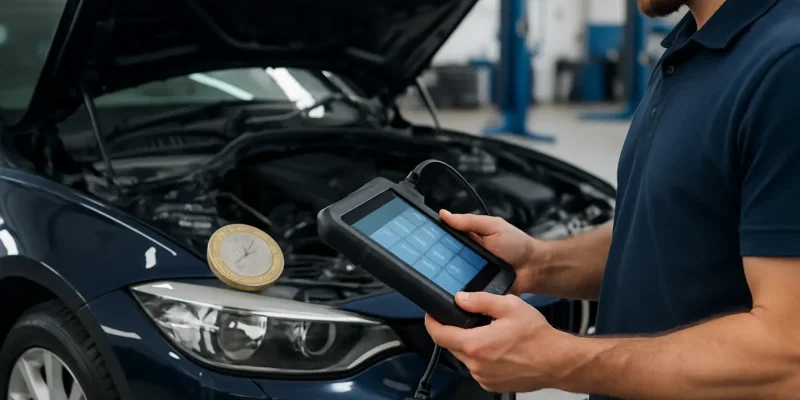
A proper check engine light diagnosis cost makes more sense when you know what the garage is actually doing. In most cases, the process starts with a fault code scan. That gives a starting point, but it is not the full answer.
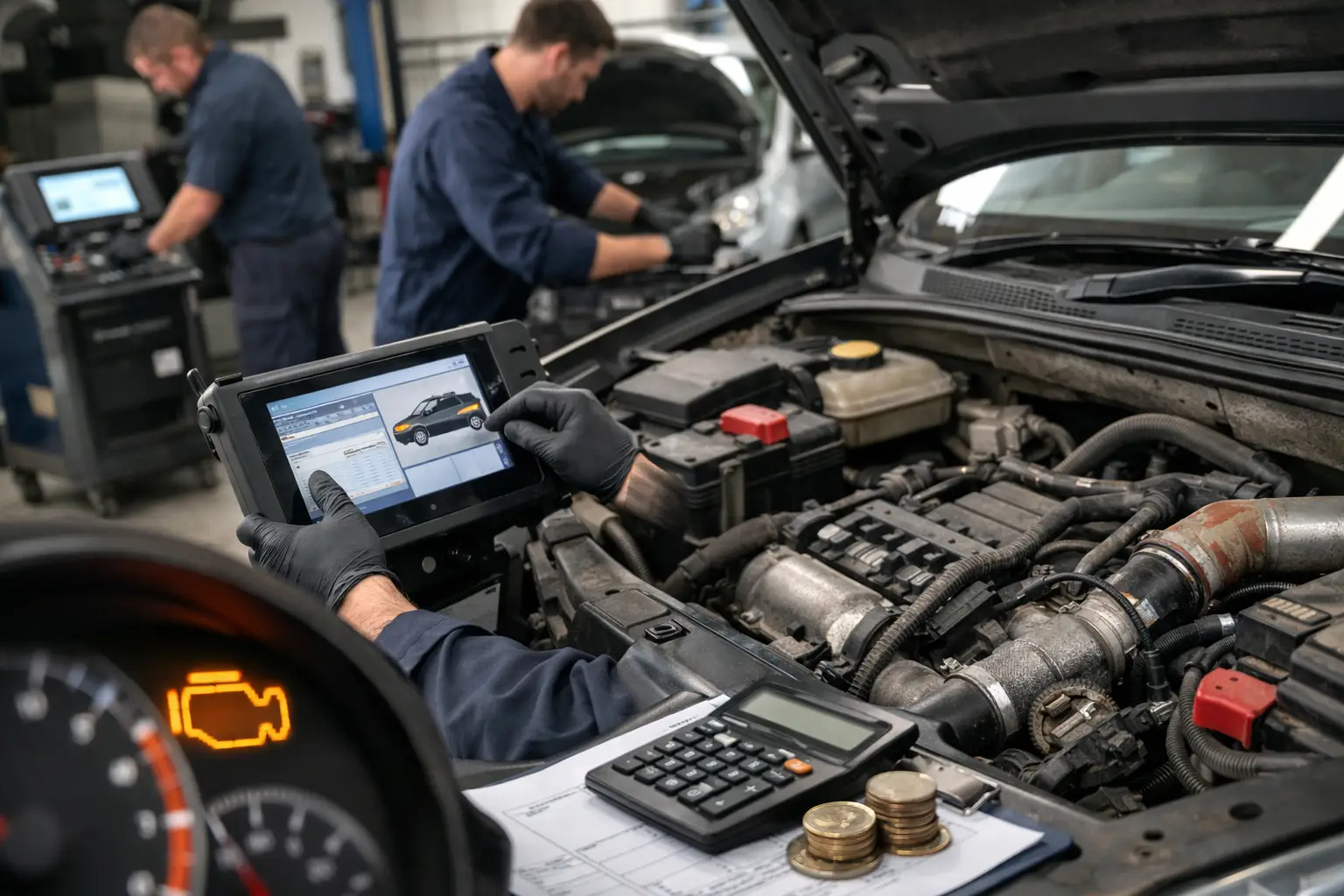
After that, the technician will look at live data, check how the engine is running, and test any likely causes. If the car is misfiring, for example, they may check ignition components, fuel delivery, and compression. If it is showing a DPF or emissions-related fault, they may need to inspect pressure readings, regeneration history, and sensor values.
We often see cars come in after another place has only cleared the light. That might switch the warning off for a short time, but if the root cause is still there, the same code usually returns.
A proper diagnosis should leave you with a clear answer in plain English. What is wrong, how serious it is, what needs repairing, and whether the car is safe to drive in the meantime.
Typical check engine light diagnosis cost in the UK
In general, the check engine light diagnosis cost at an independent garage is often somewhere around £50 to £120 for an initial assessment, depending on the vehicle and the complexity of the fault. Some issues are identified within that first stage. Others need more in-depth testing, which may add further labour time.
That range is only a guide. It depends on the make and model, how accessible components are, and whether the fault is constant or intermittent. A warning light on a small petrol hatchback is often quicker to assess than a more complex diesel with multiple stored faults, DPF issues, and limp mode.
This is where clear pricing matters. You should know what the initial diagnostic charge covers and whether extra testing will be needed before any further work is done. A good garage will explain that upfront rather than handing you a surprise bill later.
Why diagnosis can save you money
Some drivers hesitate to book diagnostics because they do not want to pay just to find out what is wrong. That is understandable. But guessing is usually more expensive.
We often see this issue when warning lights have been left for too long or when parts have already been changed without proper testing. A coil pack, spark plugs, EGR valve, sensor, or battery may be fitted in hope rather than certainty. Sometimes one of those parts was needed. Often, it was not the real cause.
Diagnosis helps avoid that cycle. It points to the actual fault so the repair can be planned properly. That means fewer wasted parts, less downtime, and a better chance of fixing the problem first time.
It also helps you prioritise. Not every warning light means stop immediately, but some do need urgent attention. If the engine is running rough, struggling to start, lacking power, or going into limp mode, the risk of further damage goes up if you keep driving.
When the cost may be higher
There are situations where the check engine light diagnosis cost may be at the upper end of the range or beyond the basic inspection.
Intermittent faults are a common example. If the light comes on and off, the garage may need more time to recreate the problem or review stored data. Electrical issues can also take longer because the fault may be in the wiring, connectors, control unit, or sensor circuit rather than one obvious failed part.
Diesel faults are another area where diagnosis can be more involved. DPF issues, EGR problems, boost leaks, and adblue-related faults often overlap. One symptom can have several possible causes. Proper testing matters here, because replacing the wrong part will not solve the issue.
Cars with multiple fault codes can also take longer. Sometimes one failed component triggers several related codes. Other times there are separate issues happening at once. The job is to separate the cause from the knock-on effects.
Can you keep driving with the light on?
It depends on how the car feels. If the engine warning light is on but the car is driving normally, you may be able to use it for a short time. Even then, it is best to get it checked soon. Small faults often turn into bigger ones if they are left.
If the light is flashing, or the car is misfiring, shaking, lacking power, smoking, or struggling to pull properly, stop using it and get advice. This usually happens because the fault is active and could damage the catalytic converter, DPF, or engine if driven further.
That is why a quick diagnosis matters. It is not just about switching the light off. It is about preventing a more expensive repair.
What to ask before booking diagnostics
Before you book in, ask what the diagnostic charge includes. Does it cover code reading only, or proper fault finding? Will you get a clear repair quote after the inspection? Will the garage contact you before any extra work is carried out?
You should also mention any symptoms, not just the warning light itself. If the car has poor fuel economy, rough idling, hard starting, limp mode, or loss of power, say so. That extra information can shorten the diagnostic process and help pinpoint the fault faster.
At a local garage, that conversation matters. A technician who listens to how the problem started and how the car behaves can often narrow things down before the bonnet is even opened.
Booking a local diagnostic check
If you are in or around Lowestoft and the engine warning light has come on, the best next step is to book a proper diagnostic check rather than wait for the problem to get worse. At https://autofix4u.co.uk/, the focus is on finding the cause, explaining it clearly, and giving you a repair plan with transparent pricing and no surprise extras.
In most cases, drivers just want a straight answer. Is it serious, what will it cost to fix, and can the car be used safely until then? That is exactly what a good diagnosis should give you.
If that light is on, do not guess and do not ignore it. Get it checked, get a clear answer, and deal with the fault before it turns into something bigger.