
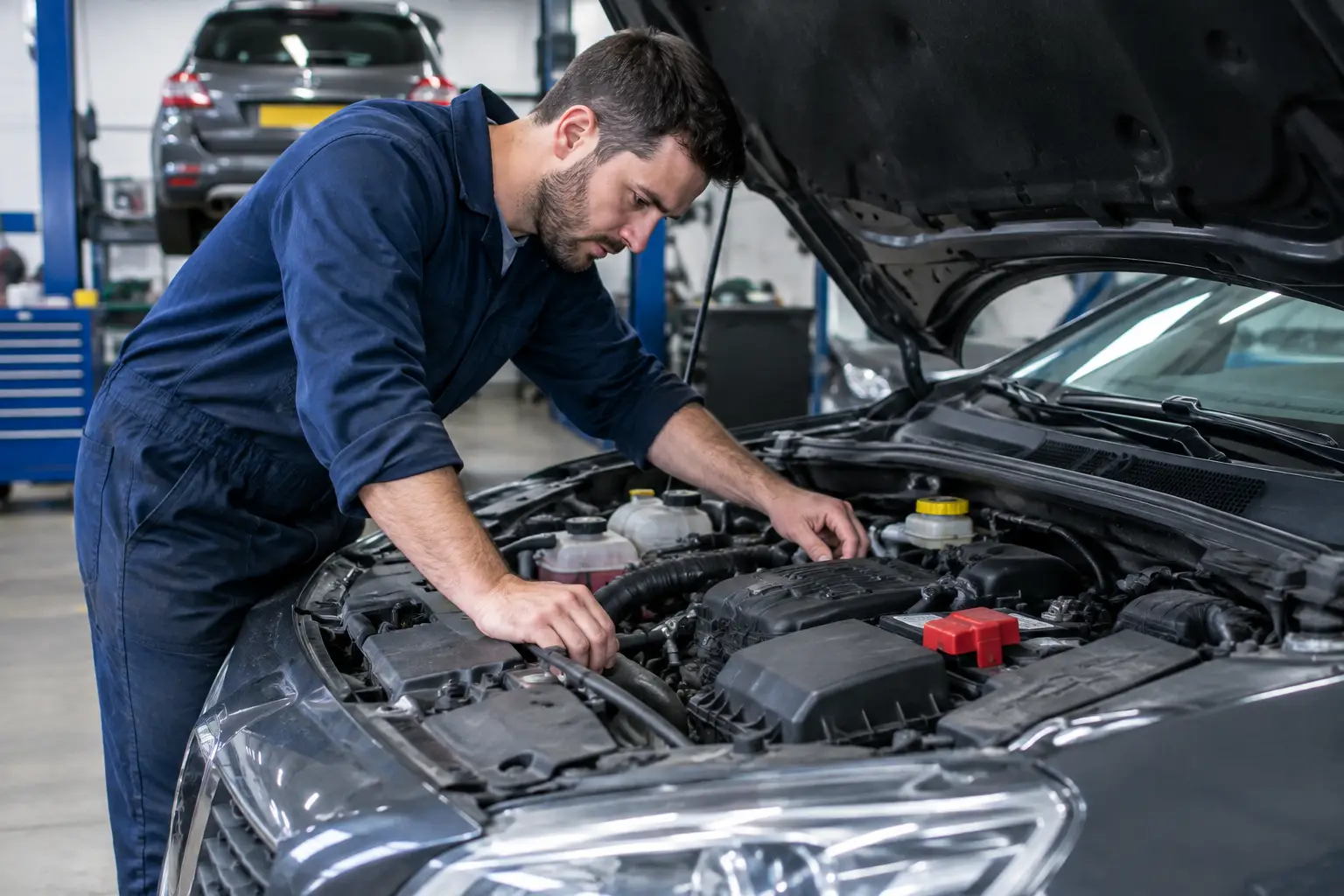
Car Will Not Start? Common Causes and Next Steps
You turn the key before work, but the engine refuses to start. Perhaps the dashboard lights appear, yet nothing happens. Alternatively, you hear clicking or the engine turns over without firing.
When your car will not start, the first step is to identify what happens when you turn the key or press the start button.
A flat battery is a common cause. However, starting problems can also involve the alternator, starter motor, fuel system, immobiliser or engine sensors.
At AutoFix4u Garage Lowestoft, we help drivers investigate starting faults and identify the correct repairs. Rather than replacing parts unnecessarily, we check the symptoms and test the relevant systems.
What Happens When Your Car Will Not Start?
Not every starting problem has the same cause.
For example, an engine that does not turn over requires different checks from one that cranks normally but refuses to run.
Before trying again, notice what the vehicle does.
- Does the engine remain completely silent?
- Do you hear a single click?
- Is there a rapid clicking noise?
- Does the engine crank but fail to start?
- Do the dashboard lights become dim?
- Does an immobiliser warning appear?
These details help narrow down the problem.
However, avoid repeatedly cranking the engine. Doing so can drain the battery further and overheat the starter motor.
If you notice smoke, a strong fuel smell or burning electrical components, stop trying to start the car.
1. Weak or Flat Car Battery
A weak battery is one of the most common reasons a car will not start.
Cold weather, short journeys and long periods without driving can all contribute to battery problems.
Typical symptoms include:
- Slow engine cranking
- Rapid clicking when starting
- Dim dashboard lights
- Electrical equipment behaving unusually
- The engine failing to turn over
However, a flat battery does not always mean you need a new one.
For example, an electrical drain may discharge a healthy battery overnight. Alternatively, a faulty alternator may prevent the battery from charging properly.
Therefore, testing the battery and charging system is more reliable than immediately replacing the battery.
Our garage can investigate battery condition, charging faults and related electrical problems.
2. Faulty Starter Motor
The starter motor turns the engine during the starting process.
If it fails, the engine may remain completely silent or produce a clicking sound.
However, other electrical faults can cause similar symptoms.
Possible causes include:
- A worn starter motor
- Poor battery connections
- Damaged electrical cables
- A faulty starter relay
- A bad earth connection
- An ignition-switch problem
On some vehicles, a faulty clutch switch or automatic gearbox selector switch can also prevent starting.
A technician should check the power supply and starting circuit before recommending a replacement starter.
This approach helps avoid unnecessary parts and labour costs.
3. Alternator or Charging Problems
The alternator charges the battery while the engine runs.
If it stops working correctly, the battery gradually loses its stored energy.
As a result, the car may struggle to start after a journey.
Before the failure, you might notice several warning signs.
For example, the headlights may become dim or the battery warning light may appear while driving.
You might also experience intermittent electrical problems.
However, replacing the battery alone will not fix a faulty alternator.
A proper charging-system test can identify whether the alternator, wiring or battery needs attention.
Read our guide to Alternator Fault Symptoms and Testing for more information.
4. Engine Cranks but Will Not Start
Sometimes the starter motor works normally, but the engine refuses to run.
This suggests a different type of starting problem.
A combustion engine needs the correct combination of fuel, air, compression and, for petrol engines, ignition.
Modern vehicles also rely on electronic sensors and engine-management systems.
Possible causes include:
- Insufficient fuel pressure
- Faulty crankshaft or camshaft sensors
- Ignition-system faults
- Fuel-pump problems
- Injector faults
- Damaged wiring
- Mechanical timing problems
For example, a faulty crankshaft sensor may prevent the engine control unit from identifying engine position.
Consequently, the engine may crank without starting.
However, the same symptom can have several causes. Therefore, proper testing matters before replacing sensors or fuel-system components.
Our Engine Diagnostics Lowestoft service helps identify engine-management and electrical faults.
5. Immobiliser or Car Key Problems
Many modern vehicles use an immobiliser to prevent unauthorised starting.
The system checks whether it recognises the key before allowing the engine to start.
If communication fails, the engine may not crank or may crank without starting, depending on the vehicle.
You might notice a flashing security symbol or an immobiliser warning message.
Possible causes include:
- A damaged key
- A key recognition fault
- A weak key-fob battery
- An immobiliser antenna fault
- Low vehicle battery voltage
- Wiring or control-module problems
If you have a spare key, you can try it according to the vehicle manufacturer’s instructions.
However, do not assume that the immobiliser itself has failed.
A proper electrical inspection can help identify the source of the problem.
6. Fuel Supply Problems
An engine cannot run without an adequate fuel supply.
Therefore, a fuel-system fault can prevent starting even when the battery and starter motor work correctly.
Possible causes include a faulty fuel pump, blocked fuel filter, low fuel pressure or an injector problem.
Diesel vehicles can also develop starting difficulties when air enters the fuel system.
Some problems become more noticeable during cold weather. Others appear after the vehicle has been parked overnight.
A technician can investigate fuel pressure, relevant sensor readings and other symptoms.
However, fuel-system components should not be replaced based on guesswork alone.
7. Mechanical Engine Problems
Although electrical faults are common, mechanical problems can also prevent an engine from starting.
For example, a failed timing belt may cause the engine to lose the correct relationship between the crankshaft and camshaft.
Some engines can suffer serious internal damage when this happens.
Other potential causes include severe compression loss or mechanical engine damage.
Warning signs may include:
- Unusual cranking noises
- An engine that turns over faster than normal
- A sudden engine stoppage
- Severe overheating before the failure
- Loud mechanical noises
If the engine stopped suddenly or now sounds unusual when cranking, do not keep trying to restart it.
Repeated attempts may cause further damage.
If timing-belt failure is a concern, our Cambelt Replacement Lowestoft page explains the importance of correct timing-system maintenance.
What Can You Safely Check at Home?
Before booking a diagnostic inspection, you can make a few simple observations.
First, check whether the dashboard lights illuminate normally.
Next, listen to the engine when attempting to start it.
Also, look for obvious battery-terminal corrosion, damaged cables or warning messages. Do not touch exposed or damaged wiring.
If you use a jump starter, follow the manufacturer’s instructions carefully.
Never attempt to jump-start a visibly damaged, leaking or swollen battery.
A successful jump start may indicate low battery voltage. However, it does not confirm why the battery became discharged.
For this reason, arrange a battery and charging-system test if the problem returns.
How AutoFix4u Garage Lowestoft Diagnoses Starting Problems
At AutoFix4u Garage Lowestoft, we focus on identifying the cause before recommending repairs.
The inspection depends on the vehicle and its symptoms.
For example, a no-crank problem may require battery, starter and electrical-circuit tests.
Meanwhile, an engine that cranks without starting may need engine diagnostics, live-data checks or fuel-system testing.
A diagnostic inspection may include:
- Checking battery condition and voltage
- Inspecting electrical connections
- Testing starter-motor operation
- Checking the charging system
- Reading relevant diagnostic fault codes
- Reviewing engine sensor data
- Investigating fuel or ignition faults
However, fault codes do not always identify the failed component directly.
For example, a sensor-related code could result from damaged wiring or another underlying problem.
Therefore, accurate diagnosis involves interpreting the results and confirming the fault.
Our Auto Electrical Repairs Lowestoft service covers vehicle electrical problems and related testing.
How Much Does a Car Starting Repair Cost?
Repair costs depend on the actual fault.
For example, a battery replacement is usually less involved than repairing damaged wiring or investigating a complex engine-management problem.
Similarly, starter-motor replacement costs vary according to the vehicle and component accessibility.
The final price may depend on:
- The type of fault
- Replacement parts required
- Labour involved
- Electrical diagnostic work
- Vehicle design and accessibility
Because several faults can produce identical symptoms, an accurate quote may require an inspection first.
At AutoFix4u Garage Lowestoft, we aim to explain the findings and recommended repairs before additional work begins.
When Should You Stop Trying to Start the Car?
Some problems require immediate attention.
Stop attempting to start the vehicle if you notice:
- Smoke or burning electrical smells
- Strong petrol or diesel smells
- Damaged battery cables
- Unusual mechanical grinding
- Signs of severe overheating
- An engine that stopped suddenly with a loud noise
Additionally, avoid driving if the vehicle starts but displays a serious warning, such as the oil-pressure warning light.
A starting problem can sometimes indicate a wider mechanical or electrical fault.
Therefore, identifying the cause early can help prevent additional damage.
Book a Car Starting Fault Diagnosis in Lowestoft
Car will not start? AutoFix4u Garage Lowestoft can help investigate the cause.
Whether you suspect a battery, starter motor, alternator or engine-management problem, we can discuss the symptoms and arrange an appropriate inspection.
We help drivers from Lowestoft, Oulton Broad, Carlton Colville, Beccles and surrounding areas.
Our approach is straightforward: identify the problem, explain the findings and recommend a suitable repair.
Call: 07778 979802
WhatsApp: Message AutoFix4u Garage
Request a quote: Car Repair Estimate Lowestoft
Don’t keep replacing parts without knowing why your vehicle refuses to start. Contact AutoFix4u Garage Lowestoft for practical advice and a professional diagnostic inspection.