
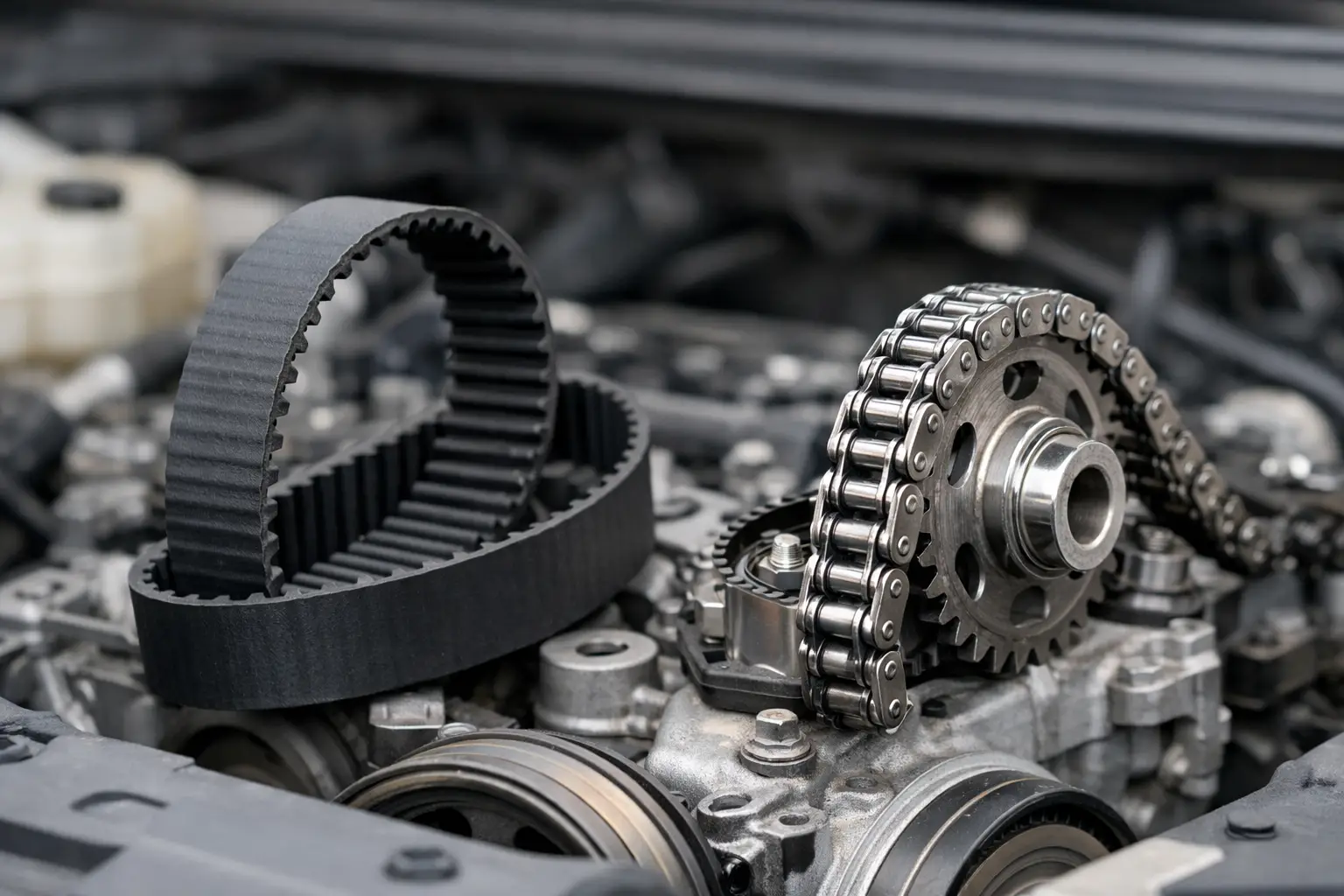
Cambelt vs Timing Chain Replacement
If you’ve been told your car might need a cambelt or timing chain, the first question is usually the same: what is the difference, and how serious is it? That is exactly why cambelt vs timing chain replacement matters. Get it wrong, or leave it too long, and a routine repair can turn into major engine damage.
Most drivers do not care what system their engine uses until there is a warning from the garage, a rattling noise on start-up, or a service schedule that mentions belt replacement. Fair enough. What matters is knowing what your car has, what the risks are, and when action is worth taking before the problem becomes expensive.
Cambelt vs timing chain replacement – what is the difference?
Both parts do the same job. They keep the crankshaft and camshaft in sync so the engine’s valves open and close at the right time. If that timing goes out, the engine will not run properly. In many cases, it will not run at all.
The main difference is what they are made from and how they wear. A cambelt is a reinforced rubber belt. A timing chain is a metal chain, usually running inside the engine and lubricated by engine oil.
A cambelt is usually quieter and lighter. It is also a regular service item on many vehicles, which means replacement at the right interval is expected. A timing chain is often sold as longer-lasting, sometimes even described as lasting the life of the engine. That sounds reassuring, but it is not a guarantee. Chains still wear, stretch, and develop faults, especially if oil changes have been missed or poor-quality oil has been used.
Why cambelts usually need planned replacement
With a cambelt, the rule is simple. Follow the manufacturer’s mileage or age interval, whichever comes first. Even if the car has covered low mileage, the belt material still ages over time.
That is why a car with only modest use can still need a cambelt. We see this with second cars, family runarounds, and vehicles owned by drivers who mainly do short local trips. The mileage may look fine, but the belt can still be old enough to be a risk.
When a cambelt fails, it often fails suddenly. There may be no warning. On many engines, a snapped belt can let internal components collide, bending valves and causing serious engine damage. At that point, you are no longer talking about routine maintenance. You are talking about a much bigger repair.
This is why cambelt replacement is preventative work. You replace it before it gives trouble, not after.
Why timing chains can still fail
Timing chains do not have the same fixed replacement schedule on every vehicle, but that does not mean they are fit and forget. A worn timing chain can stretch. The tensioner or guides can wear out. Oil pressure issues can affect how the chain system works.
The early signs are often easier to spot than with a cambelt. You might notice a rattling noise for a few seconds on cold start, rough running, poor performance, engine management lights, or fault codes linked to timing. Sometimes the problem is gradual. Sometimes it develops fast.
The important point is this: a timing chain fault is not automatically cheaper because it is a chain, and it is not automatically less urgent. In some cases, timing chain replacement is more labour-intensive than a cambelt because of where the parts sit in the engine.
Which is more expensive?
There is no honest one-size-fits-all answer here.
Cambelt replacement is often more predictable because it is planned maintenance. On many cars, the job includes the belt, tensioners, idlers and, where recommended, the water pump. Replacing the pump at the same time often makes sense because access is already there, and a failed pump can damage the new belt or mean paying similar labour twice.
Timing chain replacement can be more expensive, but it depends on the vehicle and what has actually failed. If the chain, guides and tensioners all need doing, labour can be higher. If the chain has already slipped or caused internal damage, costs rise quickly.
So if you are comparing cambelt vs timing chain replacement purely on price, the real answer is that the cheaper option is the one dealt with early. Delay is what usually turns either job into a costly one.
How to know what your car has
Some drivers assume older cars have belts and newer ones have chains. That is not always true. Manufacturers use both systems across different engines, sometimes even within the same model range.
The safest approach is to check the service record, handbook, or ask a garage to confirm it from the registration and engine details. If a previous owner says the cambelt was done, ask for proof. A stamped book is useful, but an invoice is better.
If there is no evidence and the car is at the right age or mileage, treat that as a warning sign rather than a maybe. Guesswork is not worth it with engine timing components.
Warning signs you should not ignore
A cambelt often gives little or no warning before failure, which is why service intervals matter so much. A timing chain is more likely to show symptoms, but those symptoms can be easy to dismiss at first.
Look out for rattling from the engine, especially on start-up, rough idling, misfires, poor acceleration, trouble starting, or warning lights linked to engine timing. Oil contamination, low oil level, or overdue servicing can also point to timing chain wear becoming more likely.
If your car is due a cambelt by age or mileage, that alone is enough reason to book it in. If your car has a timing chain and starts showing symptoms, do not keep driving it in the hope it will settle down.
Replacement is not just about the belt or chain
A proper repair looks at the full system. With cambelts, that usually means associated pulleys, tensioners and often the water pump. With timing chains, it may mean guides, tensioners, seals and a check for any related wear or damage.
This is where clear quoting matters. A vague price for just the main part is not always the full picture. The right repair is the one that fixes the cause properly and reduces the chance of repeat failure.
That does not mean adding work for the sake of it. It means replacing the components that commonly wear together, using quality parts, and doing the job to best practice.
When should you book it in?
With a cambelt, book before the due date if possible, not after. If you have bought a used car and cannot verify the history, it is sensible to get it checked straight away.
With a timing chain, book as soon as symptoms appear. A rattle on start-up is not something to put off for months. The same goes for engine timing fault codes or unexplained running issues.
If you rely on one vehicle for work, school runs or day-to-day travel, waiting until it becomes a breakdown is usually the most disruptive option. Planned repairs give you more control, less stress and a better chance of avoiding secondary damage.
What to expect from a good garage
You should be told clearly whether your vehicle has a cambelt or chain, whether replacement is due because of age, mileage or symptoms, and what parts are included in the job. You should also be told if there is any sign the fault has gone beyond routine replacement.
That level of clarity matters. Most drivers are not looking for a technical lecture. They want to know what the problem is, how urgent it is, and what the next step should be.
At AutoFix4u, that is how we approach repairs – clear quotes, no surprise extras, and honest advice based on what the vehicle actually needs. If you are in or around Lowestoft and need a cambelt check, timing diagnosis or replacement, it is worth getting it looked at before a small issue becomes engine damage.
So which is better?
Neither is automatically better for every driver. Cambelts need scheduled replacement, which can feel like a nuisance, but that does make planning easier. Timing chains can last longer, but when they wear, diagnosis and repair can be more involved.
What matters most is not whether your engine uses a belt or a chain. It is whether the system is being maintained properly, whether the warning signs are being taken seriously, and whether the repair is done before bigger damage sets in.
If you are unsure what your car has, or whether replacement is due, get it checked now while it is still your choice and not the engine’s.


