Alternator Fault Symptoms
Your car starts fine one day, then the next the battery light comes on, the headlights look weak, and the engine feels like it is about to give up at the lights. That kind of change often points to the charging system, and one of the main suspects is the alternator.
If you know the likely alternator fault symptoms, you have a much better chance of catching the problem before the car leaves you stranded. The difficulty is that alternator faults can look like battery faults, wiring faults, or even general electrical problems. That is why proper diagnostics matter. You do not want to replace the wrong part and still have the same issue a week later.
Common alternator fault symptoms
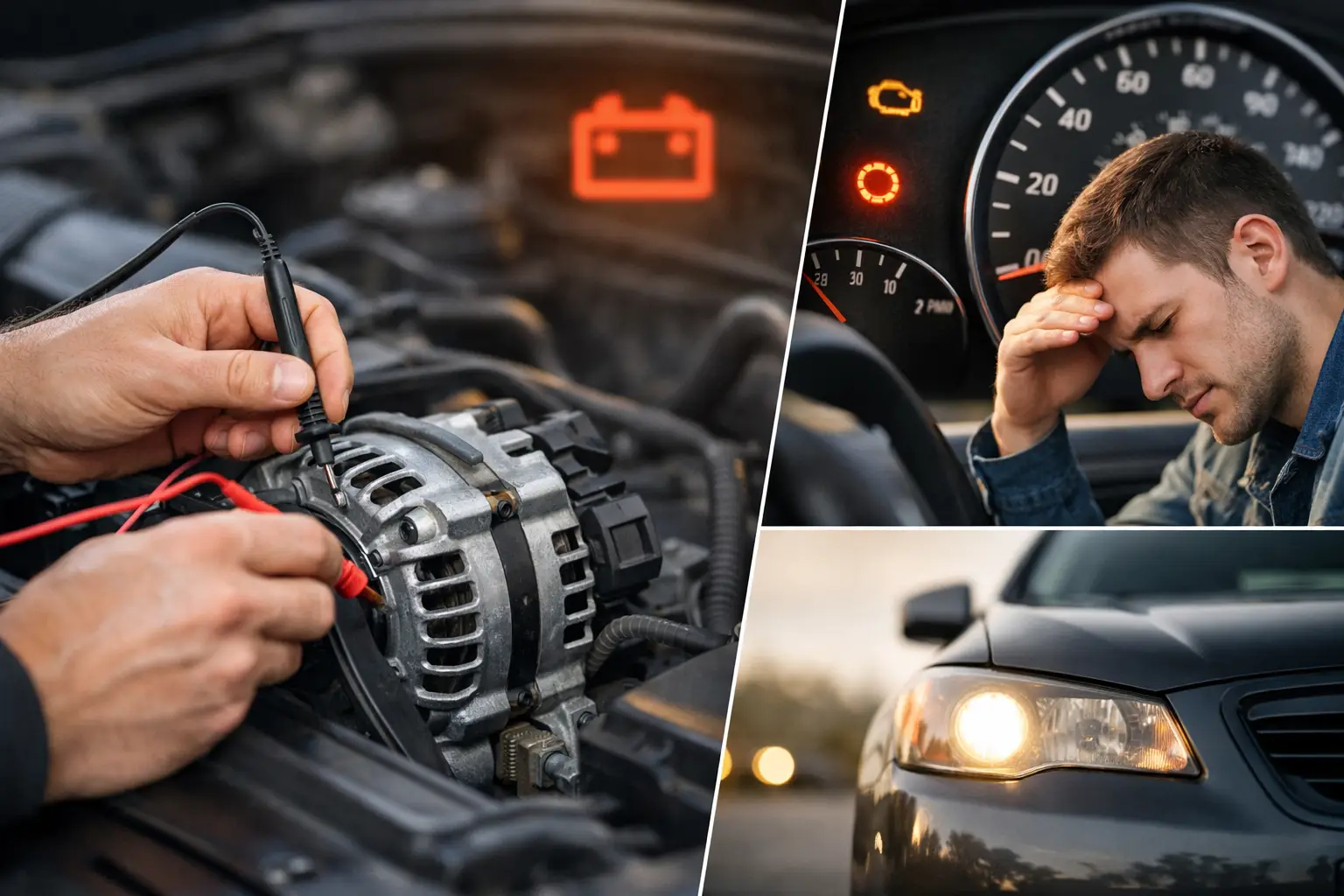
The clearest sign is usually the battery warning light on the dashboard. Despite the name, that light does not always mean the battery itself is faulty. It often means the battery is not being charged properly while the engine is running.
You may also notice dim or flickering headlights, especially at idle or when using heaters, wipers, heated screens, or air conditioning. Interior lights can do the same. On some vehicles, the radio may cut out, the electric windows slow down, or the dashboard may behave oddly.
Another of the more serious alternator fault symptoms is trouble starting the engine. The battery may have enough charge to crank the car once or twice, but if the alternator is not topping it up as you drive, the charge gradually drops away. At that point, the car may start sluggishly, click, or fail to start altogether.
Stalling can happen too. Modern vehicles rely heavily on a stable electrical supply. If the alternator output drops too far, the engine management system, fuel system, and ignition can all be affected. That can lead to rough running, cutting out, or a complete breakdown.
A burning smell is another warning sign worth taking seriously. If an alternator is overworking, has a failing bearing, or the belt is slipping, heat can build up. That may produce a hot rubber smell from the belt or a more electrical burning smell from the alternator itself.
What a bad alternator can feel like on the road
Some faults show up before the car actually stops. The first clue might be a dashboard that looks dimmer than usual at night. You might turn the blower fan up and notice the lights dip. You might also hear the engine note change slightly at idle as the electrical load increases.
In other cases, the symptoms are less obvious. The sat nav may restart, warning lights may appear and disappear, or driver assistance systems may throw up random messages. That is where people can get caught out. It does not always look like one neat, obvious alternator failure.
If the alternator is charging too little, the battery slowly runs flat. If it is overcharging, that can also cause damage. Overcharging can shorten battery life, upset sensitive electronics, and lead to unusual warning lights. So the issue is not only whether the car charges, but whether it charges correctly.
Alternator fault symptoms or battery problem?
This is where a lot of drivers understandably guess wrong. A flat battery and a faulty alternator can produce similar signs. The car may not start. The battery light may be on. Electrical items may be weak. That does not automatically mean the battery is the root cause.
A battery can fail because it is old and no longer holds charge. But it can also go flat because the alternator has not charged it properly. Fitting a new battery might get the car going again for a short time, but if the charging fault is still there, the same problem returns.
The reverse can happen as well. Sometimes the alternator is fine, but the battery is failing under load. There can also be a wiring fault, poor earth, blown fuse, or damaged belt involved. That is why voltage checks and charging system tests are the sensible next step rather than guessing.
Signs the alternator belt or pulley may be involved
The alternator itself is not always the only failed part. The belt that drives it, and the pulley system around it, can also cause charging issues.
A squealing noise from the engine bay, especially on start-up or when electrical demand is high, can point to a loose or worn auxiliary belt. If that belt slips, the alternator cannot generate proper output. Some vehicles may also suffer from tensioner or pulley wear, which creates noise, poor charging, or both.
This matters because replacing the alternator alone will not solve the problem if the real issue is the belt drive system. A proper inspection should check the full charging setup, not just one part.
When should you stop driving?
It depends on what the car is doing. If the battery light has just come on but the car still feels normal, you may have a short window before the battery charge drops too low. Even then, it is best not to ignore it. Every mile uses more stored battery power if the alternator is not working as it should.
If the headlights are dim, the dashboard is flickering, systems are switching off, or the car is stalling, keep driving only if you absolutely need to get to a safe place. At that stage, the vehicle may stop at any point.
If there is a burning smell, obvious smoke, or a loud mechanical noise from the engine bay, stop as soon as it is safe. That could be more than a simple low-charge issue.
How garages diagnose alternator faults properly
A good diagnosis should start with testing, not assumptions. Battery condition needs to be checked first, because a weak battery can affect results. After that, the charging voltage is measured with the engine off and running, and often under electrical load as well.
If the readings are outside the expected range, the next job is working out why. That may involve checking the alternator output, the regulator, the belt condition, the wiring, and the earth connections. On some vehicles, scan tools are also useful because charging faults can trigger fault codes or affect other control units.
This is the difference between swapping parts and fixing the actual fault. If your car has warning lights, power issues, or repeated flat battery problems, a proper diagnostic check is usually quicker and cheaper than trial and error.
Can an alternator fail suddenly?
Yes, and that is one reason drivers get caught off guard. Sometimes alternators get weaker over time. You might notice dim lights for a few weeks, or occasional starting trouble in the morning. In those cases, the problem builds gradually.
But they can also fail with very little warning. Internal components such as the voltage regulator, diodes, or bearings can go suddenly. A belt problem can also appear quickly. So if a car was fine yesterday and suddenly has multiple electrical symptoms today, the alternator should be on the list.
What to do if you notice alternator fault symptoms
Start with the obvious. If the battery light is on, avoid unnecessary electrical use. Heated seats, heated screens, blower fans, and charging cables all add load. That will not fix the fault, but it may help preserve enough battery power to get the vehicle somewhere safe.
Do not keep restarting the engine to see if the problem clears. Each start takes a heavy draw from the battery. If the alternator is not charging, repeated attempts can leave you with nothing.
The sensible next step is to book diagnostics. If you are in or around Lowestoft and need a quick answer, AutoFix4u can carry out same-day fault finding where possible and tell you whether the issue is the alternator, the battery, the belt system, or something else in the charging circuit. Clear quote, no surprise extras, and the repair aimed at the real cause.
Why quick action matters
Charging faults rarely improve on their own. Leave them too long and what starts as one warning light can turn into a non-start, a roadside recovery, or damage to the battery from repeated deep discharge.
There is also the safety side. Losing electrical power affects more than convenience. Lights, wipers, heating, demisting, and engine management all rely on a healthy charging system. In poor weather or night driving, that is not something to put off.
If your car is showing alternator fault symptoms, trust what it is telling you. Get it checked before it becomes a bigger problem, because a clear diagnosis now is a lot easier than dealing with a breakdown later.