Brake Fluid Leak Lowestoft – What to Do Now
A soft brake pedal can make any journey frightening. You might notice it on the way to work or during a short trip around Lowestoft. Perhaps a red brake warning light has appeared. Alternatively, you may have spotted fluid underneath your car.
If you suspect a brake fluid leak Lowestoft drivers should take immediate action. A leaking braking system can lose hydraulic pressure. As a result, the vehicle may struggle to stop safely.
Brake fluid transfers pressure from the pedal to the brakes at each wheel. Without enough fluid and pressure, braking performance can deteriorate quickly.
Therefore, do not ignore unusual pedal movement, visible leaks or brake warning lights.
Signs you may have a brake fluid leak
A brake fluid leak does not always leave an obvious puddle.
Sometimes, the first warning comes from the brake pedal. You may notice that it feels softer than usual or travels further towards the floor.
Other warning signs include:
- A soft or spongy brake pedal
- A pedal that slowly sinks under steady pressure
- A red brake warning light
- Low fluid in the brake reservoir
- Wet patches around brake components
- Fluid underneath the vehicle
- Reduced braking performance
- The car pulling to one side when braking
However, these symptoms do not always mean fluid is leaking.
For example, air in the hydraulic system can produce a soft pedal. A faulty master cylinder may cause similar symptoms.
Also, worn brake pads can lower the fluid level in the reservoir as the caliper pistons extend.
Therefore, a mechanic should inspect the braking system before recommending repairs.
If you notice a brake warning light, treat it seriously.
Is it safe to drive with a brake fluid leak?
No. If you suspect a brake fluid leak, do not drive the vehicle.
A hydraulic leak can reduce braking pressure without much warning. Consequently, the pedal may travel further than normal.
In severe cases, you could lose a significant amount of braking performance.
If you notice a soft pedal or visible fluid loss while driving, stop somewhere safe as soon as possible.
Then switch off the engine and arrange professional assistance.
Do not rely on pumping the pedal or topping up the reservoir.
Neither action repairs the leak.
Also, avoid driving the car to a garage if you suspect that hydraulic fluid is escaping.
Instead, arrange recovery or suitable vehicle transport.
Your safety matters more than completing the journey.
What causes brake fluid leaks?
The braking system contains several components that carry pressurised hydraulic fluid.
These include metal brake pipes, flexible hoses, calipers, wheel cylinders and the master cylinder.
Over time, corrosion, damage or worn seals can cause leaks.
However, the correct repair depends on identifying the faulty component.
1. Corroded brake pipes
Metal brake pipes carry hydraulic fluid around the vehicle.
They often run underneath the car, where road spray, moisture and salt can cause corrosion.
Consequently, older vehicles may develop rust around pipe clips, joints or exposed sections.
Eventually, severe corrosion can weaken a pipe and allow fluid to escape.
A mechanic should inspect the affected pipe and the surrounding sections.
If corrosion has spread, replacing only a small section may not provide a lasting solution.
2. Damaged flexible brake hoses
Flexible hoses connect the rigid brake pipes to moving brake components.
They allow the wheels and suspension to move while maintaining hydraulic pressure.
However, age, rubbing or physical damage can weaken the hose.
You may notice cracks, swelling or fluid around the hose connections.
A damaged brake hose needs replacement.
A temporary patch cannot provide a safe hydraulic repair.
3. Leaking brake calipers
Brake calipers use hydraulic pressure to press the pads against the discs.
Internal seals help retain the fluid.
However, worn or damaged seals can allow brake fluid to escape.
You may notice moisture around the caliper or behind the wheel.
A leaking caliper can also contaminate the brake pads.
Therefore, a proper inspection should include the caliper, disc and friction material.
Learn more about our brake repair service in Lowestoft.
4. Faulty rear wheel cylinders
Some vehicles use drum brakes on the rear axle.
These systems contain wheel cylinders that operate the brake shoes.
Over time, cylinder seals can deteriorate and leak.
Brake fluid may then collect inside the drum.
As a result, you might not see any fluid underneath the vehicle.
A mechanic may need to remove the drum to identify the fault.
If the fluid has contaminated the brake shoes, replacement may also be necessary.
5. Brake master cylinder problems
The master cylinder creates hydraulic pressure when you press the brake pedal.
However, internal seal wear can allow pressure to bypass the seals.
The pedal may slowly sink, even without a visible external leak.
Some master cylinders can also leak fluid externally.
Therefore, the technician must check the cylinder and surrounding components.
A proper diagnosis helps distinguish internal pressure loss from an external leak.
Can low brake fluid mean worn brake pads?
Yes. A low fluid level does not always indicate a leak.
As brake pads wear, caliper pistons move further out to maintain contact with the discs.
This movement can gradually lower the fluid level in the reservoir.
However, the braking system still needs checking.
Do not simply top up the fluid and assume everything is fine.
The mechanic should inspect pad thickness, disc condition and hydraulic components.
This helps identify whether the issue involves normal wear or an actual leak.
How a garage finds a brake fluid leak
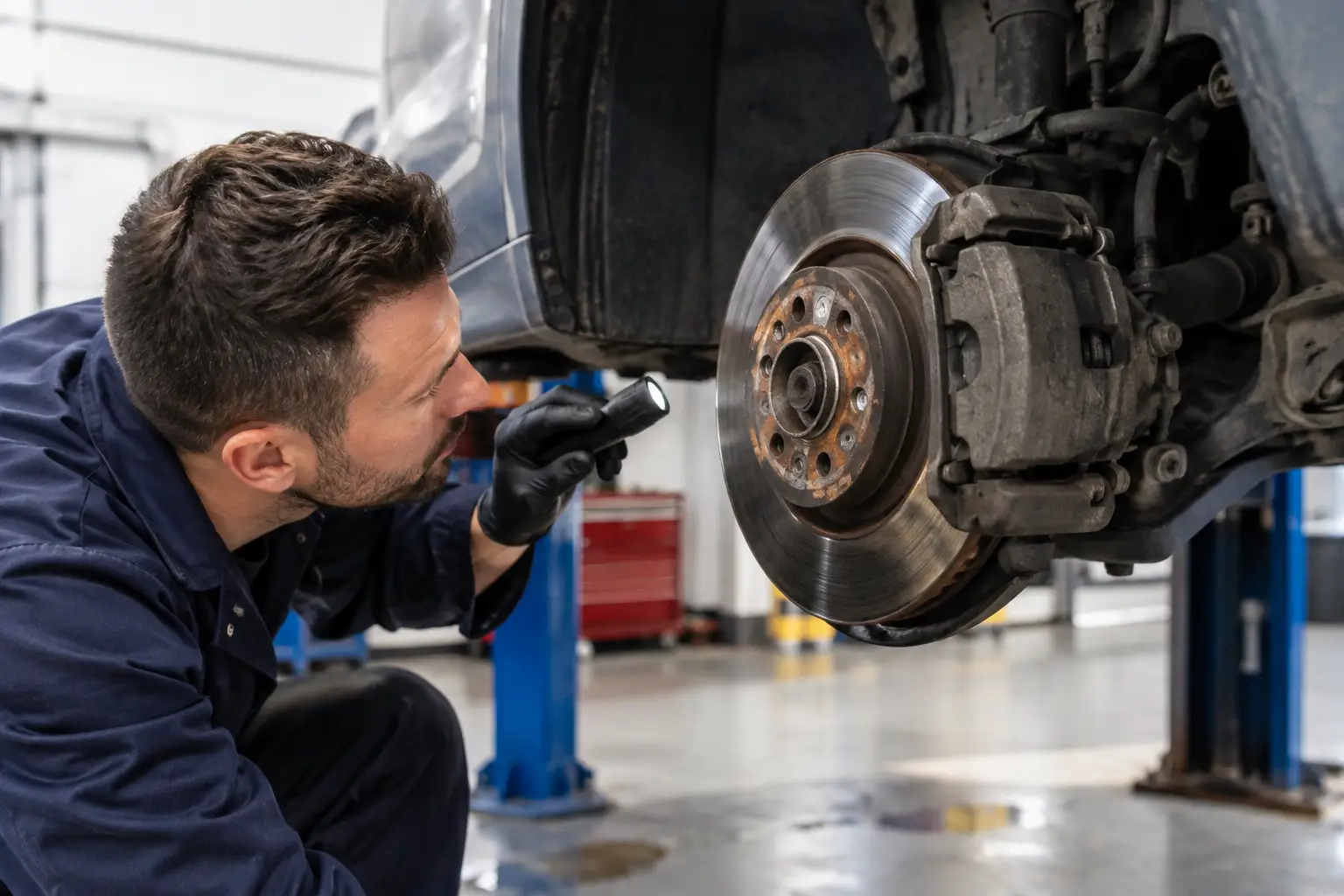
A proper brake inspection starts with the symptoms.
First, the mechanic checks the fluid reservoir and brake warning lights.
Next, they assess the pedal and inspect the visible hydraulic components.
The vehicle may need to go onto a lift.
This allows the technician to inspect pipes, connections and hoses underneath the car.
The inspection may also include:
- Brake calipers and their seals
- Rear wheel cylinders
- Flexible hoses
- Metal brake pipes
- Master cylinder connections
- Brake pads and discs
- Signs of corrosion or contamination
Sometimes, the mechanic needs to remove a wheel or brake drum.
This provides access to components that remain hidden during a basic visual check.
If necessary, further hydraulic testing can help identify pressure loss.
At AutoFix4u Garage Lowestoft, we focus on identifying the cause before recommending parts.
Therefore, the repair plan follows the inspection findings.
What repairs may be necessary?
The right repair depends on the faulty component.
For example, a leaking flexible hose normally needs replacement.
A corroded metal brake pipe may require a new section or a more extensive repair.
Similarly, a leaking caliper or wheel cylinder may need replacing.
However, the technician must also inspect the surrounding components.
Brake fluid can damage or contaminate friction materials.
Consequently, affected brake pads or shoes may also need replacement.
After repairing the leak, the mechanic must restore the hydraulic system.
This includes using the correct brake fluid and removing trapped air.
Some vehicles require a specific bleeding procedure.
The technician should then confirm that the pedal feels correct and the system holds pressure.
Finally, appropriate braking checks help verify the repair.
Can you fix a brake fluid leak by topping up?
No. Adding brake fluid cannot repair a leaking component.
It may temporarily restore the reservoir level. However, fluid can continue escaping.
As a result, braking performance may deteriorate again.
Also, different vehicles require specific brake fluid types.
Using an unsuitable fluid can damage hydraulic components.
Therefore, avoid adding random brake fluid or mixing products without checking the manufacturer’s specification.
If the reservoir is low, arrange a professional inspection.
Do not attempt to drive a vehicle with a suspected leak.
Can a brake fluid leak cause an MOT failure?
Yes. An MOT inspection includes checks on the braking system.
A visible hydraulic leak can result in an MOT failure.
In addition, severe pipe corrosion, damaged hoses and poor braking performance can cause problems.
Some defects may receive a dangerous classification.
Therefore, addressing brake problems before an MOT is important.
However, you should not wait for the annual test if braking performance changes.
An MOT only assesses the vehicle’s condition at the time of testing.
A hydraulic fault can develop at any point during the year.
Brake fluid leaks and coastal driving
Vehicles around Lowestoft often encounter wet roads, coastal moisture and winter road salt.
These conditions can contribute to corrosion on exposed metal components.
Brake pipes underneath the vehicle are particularly vulnerable when protective coatings deteriorate.
However, corrosion does not affect every vehicle in the same way.
Age, mileage, maintenance and previous repairs also matter.
Regular inspections can help identify deterioration before a pipe develops a serious leak.
Therefore, mention any unusual brake symptoms when booking servicing or repair work.
How to prevent brake fluid problems
Regular maintenance helps keep your braking system in good condition.
For example, a mechanic can inspect brake pipes, hoses and visible connections during servicing.
Brake fluid also requires periodic replacement according to the manufacturer’s schedule.
Over time, many conventional brake fluids absorb moisture.
This can reduce performance at high temperatures and contribute to internal corrosion.
However, a brake fluid change cannot repair a leaking pipe or damaged seal.
Therefore, address any hydraulic fault before treating the job as routine maintenance.
Book a brake inspection in Lowestoft
A brake fluid leak Lowestoft drivers notice should never go unchecked.
Whether the problem involves a corroded pipe, damaged hose or leaking caliper, the priority is safety.
At AutoFix4u Garage Lowestoft, we inspect brake faults and explain the findings clearly.
We help drivers from Lowestoft, Oulton Broad, Carlton Colville, Kessingland, Beccles and nearby areas.
Our approach focuses on identifying the actual problem before recommending repairs.
You receive an explanation of the required work and the estimated cost before repairs begin.
Contact AutoFix4u Garage Lowestoft
Address: Unit 4, 10 Battery Green Road, Lowestoft, NR32 1DE
Phone: 07778 979802
WhatsApp: Message AutoFix4u Garage
Contact: Book a brake inspection
If your brake pedal feels soft, the warning light appears or you suspect fluid is leaking, stop driving and contact our garage.
Arrange a professional inspection and suitable vehicle recovery before using the car again.