DPF Cleaning Lowestoft for Loss of Power
If your diesel car has suddenly lost power on the way to work, gone into limp mode, or put the engine warning light on, a blocked DPF is often the reason. We deal with dpf cleaning Lowestoft drivers need when the car is struggling to regenerate properly, fuel economy has dropped, or the vehicle is no longer driving as it should.
For most people, this starts with a warning light and a car that feels flat. Then it gets worse. The engine may hesitate, the cooling fan may keep running, or the car may refuse to rev properly. In some cases, it will still drive, just badly. In others, it will barely pull at all. That is usually the point where drivers realise it is not something to ignore.
What a blocked DPF usually means
The DPF, or diesel particulate filter, is there to catch soot from the exhaust. Normally, the car burns that soot off during a regeneration cycle. That works best when the vehicle is driven at the right speed and temperature for long enough.
The problem is that many diesel cars around Lowestoft are used for short local trips, school runs, stop-start traffic, or short commutes. We often see this issue when the car rarely gets a proper run. The soot builds up faster than the car can clear it, and eventually the DPF becomes restricted.
That restriction affects how the engine breathes. Back pressure rises, performance drops, and the car starts protecting itself. That is why limp mode is so common with DPF faults.
Signs you may need DPF cleaning in Lowestoft
In most cases, the symptoms are fairly obvious once you know what to look for. The main ones are loss of power, sluggish acceleration, poor fuel economy, excessive smoke in some cases, and dashboard warning lights.
You might also notice the idle changing, the engine sounding harsher than normal, or the car trying and failing to regenerate. Some vehicles will raise the revs slightly or keep the fan running after the ignition is turned off. That can be part of the regeneration process, but if it keeps happening without clearing the fault, the DPF may already be too blocked.
Another common sign is repeated recovery of the same issue. A warning light is cleared somewhere else, the car seems fine for a day or two, and then the fault comes straight back. That usually means the root cause was never dealt with.
DPF cleaning Lowestoft drivers actually need starts with diagnostics
This is the part that matters most. Not every DPF fault means the filter itself is the only problem. A lot of garages jump straight to forced regeneration or recommend replacing parts too quickly. We take a diagnostic-first approach because blocked DPFs often have an underlying cause.
This usually happens because something else has stopped the regeneration process working properly. It could be a faulty pressure sensor, an exhaust temperature sensor issue, an EGR fault, injector problems, or an engine issue causing excess soot. If that is missed, cleaning the DPF alone will not last.
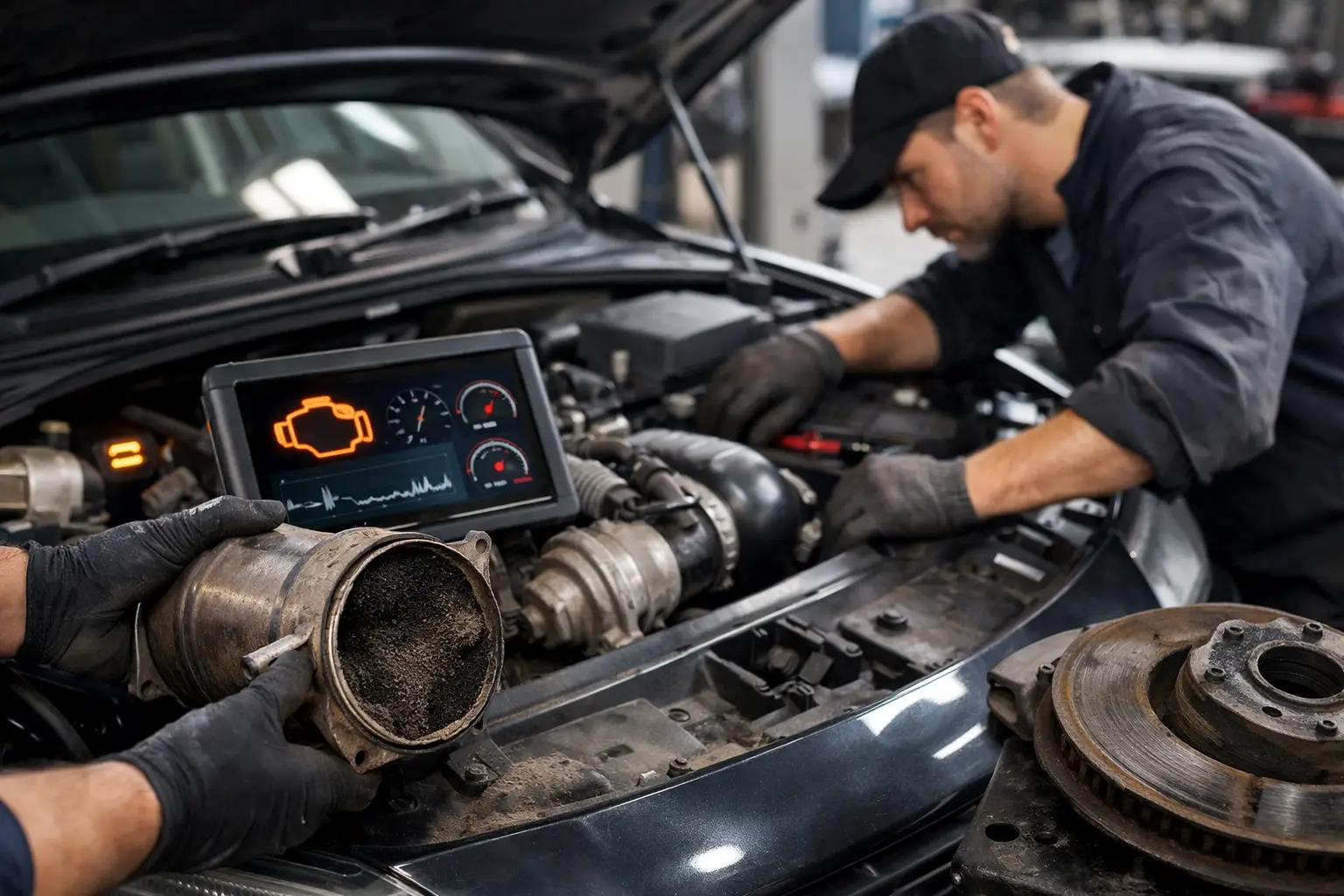
That is why proper fault finding comes first. We check the fault codes, pressure readings, soot load, ash load where possible, and how the engine is behaving overall. We also look at how blocked the filter really is and whether cleaning is still the right option.
When cleaning works and when it does not
A lot depends on how advanced the blockage is.
If the DPF is heavily loaded with soot but still structurally sound, cleaning can often restore proper flow and get the system working again. If the issue has been caught early enough, that can be the most sensible repair.
If the filter is damaged internally, contaminated, cracked, or overloaded beyond recovery, cleaning may not be enough. The same applies if the car has been driven too long with the fault and the blockage has become severe. In that situation, we will explain it clearly rather than pretending a quick fix will solve it.
The honest answer is that it depends on the condition of the filter and the reason it blocked in the first place. That is why testing matters.
Why forced regeneration is not always the answer
Drivers often ask for a forced regen because they have heard that is the quick fix. Sometimes it helps. Sometimes it does not. And sometimes it is the wrong thing to do.
A forced regeneration only makes sense if the vehicle is in a condition where it can complete it safely and the DPF is not beyond its limit. If the blockage is too heavy, or if there is a sensor or engine fault stopping normal regeneration, forcing the process can fail or put extra stress on the system.
We often see cars that have had repeated regens without solving the real problem. The customer pays more than once, loses time, and ends up back where they started. A proper assessment usually saves money and hassle.
Common causes behind repeated DPF problems
If a DPF blocks once, it may simply be driving pattern. If it keeps happening, there is usually more to it.
Short journeys are a major factor, especially on modern diesels that never get fully warm for long enough. But we also see repeated DPF trouble caused by faulty glow plugs, boost leaks, EGR issues, split hoses, poor injector performance, and sensor faults that stop the ECU managing regeneration correctly.
Oil quality can play a part as well. Using the wrong oil in a diesel with a DPF can increase ash build-up over time. That is not always the original trigger, but it can shorten the life of the filter.
This is why the job should never stop at clearing a code and sending the car out. If the cause stays there, the problem will come back.
What to expect from a local garage visit
Most customers just want a straight answer. Is it the DPF, how bad is it, and what needs doing next?
That is exactly how we handle it. First, we inspect and diagnose the fault properly. Then we explain what we have found in plain English. If cleaning is the right route, we will say so. If the issue is being caused by another fault, we will tell you that too and give you a clear repair plan.
Where possible, same-day solutions are available, especially when the fault is caught before the vehicle becomes undriveable. If the car is already in limp mode or has poor power, it is still worth getting it checked quickly before the blockage worsens and repair options narrow.
DPF issues before MOT or after a breakdown
A blocked DPF often shows up at the worst time. Sometimes it is just before an MOT, when warning lights or emissions issues suddenly become impossible to ignore. Other times it happens after the car has felt rough for a week and finally gives up on a busy morning.
Either way, leaving it rarely helps. Continued driving with a blocked DPF can affect turbo performance, increase engine stress, and in some cases lead to more expensive repairs. That does not mean panic. It just means the sooner it is checked, the more chance there is of fixing the issue without it escalating.
If you are in Lowestoft, Oulton Broad, Carlton Colville, Kessingland, Beccles or nearby, using a local garage makes a real difference here. You want quick answers, clear pricing and a repair that actually deals with the cause.
When to book DPF cleaning Lowestoft drivers should not delay
If the DPF light is on, the engine warning light is on, the car is in limp mode, or you have noticed a clear drop in power, get it looked at sooner rather than later. The longer it is left, the less likely a straightforward clean will sort it.
At AutoFix4u, the focus is simple. Find the fault properly, explain it clearly, and fix what is actually wrong. No guesswork, no surprise extras, and no pointless parts swapping.
If your diesel is struggling, call now, book diagnostics, and get a proper answer before a small DPF issue turns into a bigger repair. A blocked filter can often be dealt with – the key is catching it before the car decides it has had enough.


2 thoughts on “DPF Cleaning Lowestoft for Loss of Power”