MOT Preparation Lowestoft Drivers Can Trust
A car that feels mostly fine on the school run or commute can still fail its MOT for something simple. We see that a lot with MOT preparation Lowestoft drivers leave until the last minute – a brake light out, tyres worn on the inside edge, or a warning light that has been ignored because the car still drives normally. Small faults can turn into a failed test, extra time off the road, and more stress than most people need.
The good news is that most MOT failures are not major engine problems. In most cases, they are everyday wear-and-tear issues that can be picked up early and sorted quickly. If you use your car daily, a proper check before the test gives you a much better chance of passing first time and avoiding repeat visits.
Why MOT preparation in Lowestoft matters
A lot of drivers book the MOT and hope for the best. Sometimes that works. Sometimes it does not. The problem is that an MOT checks safety and roadworthiness, not whether the car has been convenient or reliable over the last few months.
We often see this issue when a customer says, “It’s been driving alright, apart from a noise,” or, “That warning light has been on for ages.” Those are exactly the sorts of things that can lead to a fail. If the car is your main transport for work, school runs, or caring responsibilities, even a short delay can be a real headache.
Preparation matters even more if your vehicle already has a known fault. Maybe the brakes feel weak, the steering pulls to one side, or the engine warning light has come on. In that case, you do not want to turn up for the test with problems that were always likely to be flagged.
The most common reasons cars fail an MOT
Most MOT failures come down to a handful of areas. Tyres are a big one. If the tread is low, the sidewall is damaged, or the tyre wear is uneven, it can fail. Uneven wear usually happens because of suspension issues, tracking problems, or worn components. Replacing the tyre alone may not solve the real cause.
Lights are another common problem. A blown bulb sounds minor, but it is enough to fail. The same goes for number plate lights, indicators, and brake lights. These faults often go unnoticed because drivers do not walk around the car regularly with the lights on.
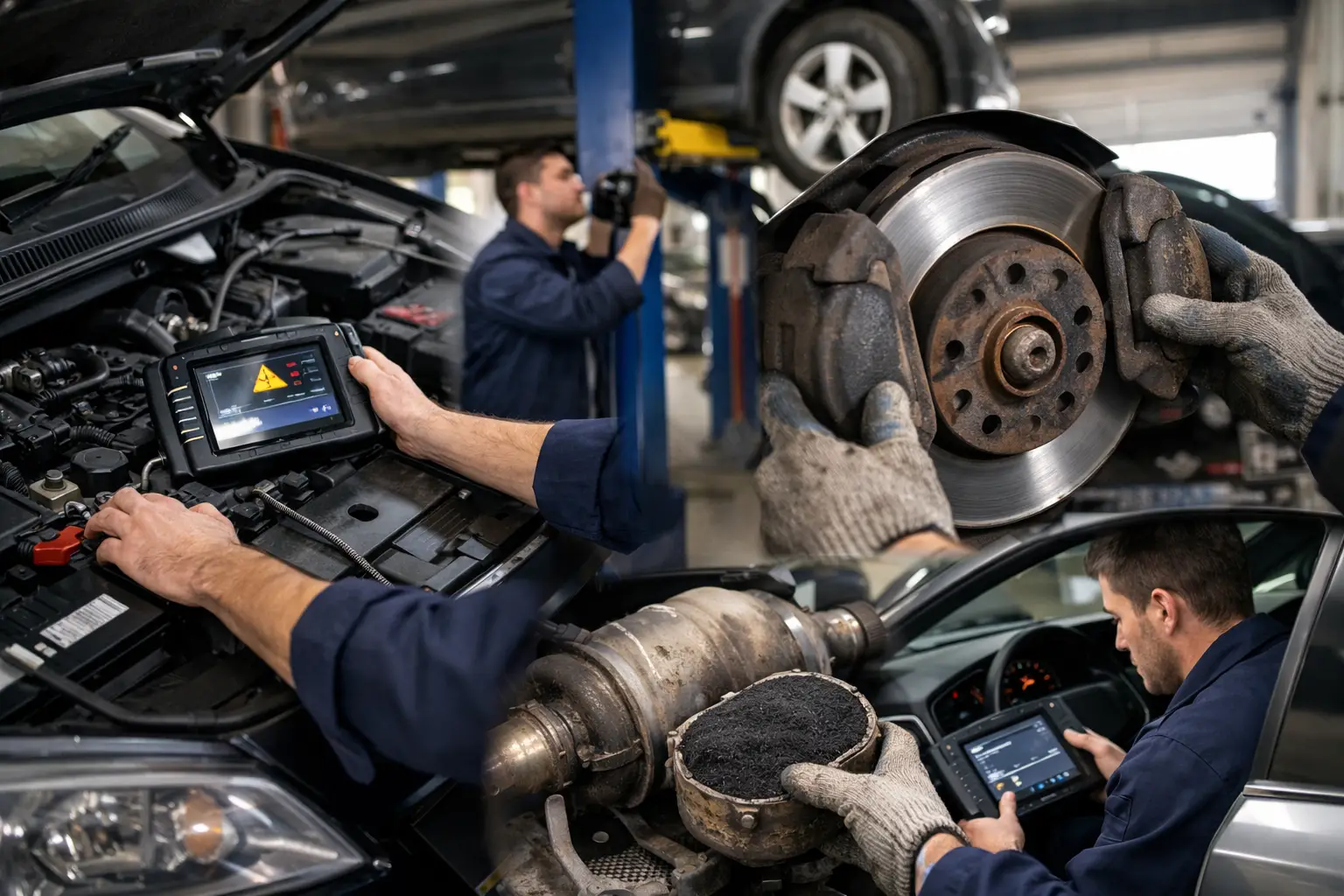
Brakes are high on the list too. If pads or discs are worn, braking performance is poor, or there is an imbalance across the axle, the tester will pick it up. Sometimes the driver has already noticed squealing, grinding, or a soft pedal. Sometimes there are no obvious signs until the inspection.
Suspension faults also show up regularly. Knocking noises over bumps, uneven tyre wear, or vague steering can all point to worn suspension arms, bushes, or links. Exhaust issues, damaged wipers, cracked windscreens in the driver’s view, and warning lights can all lead to problems as well.
MOT preparation Lowestoft motorists should not leave too late
If your MOT is due soon, timing matters. Leaving checks until the day before the test limits your options. If the car needs tyres, brake work, or diagnostics, you may end up chasing parts, rearranging work, or driving a car that should really be off the road.
Booking a pre-MOT check a bit earlier gives you room to fix anything properly. That is especially useful if the issue is not straightforward. For example, an ABS warning light might be a sensor, wiring damage, or a deeper braking fault. An engine warning light might be emissions-related, which could affect the MOT, but the root cause needs diagnosing rather than guessing.
This is where a proper inspection helps. A quick look is fine for obvious items, but if there is a warning light, poor running, or an ongoing fault, it makes sense to identify the actual problem first. That saves time, avoids unnecessary parts, and gives you a clearer repair plan.
What a proper pre-MOT check should cover
A useful pre-MOT check is not about making the list look impressive. It is about checking the things that actually cause failures and spotting the faults that matter.
That usually starts with tyres, lights, brakes, suspension, steering, wipers, washers, glass, mirrors, seatbelts, and obvious exhaust issues. If there are dashboard warning lights on, those need attention too. In many modern cars, electronic faults can affect systems linked to safety or emissions, so they should not be ignored.
Fluids and general condition also matter. Low brake fluid, poor visibility from worn blades, or a battery that struggles to hold charge may not all trigger an MOT fail directly, but they can point to wider issues. In most cases, if a car looks and feels neglected, there is a higher chance something else will be found during the test.
The value of a pre-MOT check is simple. You get a realistic view of the car’s condition before the official test. If something needs doing, it can be explained in plain English and dealt with before it becomes a fail sheet.
Warning lights, emissions, and hidden faults
This is where many MOT bookings get complicated. A customer books in because the test is due, but the real issue is a warning light or running fault that has been going on for weeks.
We often see this with engine management faults, DPF problems, and emissions issues. The car may still start and drive, but if it is in limp mode, smoking, struggling for power, or showing a dashboard light, there is usually something else going on. An MOT test will not fix that. It will only confirm there is a problem.
This usually happens because the fault has been put off. That is understandable. People are busy, and if the car still moves, it is easy to hope it can wait. But emissions faults, sensor failures, and DPF issues tend to get worse, not better. If they are caught early, the fix is often simpler.
That is why a diagnostic-first approach matters. Instead of changing parts and hoping for the best, the fault is checked properly, the cause is identified, and the right repair can be planned. That is often the difference between a quick solution and a string of repeat visits.
If your car has already failed
A failed MOT does not always mean a disaster. A lot depends on what it failed on. Some failures are minor and straightforward. Others point to wear that has built up over time.
If you have already been given a fail sheet, the best next step is to deal with the actual reasons listed, not just the cheapest-looking item. For example, if tyres have worn unevenly and the suspension has play in it, doing the tyres alone may leave you back in the same position later. If the brakes have failed on performance, the issue could be pads and discs, but it could also involve seized components or imbalance that needs checking properly.
This is where clear advice matters. You need to know what has failed, why it has failed, and what needs doing now versus what can wait. Honest garages do not make that more complicated than it needs to be.
Choosing a local garage for MOT prep and repairs
For most drivers, speed and clarity matter as much as the repair itself. If your car is off the road, you want a local garage that can inspect it quickly, explain the issue properly, and carry out the work without dragging things out.
That matters in and around Lowestoft because most people are relying on one main vehicle. If the car is needed for commuting, shopping, or getting the kids where they need to be, delays are not just inconvenient. They affect the rest of the week.
A good local garage should be able to tell you what is urgent, what is causing the issue, and what the next step is. No vague advice. No guessing. Just a clear repair plan and transparent pricing. That is the standard drivers should expect.
If you are looking for MOT preparation or failure repairs in Lowestoft, it makes sense to get the car checked before the test if anything feels off. Strange noises, warning lights, poor braking, uneven tyre wear, or loss of power are all worth dealing with early. AutoFix4u handles MOT-related repairs with the same approach as any other job – find the fault, explain it clearly, and fix it properly.
If your MOT is coming up and you are not fully confident in the car, get it looked at now rather than hoping it gets through. A simple check today can save a failed test, lost time, and a bigger repair bill later. Call now or get a quote while there is still time to sort it properly.


3 thoughts on “MOT Preparation Lowestoft Drivers Can Trust”