Interim Service vs Full Service: What to Book
If your car is due some attention and you are wondering about interim service vs full service, the right choice usually comes down to one thing – how much you rely on the vehicle and what problems you are trying to avoid.
We speak to drivers all the time who book a service because something feels off. Maybe the brakes are starting to squeak, the oil warning has flashed up once, or the car just does not feel as smooth as it did a few months ago. In most cases, a service is not just routine maintenance. It is a chance to catch wear early, before it turns into a breakdown, an MOT failure, or a more expensive repair.
Interim service vs full service: the main difference
An interim service is the lighter option. A full service is more thorough.
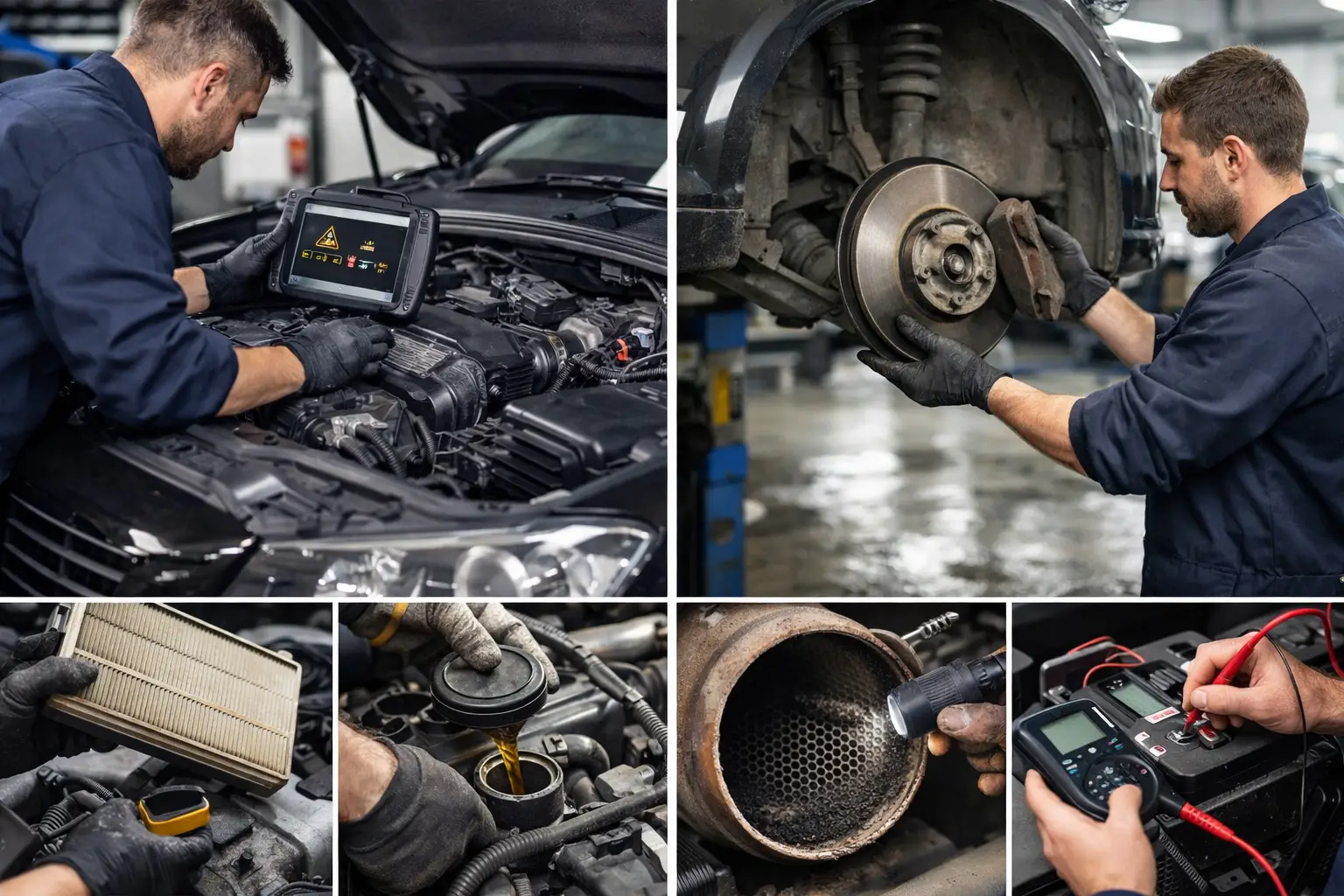
An interim service is usually suited to drivers who cover a lot of miles and need checks between annual services. It focuses on the main items that wear faster or affect day-to-day reliability, such as engine oil, oil filter, fluid levels, tyres, brakes and general safety checks.
A full service goes further. It includes the core items you would expect in an interim service, but with more detailed inspections and additional replacement parts, such as air filters and spark plugs where required. It is designed to give a broader picture of the vehicle’s condition and pick up issues that may not be obvious yet.
That is the simple version. The more useful question is which one makes sense for your car, your mileage and the problems you are already noticing.
When an interim service is usually enough
An interim service is often the right choice if you use your car heavily between annual services. We often recommend it for drivers doing regular commuting, school runs, business mileage or longer trips across Suffolk and Norfolk.
This usually happens because high mileage puts more strain on oil, filters, brakes and tyres. Even if the car seems to be driving fine, wear builds up steadily. Fresh oil and a proper inspection can make a real difference to engine protection and day-to-day reliability.
If you had a full service not that long ago, but you have since done a lot of miles, an interim service can be a sensible halfway point. It helps keep the vehicle in good order without repeating every item from a full annual service.
It can also be useful before a long journey, especially if the car has been showing small warning signs. A quick service check is far better than waiting until you are stuck on the roadside with an overheating issue, worn brakes or low fluids.
When a full service is the better option
A full service is usually the better choice if the car has not had much attention for a while, you have bought it used, or you are starting to notice faults building up.
We often see this when customers come in with an engine warning light, poor fuel economy, sluggish performance or an MOT advisory they have ignored for a few months. A full service does not fix every fault on its own, but it gives a much clearer view of what is wearing out and what needs doing next.
It is also the better option if you do lower mileage but mostly short trips. That might sound odd, but short journeys can be hard on a car. Oil takes longer to get up to temperature, batteries do not always recharge properly, and DPF systems can struggle on diesel vehicles. In those cases, the car may not do big miles, but it still needs regular proper maintenance.
A full service is also a good idea if you are preparing for an MOT. It gives you a better chance of spotting worn brakes, tyres, suspension or lighting issues before the test rather than dealing with a failure afterwards.
What an interim service will not cover
This is where some drivers get caught out. They book an interim service thinking it is a full once-over, then assume everything must be fine.
An interim service is useful, but it has limits. It does not replace proper diagnostics if you have a warning light on. It does not solve a clutch slipping, a DPF blockage, an air conditioning fault or a knocking suspension arm. And it may not include some of the more detailed replacement items or checks that come with a full service.
If your car is showing symptoms, the answer is not always a service package. In most cases, symptoms point to a fault that needs diagnosing first.
For example, if the engine warning light is on and the car has lost power, that could be anything from a sensor fault to an air leak, fuel issue or DPF problem. A service alone will not identify the root cause. The same applies if your brakes are grinding, the clutch bite has changed, or the car is pulling to one side.
What a full service still will not fix
A full service is more detailed, but it is not a magic fix either.
Servicing is about maintenance. Diagnostics and repairs are about fault finding and putting something right. The two work together, but they are not the same thing.
If your car is already running badly, cutting out, overheating, going into limp mode or failing to start, you may need diagnostic work before any service is carried out. We often explain this to customers in plain English because it saves time and avoids false expectations. There is no point changing routine service items if the real issue is an electrical fault, a failed sensor or a blocked DPF.
That is why a good garage should not just sell you the biggest service package and hope for the best. The right approach is to look at the symptoms, identify the likely cause and recommend the work that actually fits the problem.
Interim service vs full service for different driving habits
If you are still weighing up interim service vs full service, think about how the car is used rather than just what the service book says.
If you drive a lot every week, an interim service between full services often makes sense. It keeps on top of oil condition, brake wear and general safety.
If you do fewer miles but mostly short local journeys, a full service can still be the better option because short-run use creates its own wear. That is especially true for diesel cars with DPF systems.
If the car is older, has patchy service history, or you have recently bought it, a full service is usually the safer place to start. It gives a stronger baseline and helps avoid nasty surprises later.
If the car already has a clear fault, book diagnostics or a repair inspection first. Servicing is still important, but it should not distract from the main issue.
A service should help prevent bigger repairs
The reason servicing matters is simple. Small problems are cheaper and easier to deal with than major ones.
Low or dirty oil can contribute to engine wear. Worn brake pads can damage discs if left too long. Old filters can affect performance and fuel use. Missed fluid issues can lead to overheating or component failure. These are not scare stories. They are the kinds of faults we see regularly when routine maintenance has been pushed back too far.
Most drivers are not trying to neglect their car. They are busy. They need it every day. They put off the booking because the vehicle still seems to be running. Then the warning light comes on, the MOT rolls round, or the car starts making a noise that was not there last week.
That is usually the point where a clear inspection matters more than guesswork.
What to do if you are unsure
If you are not sure whether to book an interim or a full service, the best starting point is to think about two things: mileage since the last proper service, and whether the car has any symptoms right now.
If it has done a lot of miles and otherwise feels fine, an interim service may be enough.
If it has not been serviced in a while, you want a more complete check, or you are trying to stay ahead of an MOT, a full service is usually the better option.
If there is a warning light, loss of power, poor starting, unusual smoke, brake noise or anything else that suggests a fault, ask for diagnostics first. That way you get a proper answer instead of changing parts and hoping.
At AutoFix4u, we keep it straightforward. We explain what we find, what needs doing now, and what can wait. No surprise extras, no vague advice. If you are in or around Lowestoft and need help deciding what your car actually needs, get in touch and we will point you in the right direction.
The best service is the one that matches how your car is used and catches trouble before it leaves you stranded.


