
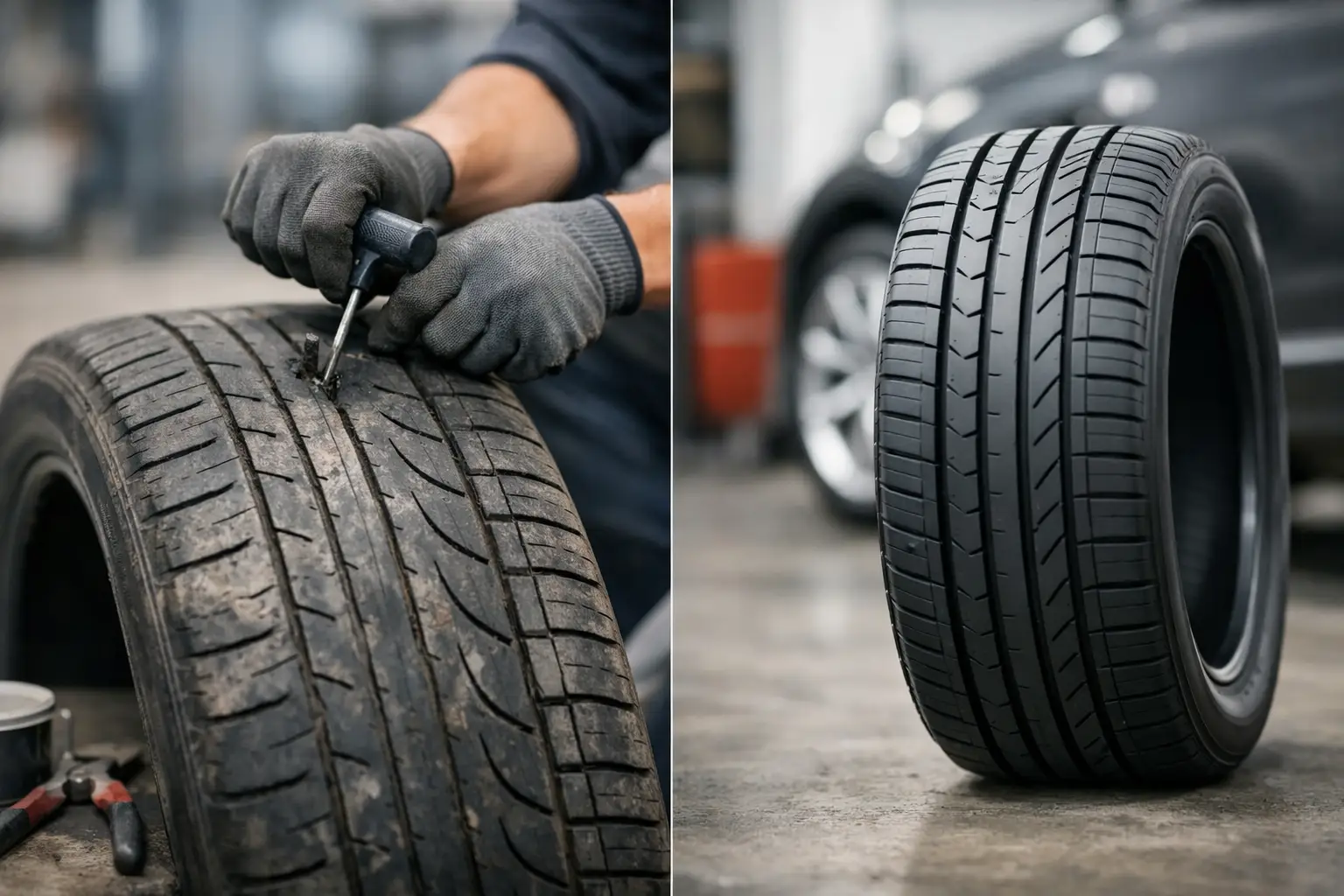
Puncture Repair vs New Tyre: What’s Best?
A flat tyre rarely happens at a good time. You are either trying to get to work, pick the kids up, or sort out ten other things at once. When the tyre goes down, the question is usually immediate – puncture repair vs new tyre, which one actually makes sense for your car, your safety, and your wallet?
The honest answer is that it depends on where the damage is, how bad it is, and what condition the tyre was in before the puncture happened. Sometimes a repair is the right call and gets you safely back on the road without spending more than you need to. Sometimes fitting a new tyre is the only proper option. The key is making the decision based on safety first, not guesswork.
When a puncture repair is usually possible
A puncture repair can be a sensible fix if the damage is small, in the main tread area, and the tyre has not been driven on while flat. That last part matters more than many drivers realise. If the tyre has been run underinflated for any distance, the internal structure can be damaged even if the hole itself looks minor from the outside.
In straightforward cases, a proper repair can give plenty of further use from the tyre. It is often the best option when the tyre still has good tread depth, is wearing evenly, and is otherwise in sound condition. If the puncture has come from a nail or screw in the central part of the tread, there is a fair chance it can be repaired safely.
This is not about putting in a quick plug and hoping for the best. A proper inspection needs to confirm the tyre casing is still sound and the damage falls within repairable limits. If it does, repair can be a reliable and cost-effective answer.
When a new tyre is the better choice
There are plenty of situations where replacement is the safer and more sensible route. If the puncture is in the sidewall or shoulder of the tyre, it is normally not repairable. Those areas flex more and take a different kind of load, so repairs there do not meet proper safety standards.
A new tyre is also usually needed if the hole is too large, if there are multiple punctures close together, or if the tyre has visible cracking, bulges, cord damage, or very low tread. In those cases, the puncture is only part of the problem. The tyre was already near the end of its useful life, or it has suffered structural damage that makes repair a poor risk.
The same applies if you have driven on it while it was nearly flat. The outside might not look terrible, but the inside sidewalls can be weakened by the extra heat and flex. That is exactly the kind of hidden fault that can lead to a blowout later.
Puncture repair vs new tyre – the safety question
Most drivers start with cost, which is understandable. But with puncture repair vs new tyre, safety has to come first. A repair is only worth doing if it is fully safe and likely to last. If there is any doubt about the tyre’s structure, replacement is the right answer.
This is where a proper inspection matters. You cannot judge a tyre just by looking at the object stuck in it. The tyre needs to be removed from the wheel so the inside can be checked for splits, rubbing, or internal damage. Without that inspection, any decision is just an estimate.
A good garage should explain the result clearly. If it can be repaired, they should tell you why. If it needs replacing, they should be able to show you the issue and explain what makes it unsafe. No vague wording. No pressure. Just a clear recommendation based on the condition of the tyre.
What affects the decision beyond the puncture itself
Tyre age and general wear play a bigger part than people expect. If a tyre is already close to the legal limit, spending money on a repair may not make much sense. You could be back in the garage again soon needing replacement anyway.
The type of vehicle and the way you use it also matter. If you do mainly short local trips at low speed, that is one thing. If you do regular motorway miles, school runs in all weather, or carry family members every day, reliability becomes even more important. A borderline tyre is not worth the risk.
Then there is the issue of matching tyres across the axle. If one tyre is badly worn and the other is fairly new, replacing just the punctured one may still be fine, but it depends on the remaining tread and the vehicle setup. A sensible garage will take that into account rather than treating every puncture the same.
Common cases drivers get wrong
One of the biggest mistakes is using a temporary sealant or inflation kit and assuming the tyre is then sorted. Those products can be useful to get you moving in an emergency, but they are not the final repair. The tyre still needs to be properly checked, and sometimes sealant can make inspection and repair less straightforward.
Another common mistake is driving on a slow puncture for days, just topping the pressure back up. By the time the tyre comes in, the repeated underinflation may have damaged it beyond repair. What could have been a simple fix becomes a replacement.
It is also common for drivers to assume a tyre with good tread must be repairable. Tread depth is only one part of the picture. The location of the damage and the condition inside the tyre matter just as much.
How a garage should assess puncture repair vs new tyre
The process should be simple and transparent. First, the tyre is inspected externally for the object, the damage area, and any obvious signs of wear or sidewall problems. Then it is removed from the wheel so the inside can be checked properly. That internal inspection is what confirms whether the tyre has been compromised.
If the puncture is in the repairable area and the structure is sound, a proper repair can be carried out to the right standard. If not, the tyre should be replaced with a suitable alternative for your vehicle and driving needs.
What you should not get is a rushed answer from someone who has not inspected the tyre properly. This is one of those jobs where the right process matters more than the fastest answer.
What this means for cost and value
A repair is usually the lower-cost option, and when it is safe, it can be very good value. There is no point replacing a tyre early if a proper repair will restore it to safe use. That is money you do not need to spend.
On the other hand, trying to save money on a tyre that is worn out, damaged, or unsafe often costs more in the long run. You may end up paying twice – once for a short-term fix and again for the replacement you needed all along. Worse than that, you are carrying the risk every time you drive.
Clear pricing matters here. You want to know whether the tyre can be repaired, what the replacement options are if it cannot, and what happens next. No surprise extras. No confusing upsell. Just a direct answer.
When to stop driving and call for help
If the tyre has gone fully flat, the sidewall looks crushed, or the car feels unstable, do not keep driving on it. That is how repairable tyres get ruined and how bigger safety problems start. If you have a spare and can change it safely, that may get you moving. If not, it is better to get help than force the car along on a damaged tyre.
For local drivers around Lowestoft, getting the tyre checked quickly can make all the difference between a simple repair and a full replacement. At AutoFix4u, the focus is always the same – inspect it properly, explain it clearly, and recommend the safest option with clear pricing.
So which one should you choose?
If the puncture is small, central, and the tyre is otherwise in good condition, a repair is often the right call. If the damage is in the sidewall, the tyre is worn, or it has been driven on while flat, a new tyre is usually the only sensible option.
The main thing is not to guess. A tyre can look fine from the outside and still be unsafe inside. Get it checked properly, ask for a clear explanation, and make the decision based on what keeps the car dependable day after day. That is usually the choice that saves the most hassle as well as the most money.


2 thoughts on “Puncture Repair vs New Tyre: What’s Best?”