
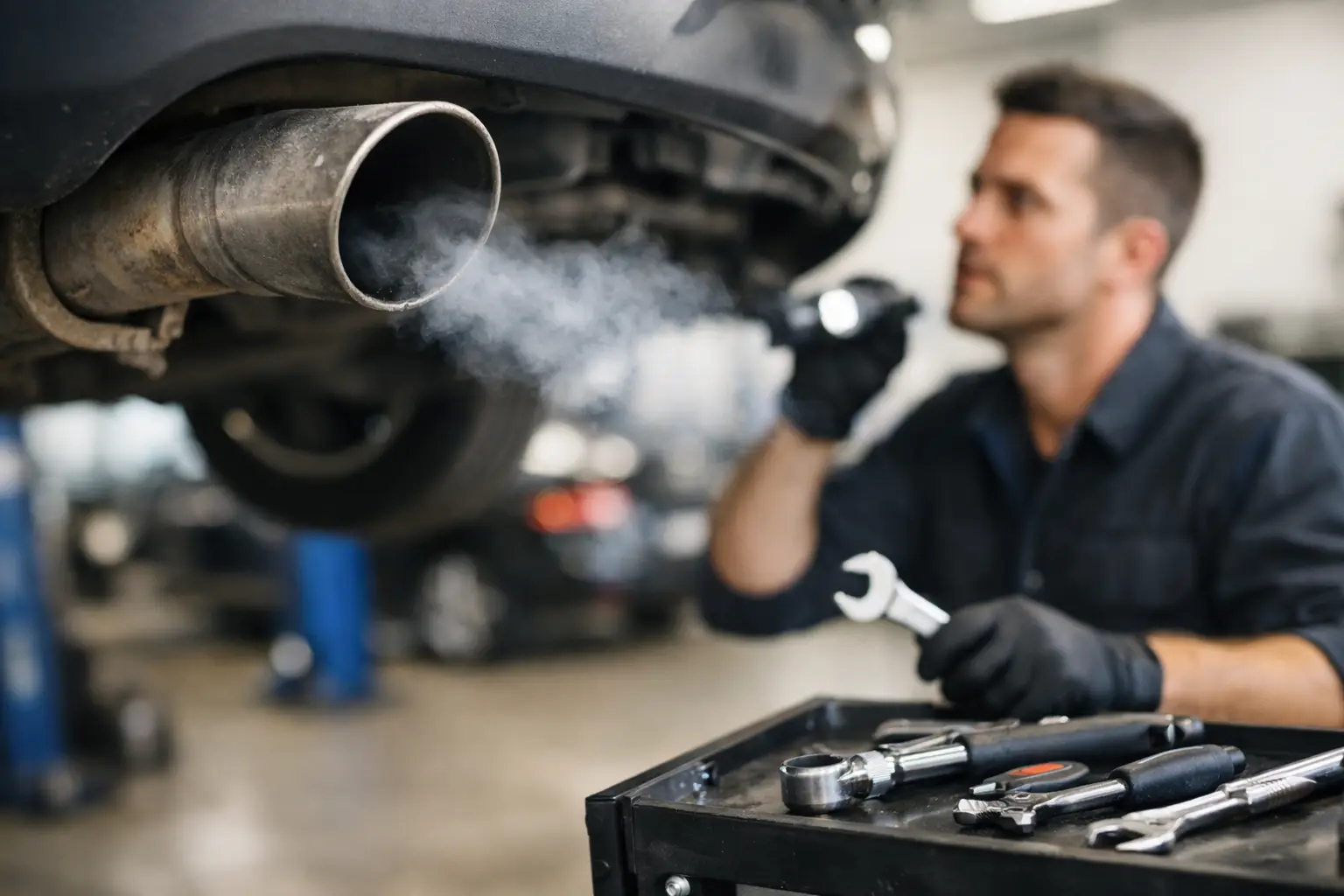
Exhaust Blowing Noise? Your Repair Options
That blowing or chuffing sound usually starts small. You hear it on a cold start, under acceleration, or when pulling away at a roundabout. Then it gets louder, the car feels rougher, and you start wondering whether it is safe to keep driving.
In most cases, an exhaust blowing noise means gases are escaping from somewhere they should not. That could be a failed gasket, a cracked flexi pipe, corrosion in the exhaust, or a loose joint. The right repair depends on where the leak is, how bad it is, and whether other parts have already been affected.
Exhaust blowing noise repair options explained
When people search for exhaust blowing noise repair options, they usually want a straight answer – can this be patched, or does it need replacing? The honest answer is that it depends on the fault.
A small leak at a joint or gasket may be a relatively simple repair if caught early. If the exhaust has rotted through, split around a weld, or the flexi section has failed, replacement is usually the proper fix. Temporary sealants exist, but they are rarely a long-term answer on a road car that needs to stay reliable.
That is why a proper inspection matters. The noise tells you there is a problem, but not exactly where it is coming from.
What usually causes a blowing exhaust noise?
Exhaust systems live a hard life. They deal with heat, vibration, condensation, road salt, speed bumps, and age. Over time, even a well-maintained car can develop leaks.
One common cause is corrosion. Moisture inside the system and weather underneath the car gradually weaken pipes and boxes until small holes form. At first you may only notice a faint blowing sound. Later, it can turn into a louder rasp or rumble.
Another regular fault is a failed gasket. The gasket seals the join between sections, such as near the manifold or catalytic converter. If it burns out or breaks down, exhaust gases escape under pressure and create that puffing sound.
Flexi pipes are another weak point. They are designed to move slightly with the engine and absorb vibration, but the woven outer section can fray and the inner pipe can split. When that happens, the car often sounds much louder under load.
There is also the chance of a crack in the manifold or a loose clamp on a joint. These faults can sound similar, but the repair can be very different.
How to tell if it is serious
Some drivers put up with an exhaust blow for weeks because the car still runs. That is risky. An exhaust leak is not just about noise.
If the leak is near the front of the car, gases can travel towards the cabin, especially when stationary or moving slowly. That is a safety issue. You may also notice a smell of fumes, a ticking noise from the engine bay, poor fuel economy, or sluggish performance.
Modern vehicles can also bring warning lights into the picture. A leak can affect sensor readings, upset emissions, and cause MOT problems. If the system is blowing near the catalytic converter or lambda sensor, it can lead to faults that go beyond the exhaust itself.
The more the leak worsens, the more likely it is to damage nearby mountings and strain other sections. What starts as one weak joint can become a larger repair if left alone.
Repair or replace?
This is where good advice matters. Not every noisy exhaust needs a full system, and not every small leak should be patched.
Gasket replacement
If the problem is a failed gasket between two otherwise sound components, replacing the gasket is often the best-value repair. It restores the seal without changing parts that are still in good condition. This tends to be worthwhile when the surrounding flanges, bolts, and pipework are still solid.
Clamp or joint repair
Sometimes the fault is a loose or failing clamp, or a leaking sleeve joint. If the metal around the joint is still healthy, resealing and securing that section can solve the problem properly. If the pipe ends are heavily corroded, a clamp alone will not last.
Flexi pipe replacement
A damaged flexi usually needs replacing rather than patching. Because it sits in a high-movement area, short-term fixes do not tend to hold up well. A proper replacement prevents repeat failures and keeps stress off the rest of the exhaust.
Section replacement
Many exhausts are made in sections, which is useful. If the centre section or rear box has rusted through but the rest is sound, replacing only the failed section is often the sensible route. It keeps costs under control without cutting corners.
Full exhaust replacement
A full replacement may be the better option if multiple sections are weak, the system is badly corroded, or previous patch repairs have already been tried. It is more money upfront, but often cheaper than replacing one tired part after another over the next few months.
Are exhaust repair pastes and bandages worth it?
They have their place, but only in limited cases. If you are trying to stop a minor leak briefly before a booked repair, they may help reduce noise for a short time. They are not a proper fix for rot, cracks around joints, or failed flexi pipes.
The problem is heat and movement. Exhaust systems expand, contract, and vibrate constantly. A patch that looks fine on the driveway may fail quickly once the car is back in daily use. If you rely on one vehicle for work, school runs, or commuting, a temporary repair can end up wasting time.
That is why we usually advise fixing the root cause rather than paying twice.
What a garage should check before recommending repairs
A blowing noise can travel, which makes it easy to misjudge by ear alone. A proper inspection should confirm exactly where gases are escaping and whether there is more than one fault.
The garage should check the manifold area, gaskets, flexi pipe, clamps, hangers, catalytic converter connections, and the condition of the surrounding sections. It also helps to look for soot marks, as these often point to the leak. On some cars, undertrays and heat shields can make access harder, so the fault needs to be identified properly before any quote is given.
This is where a straightforward workshop approach matters. You want clear pricing, honest recommendations, and no surprise extras once the car is on the ramp.
When to stop driving and get it looked at
If the car is suddenly much louder than normal, smells strongly of fumes, feels down on power, or has an engine management light on, get it checked as soon as possible. The same applies if the noise is coming from the front of the car or from underneath the cabin area.
A rear box blowing is still worth repairing quickly, but a front-end leak is usually more urgent because of fumes and emissions issues. If the exhaust is hanging loose, rattling badly, or scraping the road, do not leave it.
For local drivers around Lowestoft who need fast answers, this is the sort of fault that is often worth phoning about straight away. Same-day inspection can make the difference between a straightforward repair and a bigger job later.
Choosing the right exhaust blowing noise repair options
The best exhaust blowing noise repair options come down to condition, not guesswork. A cheap-looking quick fix is not always the most cost-effective if it fails again next month. At the same time, a full replacement is not always necessary if the rest of the system is solid.
Good repair advice should answer three things clearly. Where is the leak? What has failed? Is the suggested repair likely to last? If a garage cannot explain that in plain English, keep asking.
At AutoFix4u, the focus is on finding the actual fault and giving you clear next steps, whether that is a gasket, a section replacement, or a more complete exhaust repair. That means no vague upselling and no fitting parts that are not needed.
A note on MOTs and repeat failures
Plenty of drivers only discover an exhaust problem at MOT time, but the signs are often there beforehand. A blowing exhaust can affect noise levels, emissions, and the overall security of the system. If you have had an advisory for corrosion or a minor leak before, it is worth dealing with it before the next test rather than waiting for a failure.
It is also worth remembering that repeated short journeys can speed up exhaust wear because moisture does not burn off fully. So if you mainly do school runs and local trips, the system may deteriorate faster than you expect.
If your car sounds different, trust your ears. Exhaust noises rarely fix themselves, and early action usually gives you better repair choices and a more predictable bill. If you are not sure what you are hearing, get it checked and get a proper answer.


One thought on “Exhaust Blowing Noise? Your Repair Options”